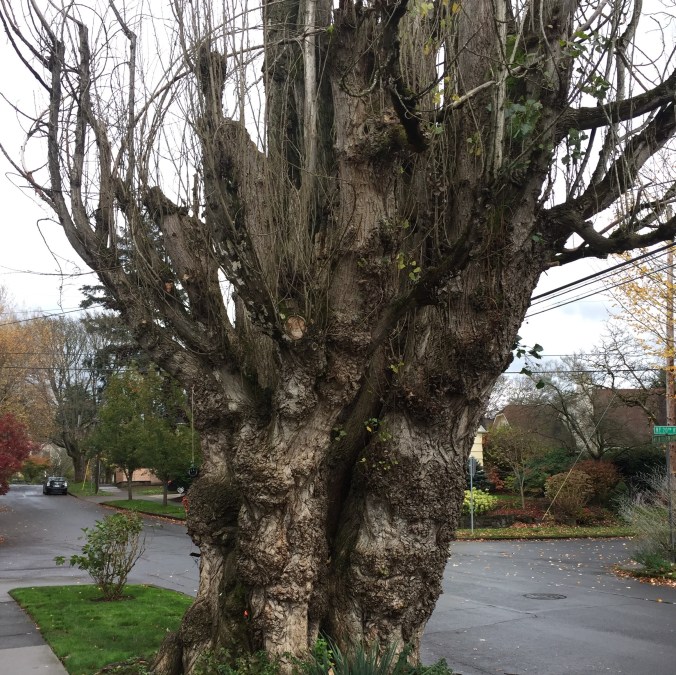
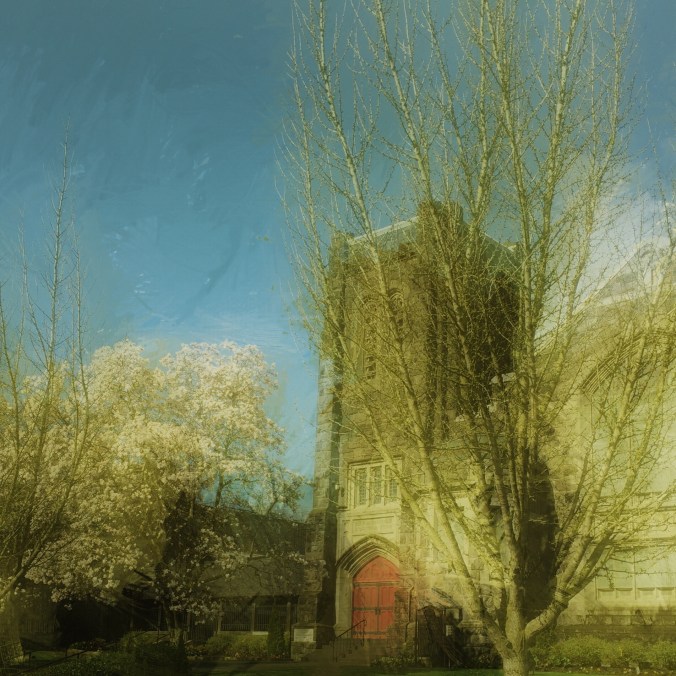
The poplar at the end of the block – thought by some to be the tallest poplar in the state – has lost its leaves. It’s an upward reaching tree, and it looks a bit forlorn, though that could be some transference on my part.
But there is beauty in those bare branches. You can see the architecture of the tree, of all of the trees whose leaves have flown downward for the winter. I find that reassuring, that I can see the structure of the tree, where the nests are, what dead branches haven’t fallen yet.
There is something plaintive about it; the trees look as though they’re beseeching their sky-god for help. It looks like beseeching and not praising, but as I said, there could be some transference going on there.
On election night, as the map of the U.S. turned more red than blue, I said one of those beseeching Hail Mary (the basketball kind, not the rosary kind) prayers. Oh God, please, change this, I yelled in my head. As it turns out, God is not some genie in a lamp whose belly I rub and my every wish and prayer are answered.
For me, for my political and ethical sensibilities, for my understanding of the call of the gospel, this election and its aftermath has been hard and wrong. But it has revealed the architecture of some things: my own prejudice and assumptions, as well as my faithful and ethical grounding; it has revealed branches of my fellow citizens whose worlds and attitudes are completely unknown and foreign to me. It has revealed nests of strength, of protest and compassion, that may have been hidden, and dead branches that need to come down, like racism and misogyny and xenophobia.
So I find myself confessing a lot more, and seeking humility. I find myself trying to be more brave and trying to reach out to those so different from me. I find myself weeping still at times, and getting worried and angry. I am hopeful too. One day those leaves will grow back on the poplar, sometime this spring. Until then I will appreciate the branches.
More than that, I will appreciate the strange village that has emerged at the base of the trunk. Some time this past spring, the people who live in the house by the tree put a little gnome and door and a little fence among the roots. Then one by one, other things appeared. Another gnome. A miniature rope ladder. A swing, then two. A few dinosaurs. A pterodactyl. Frogs. A fort. Some cowboys.
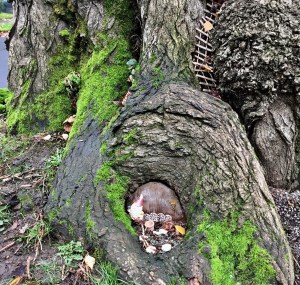
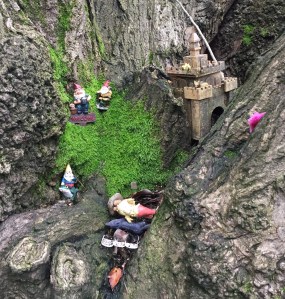
As plaintive as the branches are, a mismatched village of the whimsical and strange stands at the base of those branches, a counterpoint to the narrative of barrenness and beseeching.
There is always a counter narrative. It may not get heard, it may not be remembered in history, but it is whispered among the powerless and the planning. It is repeated by the protesters. It is spelled out in the unfolding leaves of spring.
At least that is what I hope.
A shoot shall come out of the stump of Jesse, and a branch shall grow out of his roots. The spirit of the Lord shall rest on him, the spirit of wisdom and understanding, the spirit of counsel and might, the spirit of knowledge and the fear of the Lord. His delight shall be in the fear of the Lord. He shall not judge by what his eyes see, or decide by what his ears hear; but with righteousness he shall judge the poor, and decide with equity for the meek of the earth.
 We were at the beach, and the clouds and sun were positioned in such a way, and I was positioned in such a way, that everyone I could see as I looked toward Haystack Rock was in silhouette. And I thought, isn’t that lovely – all I see are human shapes. I can’t tell if someone is young or old; I can’t tell what the color of their skin is, or what god they worship. We are simply human beings, our lowest common denominator.
 The first thing I do is make coffee. Nothing fancy, just my Cuisinart 4-cup drip and some French Roast, already ground, because there is a worse noise than a coffee grinder especially first thing in the morning when you’re trying not to wake anyone else up, unless it’s a leaf blower.
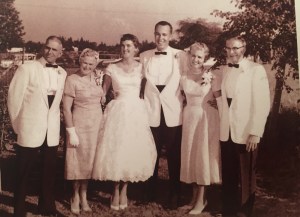

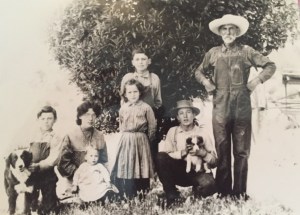


 In some ways, anyone who knew my grandmother would not immediately say she was a saint, not in the traditional “sweetness, goodness, and light” sort of way. She caught my grandfather’s eye while dancing on a table at the local tavern, or so the story goes. They married in 1925 and were married until, sixty-three years later, my grandfather died in his sleep in the bed they shared.
 And then we ate. We stuffed ourselves silly, to get ready for a day of moving rocks in the creek and hiking up Mt. Osborn and washing dishes by hand. Grandma sat at the head of the table, her little brown tea pot next to her, her eyes twinkling, her cheeks perpetually rosy. She could be sharp sometimes, but I think nothing gave her more joy than seeing her family, some of whom lived too far away, gathered at that table devouring the feast she made possible.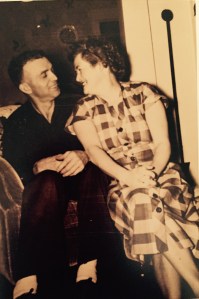
 Hold Fast to What Is Good