“EMILY: “Does anyone ever realize life while they live it…every, every minute?”
STAGE MANAGER: “No. Saints and poets maybe…they do some.”
– Thornton Wilder, “Our Town”
 The first time I ever saw “Our Town” was in 1988, a Broadway production starring Penelope Ann Miller as Emily and Eric Stoltz as George. I started crying during that speech of Emily’s when she comes back for a day, and I was still crying after the curtain call when the house lights came up. It has stayed a favorite ever since.
Maybe it’s those words about realizing life, every every minute, that grow more poignant as I get older. Maybe it’s the dawning understanding that this person will not always be a part of your life. She might move away, or you might. You might have a falling out, or simply grow apart. He might turn weird. They might die, quickly or awfully.
It’s the acknowledgement that these bones and ligaments and cells break down after a while, that they’re not made of diamonds or titanium, impenetrable and durable for eternity.
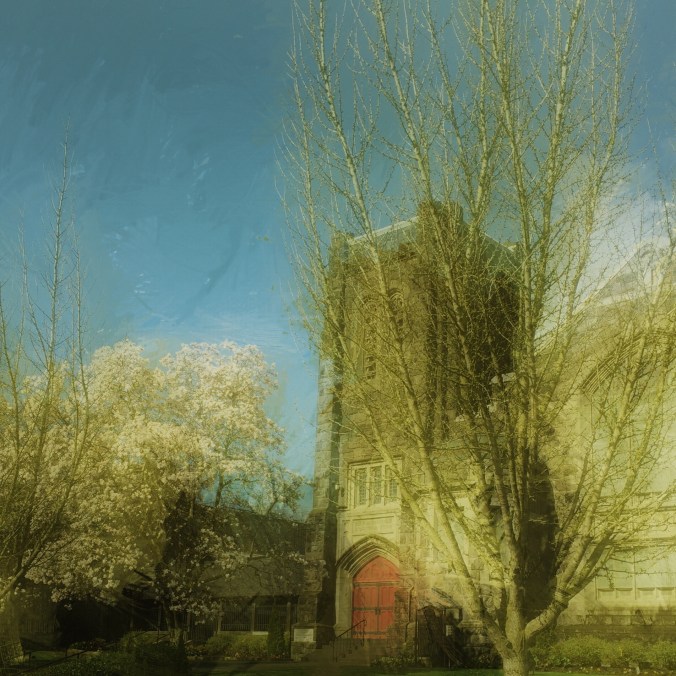
It’s the awareness that the house you grew up in feels a lot smaller if you ever go back and visit; schools do too, and churches maybe, or any place that lodged in your heart but is better served by an imperfect memory than an actual, contemporary experience.
It has taken me a while to cultivate the practice of realizing life. I’ve never been the kind who stops and smells the roses, but I’m beginning to do just that, which is funny because ever since I turned fifty, I’ve been more and more aware of the finity of years I have left. I hope for several decades more, but still, my days will come to an end, later rather than sooner. Yet I don’t want to rush and cram as much in as I can. As life shortens, I slow down.
So I watch my daughter when she’s not looking. I watch her mouth an imagined conversation and I eavesdrop on her singing in the shower. I watch my husband, too, with his imagined conversations. I watch his patience with children and marvel at what an amazing special ed teacher he must have been in his previous career. I watch him preach, and I look out at the congregation and their complete engagement with him, even as he conjures up a word now and then, or makes illegal grammatical turns.
I wonder at the perfect circle the dog makes when he curls up, and the asymmetry of the spider webs that decorated the yard naturally – artisanally and organically – for Halloween. I marvel at how hard it is to photograph a spider web or a rainbow or a sunset, and maybe it’s better that way.
I pay attention to the color of the sky on any given day, and the color of the leaves, and whether or not they’re still a part of the branch or part of the lawn.
I look at the small things, and watch the slow things, and I seek out the big arcs too. I wonder at the ever-so-slight curve toward justice that history is taking. Looking at yesterday, the arc seems flat. Sometimes I have to look far back, decades or centuries back, to see that curve but it is there.
I rejoice when someone gets ordained after waiting thirty years to be able to do so. I am humbled by those who protested apartheid and eventually brought it down, all that pride falling down like some fragile Humpty Dumpty. I applaud my friends who have more stamina than I when it comes to fighting for justice every single day. I tear up reading all the Facebook posts after the Cubs win. 108 years. That’s a long arc toward victory.
I look for what is good; I try to hold fast to what is good because that is the glue of life, the stuff that holds us together even while the tragic and oppressive might make us stronger or at least more determined. That’s realizing life, too: realizing that not everyone has a fair shot and it may well be our jobs to change that.
But mostly I look for the poets and the saints, few of whom are published, few of whom have been martyred or accomplished miracles.
I look to Gwendolyn Brooks and Bruce Springsteen and Brian Doyle and Naomi Shihab Nye and Denise Levertov, and the psalmist and once in a while St. Paul. I look to memes that take my breath away. I seek people like Nancy, a woman in my parents’ church, who weekly collected outdated food from the local grocery stores and took it out to the fields to the migrant workers, enlisting the aid of people of all ideologies and politics to help her. I am grateful for the Tamale Ladies, those women who sit wisely and patiently outside of Whole Foods with their coolers on wheels, micro-industrialists all of them, a community of women who feed their families and ours.
Saints who dress up as teachers, and CNAs, and guys who punch a clock, all of whom realize that life is found in the small moments and not the big ones: a C instead of a D; being able to walk to the bathroom instead of using the bedpan; a whistle blown which means the shift is over and you can go back home to the people who love you.
A month of convalescence has been a gift and an invitation to realize life. It’s also invited a discipline to focus on healing and positive input so most days I have to set the election aside. It’s been an opportunity to acknowledge that I am loved and liked and cared for, which isn’t always easy but has proven to be wonderful and humbling.
Because “it goes so fast. We don’t have time to look at one another” – unless we make time.
May a saint or poet cross your path today.

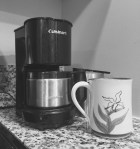 The first thing I do is make coffee. Nothing fancy, just my Cuisinart 4-cup drip and some French Roast, already ground, because there is a worse noise than a coffee grinder especially first thing in the morning when you’re trying not to wake anyone else up, unless it’s a leaf blower.

 You were who you were from the beginning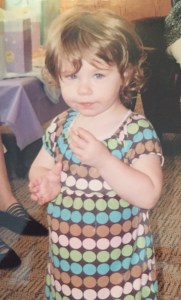
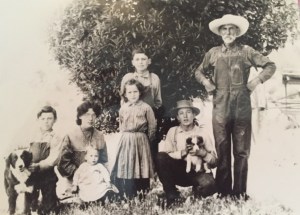


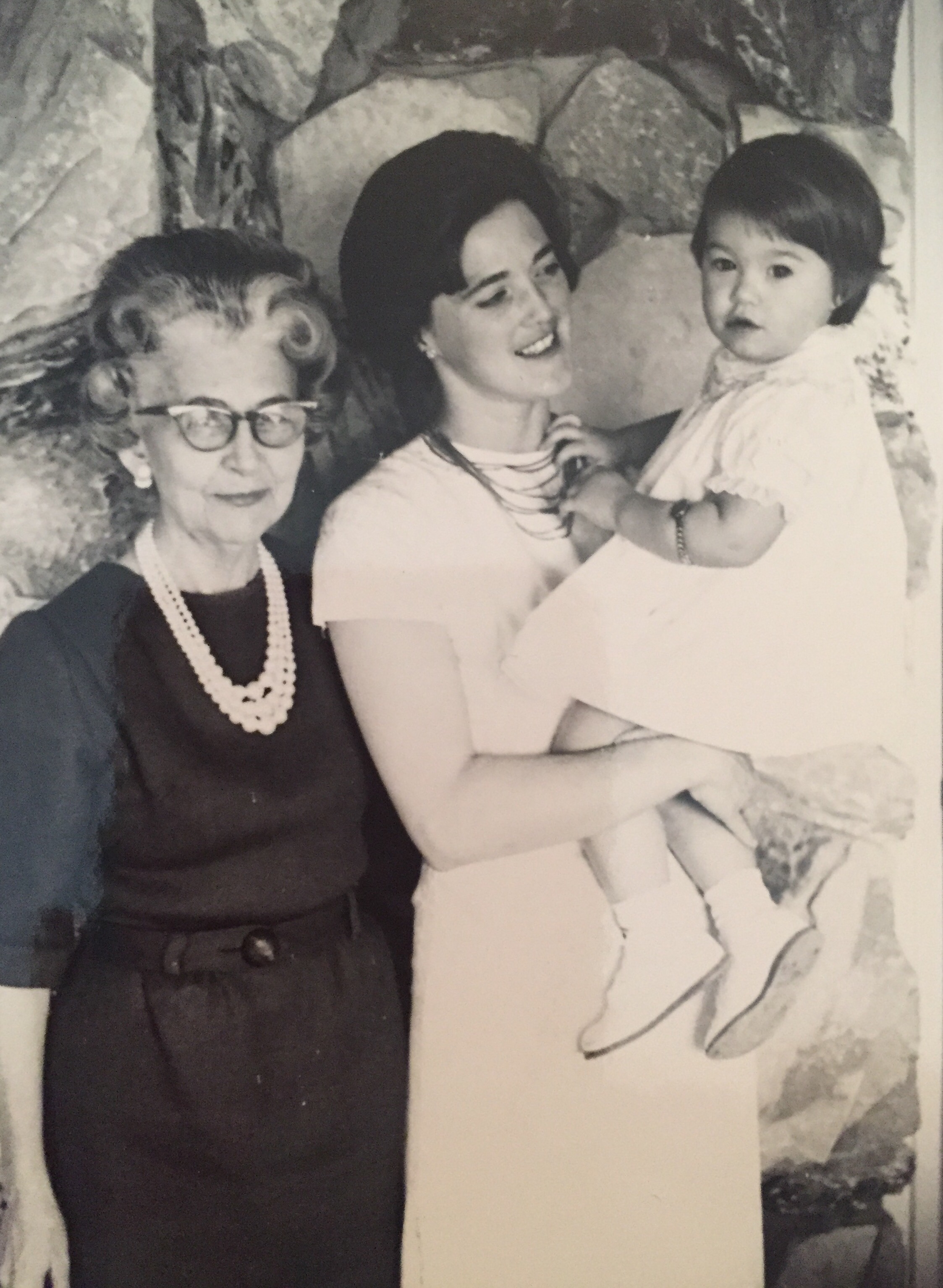
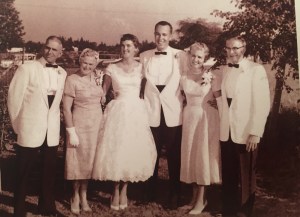
 In some ways, anyone who knew my grandmother would not immediately say she was a saint, not in the traditional “sweetness, goodness, and light” sort of way. She caught my grandfather’s eye while dancing on a table at the local tavern, or so the story goes. They married in 1925 and were married until, sixty-three years later, my grandfather died in his sleep in the bed they shared.
 And then we ate. We stuffed ourselves silly, to get ready for a day of moving rocks in the creek and hiking up Mt. Osborn and washing dishes by hand. Grandma sat at the head of the table, her little brown tea pot next to her, her eyes twinkling, her cheeks perpetually rosy. She could be sharp sometimes, but I think nothing gave her more joy than seeing her family, some of whom lived too far away, gathered at that table devouring the feast she made possible.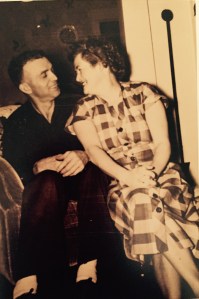

 Hold Fast to What Is Good