Saints and poets maybe

“EMILY: “Does anyone ever realize life while they live it…every, every minute?”
STAGE MANAGER: “No. Saints and poets maybe…they do some.”

– Thornton Wilder, “Our Town”

laddersThe first time I ever saw “Our Town” was in 1988, a Broadway production starring Penelope Ann Miller as Emily and Eric Stoltz as George.  I started crying during that speech of Emily’s when she comes back for a day, and I was still crying after the curtain call when the house lights came up.  It has stayed a favorite ever since.

Maybe it’s those words about realizing life, every every minute, that grow more poignant as I get older.  Maybe it’s the dawning understanding that this person will not always be a part of your life.  She might move away, or you might.  You might have a falling out, or simply grow apart.  He might turn weird.  They might die, quickly or awfully.

It’s the acknowledgement that these bones and ligaments and cells break down after a while, that they’re not made of diamonds or titanium, impenetrable and durable for eternity.

It’s the awareness that the house you grew up in feels a lot smaller if you ever go back and visit; schools do too, and churches maybe, or any place that lodged in your heart but is better served by an imperfect memory than an actual, contemporary experience.

It has taken me a while to cultivate the practice of realizing life.  I’ve never been the kind who stops and smells the roses, but I’m beginning to do just that, which is funny because ever since I turned fifty, I’ve been more and more aware of the finity of years I have left.  I hope for several decades more, but still, my days will come to an end, later rather than sooner. Yet I don’t want to rush and cram as much in as I can.  As life shortens, I slow down.

So I watch my daughter when she’s not looking.  I watch her mouth an imagined conversation and I eavesdrop on her singing in the shower.  I watch my husband, too, with his imagined conversations.  I watch his patience with children and marvel at what an amazing special ed teacher he must have been in his previous career.  I watch him preach, and I look out at the congregation and their complete engagement with him, even as he conjures up a word now and then, or makes illegal grammatical turns.

I wonder at the perfect circle the dog makes when he curls up, and the asymmetry of the spider webs that decorated the yard naturally  – artisanally and organically – for Halloween.  I marvel at how hard it is to photograph a spider web or a rainbow or a sunset, and maybe it’s better that way.

I pay attention to the color of the sky on any given day, and the color of the leaves, and whether or not they’re still a part of the branch or part of the lawn.

I look at the small things, and watch the slow things, and I seek out the big arcs too.  I wonder at the ever-so-slight curve toward justice that history is taking. Looking at yesterday, the arc seems flat. Sometimes I have to look far back, decades or centuries back, to see that curve but it is there.

I rejoice when someone gets ordained after waiting thirty years to be able to do so.  I am humbled by those who protested apartheid and eventually brought it down, all that pride falling down like some fragile Humpty Dumpty. I applaud my friends who have more stamina than I when it comes to fighting for justice every single day. I tear up reading all the Facebook posts after the Cubs win.  108 years.  That’s a long arc toward victory.

I look for what is good; I try to hold fast to what is good because that is the glue of life, the stuff that holds us together even while the tragic and oppressive might make us stronger or at least more determined.  That’s realizing life, too: realizing that not everyone has a fair shot and it may well be our jobs to change that.

But mostly I look for the poets and the saints, few of whom are published, few of whom have been martyred or accomplished miracles.

I look to Gwendolyn Brooks and Bruce Springsteen and Brian Doyle and Naomi Shihab Nye and Denise Levertov,  and the psalmist and once in a while St. Paul.  I look to memes that take my breath away.  I seek people like Nancy, a woman in my parents’ church, who weekly collected outdated food from the local grocery stores and took it out to the fields to the migrant workers, enlisting the aid of people of all ideologies and politics to help her.  I am grateful for the Tamale Ladies, those women who sit wisely and patiently outside of Whole Foods with their coolers on wheels, micro-industrialists all of them, a community of women who feed their families and ours.

Saints who dress up as teachers, and CNAs, and guys who punch a clock, all of whom realize that life is found in the small moments and not the big ones: a C instead of a D; being able to walk to the bathroom instead of using the bedpan; a whistle blown which means the shift is over and you can go back home to the people who love you.

A month of convalescence has been a gift and an invitation to realize life.  It’s also invited a discipline to focus on healing and positive input so most days I have to set the election aside.  It’s been an opportunity to acknowledge that I am loved and liked and cared for, which isn’t always easy but has proven to be wonderful and humbling.

Because “it goes so fast.  We don’t have time to look at one another” – unless we make time.

May a saint or poet cross your path today.

ladybug

For my girl

june-032You were who you were from the beginning
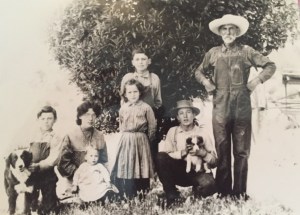
Tickling me in the womb,
Reluctant about change when it was time to be born.

But there you were.  Pink and whole and glorious and terrifying.

Now I think of you in blues and browns
And gray, your favorite color
(which I hope does not mean you’re depressed, merely independent)

Ten is turning out to be a delightful age, and I thank you for
those conversations we have as you learn to hold your own with your rather verbal parents;
for those questions you ask, like do I remember the places I was when really sad things happened like 9/11 and Sandy Hook

Watching you navigate the undulating landscape of approaching tweendom
(God help us all, literally)
And seriously, your vocabulary.  When did you learn all those words?

Your kindness to younger children
Your age-appropriate demand for fairness
Your unselfconscious beauty

Your sweetness and your sass
Your bad moods and the eye rolls you seem to have perfected
Your yearning that all your family lived nearby

Your wish that we could go away for Christmas
And that your parents had weekends off like normal parents

We’re doing all we can to help you dig those roots and sprout those wings
And as it turns out, all we really need to do is stand out of the way.

Go! Stay! Fly! Dig deep!

Words are so inadequate for love.

img_9626


Grandma Sweet Love

Sweet Love.

How my 13-year-old self rolled my eyes and huffed out a sigh whenever Grandma Merrill would call me that. Now I find myself saying those very words to my daughter.  How did I not see how much my grandma loved me?

img_9624

Grandma with her father and some of her siblings.  She’s the girl standing up.

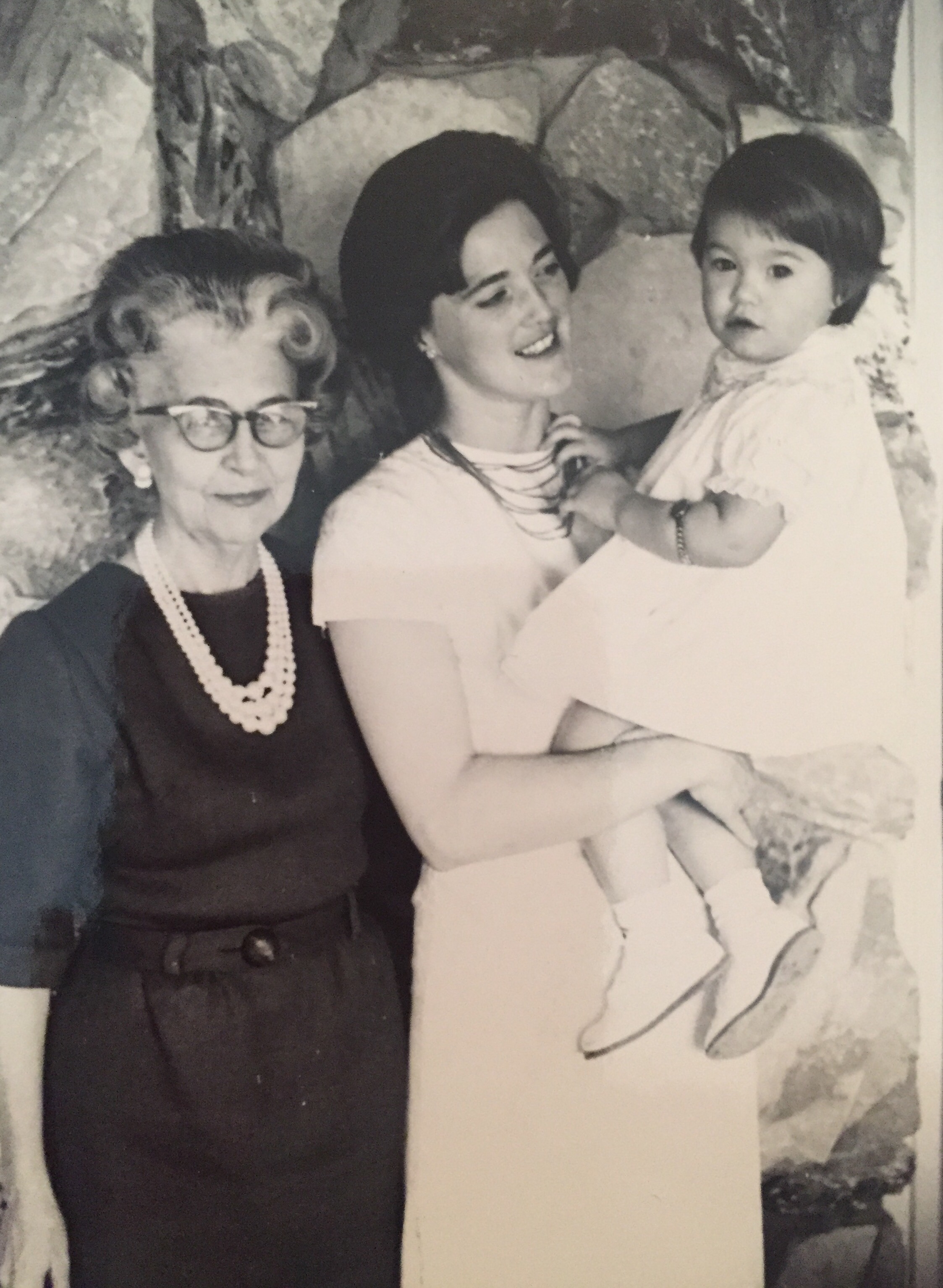
Grandma Merrill – Ann Clark Merrill – was born in January of 1900, so it was always easy to remember how old she was. She was the 11th of 12 children, the second to last daughter who remembered traveling from Utah to California by covered wagon when she was ten.

When she was born, no one owned a car. Women were not allowed to vote.  She and Grandpa raised their family in Anaheim when Disneyland was nothing more than orange groves.  She lived through World War 1, the Great Depression, World War 11, Korea and Viet Nam, the Cuban Missile Crisis, the moon landing, Watergate. She witnessed her husband’s death as he fell from a ladder, victim of a heart attack, while picking peaches.  She outlived her daughter, my aunt who died too soon. She was always cold, and even when she’d visit us in Houston in August, she would wear her cardigan.

Though never much more than five feet tall, she was a woman of no small opinions. She carried the stereotypes of her day, pronouncing them loudly in public places. She was convinced that Michael Landon utterly ruined the majesty of Laura Ingalls Wilder’s books. She had an expectation of how we were to behave, and let us know with a certain look or purse of the lips if we had not held up our end of things.

Two stories capture her for me. She often apologized to my sister and me for having passed on to us what she called “the Clark fanny.”  We were all round in that posterior area and she taught us exercises to reduce the spread. One consisted of sitting on the floor, legs straight out, scooching forward across the room. The other began in the same position. One would then raise one’s fanny of the floor (arms locked at the side with palms on the floor for support) then smash said fanny into the floor. I suppose there was a hope that all that slamming would blast the fat to bits.  It didn’t. It’s no wonder she had both hips replaced. Perhaps no wonder that I just had one replaced as well.

When I was a young adult I lived in New York and my parents were in New Jersey. Grandma came for Christmas one year, and we rented a van and went into the city for a fancy dinner. Grandma had her usual Manhattan before dinner and loved the meal. As we were finishing dessert, she caught the waiter’s attention. “Young man, do you think you might get me a cigarette?” She smoked with elan, in her orthopedic shoes, all 4’11” of her.

Pretty brazen for a woman who never learned how to drive, who did not know how to write a check when suddenly widowed in her mid -60’s.

But that was Grandma. The minute you thought you’d figured her out, the minute you thought she would scold you, out would come “sweet love.” And she meant it.

I do too.

Casting the patronus

(For those unfamiliar with J.K. Rowling’s magical world of Harry Potter, a person may cast a  Charm or spell that produces an embodied Patronus, a guardian that generally takes the shape of the animal with whom the person shares the deepest affinity.  The Patronus repels Dementors, bodiless creatures which suck joy and the soul out of their victims.  In order for this difficult spell to work, one must rely on one’s strongest and happiest memory.)

What’s your happiest memory? What gave you the most joy, the most hope?

Maybe it was the first time you fell in love
Or the last and final time, that time you met the person you ended up spending the rest of your life with

Or maybe it was the Harvest Moon that fall of your senior year

Or the lenticular cloud

Or the sky that was blue forever

That kid in the 7-11 said you were beautiful and meant it

Or they threw you a surprise party and you really were surprised

A kiss; that kiss – you remember

Learning to tie a shoe

Or make a pie crust

Or finally singing the whole of Beethoven’s 9th

Sitting in church as the light streams through the stained glass and tearing up for no reason

The Cubs this year

Mandela and the Dalai Lama

Pope Francis speaking truth to power

Getting sober, maybe

Or getting well

Five years cancer free

A grandchild

A pardon

Peace
Peace with hilarity might be best.

To have something, someone that dispels all that’s demented

Well, if I had one wish, maybe that would be it

For me

And you

And everyone

Expecto Patronum!

pine-marten-2

A pine marten, the shape my patronus would take, according to a quiz I took on Pottermore

My sainted grandmother

(Note: I think these next seven days are going to be a bit brutal, and the news and social media will not present our better angels.  So for these next seven days, I’ll write posts about something I find beautiful or happy or warm.  Just in case you need a brief respite from the election.)

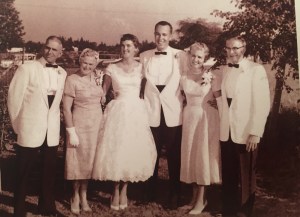
family-pix-002In some ways, anyone who knew my grandmother would not immediately say she was a saint, not in the traditional “sweetness, goodness, and light” sort of way.  She caught my grandfather’s eye while dancing on a table at the local tavern, or so the story goes.  They married in 1925 and were married until, sixty-three years later, my grandfather died in his sleep in the bed they shared.

This is one of my favorite memories about Mary Hansler.

Every summer we would visit my grandparents in Washington State, and coming from New Jersey, and then Texas, that was a big deal.  It was a big deal for them, too.  We might spend a night at their home in Tacoma, but the real goal was to get to the Ranch, the property they bought in the early 1940’s outside Mt. Rainier National Park.

We’d get up to that mountain air and know we weren’t home.  It smelled of fir trees and mint and we needed jackets to go outside; without television, the most constant sound was the creek babbling near by.  Other family members might come up while we were there, and the siblings and cousins would take turn washing all those dishes by hand.

But the real winner of the whole deal was breakfast.  My grandmother loved to fish, more than anything else in the whole world.  She would get up before dawn, grab her pole and reel, and head to the creek.  While she was gone, Grandpa would light the wood stove and start the percolator.  Grandma would come home, clean the trout, make biscuit batter.  If one of the kids was up, they’d be sent out to the raspberry patch to pick berries.

Then she’d dredge those rainbow trout in flour and lemon pepper and set the big cast iron pan on the stove, and put a slab of butter in it.  Down went the trout, so fresh they’d curl up as they cooked.  Biscuits went in the oven. Juice and milk and cream and sugar and homemade blackberry jelly went on the table.

img_9609And then we ate. We stuffed ourselves silly, to get ready for a day of moving rocks in the creek and hiking up Mt. Osborn and washing dishes by hand.  Grandma sat at the head of the table, her little brown tea pot next to her, her eyes twinkling, her cheeks perpetually rosy.  She could be sharp sometimes, but I think nothing gave her more joy than seeing her family, some of whom lived too far away, gathered at that table devouring the feast she made possible.
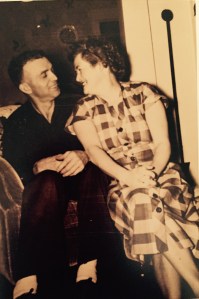
So on this All Saints day, I say a prayer of thanks for all  my grandparents, whose love formed my parents and in turn me. And I say a prayer of thanks for rainbow trout, and raspberries and blackberries, and butter, and biscuits, and family.

img_9608

The ER on a Saturday night: a glimpse of heaven or hell?

Alas, I ended up in the emergency room (or department, as they’re calling it these days) on Saturday night at 2:30 am.  Long story short, the hives that emerged out of somewhere had taken to my lips, and my husband and I worried they might make it to my tongue and throat, so off we went.  And then, because the kid was home alone (sleeping through all the drama, thank goodness) he left me there as I requested.

The guy behind the glass – which I assumed was possibly bullet-proof – was as calm and collected as can be.  Not a lot of warmth, but efficient.  The nurse who saw me in triage was as cheerful as a 7-months-pregnant woman can be at 2:45 in the morning, normal and professional, talking to me, all of which was part of her plan to assess my situation.  Then she said, “I’m going to take you to the lobby while I check on a room in the back.”

She wheeled me back to the lobby.  And what a sight it was.

A social worker was talking to a woman about anger management with children.  I did not want to know what that story was about, but since they were standing two feet in front of me, it was hard not to listen. A homeless man was stretched out over several chairs, getting a good night’s sleep in that clean, well-lighted place.  A person who did not speak English waited too, and I wondered how that was going.  In the 15 minutes I waited there, two more homeless men came in, and the guy behind the glass was as calm and collected – and not warm – with them as he was with me.  The security guy walked through a couple of times.  And then there was me, with my Angelina Jolie puffy lips and my itchy hands and knees, anxious that my throat might close and things might go south, quickly.

But they didn’t.  Instead I spent a few hours waiting, not sleeping, thinking.  Had I caught a glimpse of heaven or hell there in the lobby of the ER?  As far as I could tell, each of us who came through that door was treated equally – assessed, evaluated, left alone, tended to, cared for without a lot of warmth but cared for nonetheless.  Each of us who came through those doors needed help – for medication, for treatment, for sleep, for counsel.  Each of us left our full stories at the door – who we were, what made us laugh or dance, who were the people we counted on, what our last meal was, and with whom.  When we walked in, we were patients with a presenting condition.  That’s all.

Did I get a glimpse of hell in the lobby of the ER?  There were people whose bodies were breaking down, people who didn’t have a place to sleep or a community that would take them in, people who didn’t know how to manage their anger or their immaturity.  Were we a collection of souls in despair, cut off from the wholeness intended for us?

What I know is that I have a lot of resources and know a lot of people who would come to my aid in a heartbeat, especially my spouse, who shows his love for me every single day, even at 2:30 in the morning when I’m asking him to drive faster on our way to the hospital because I’m not sure if my shortness of breath is anaphylaxis or anxiety.  The church provides health insurance that will cover the majority of this bill that will be coming our way.  I know how to assert myself, and ask for what I need.  I am not an addict.  I have a home.  My life is good; heavenly, some of those people in the lobby might say.

When I left at 6:00 the lobby crowd had cleared.  The homeless men had found somewhere else to go.  The staff was in the middle of a shift change, so I didn’t get to thank the doctor or nurses and really, I just wanted to get home.  But I wonder where that woman went, if the conversation with the social worker helped her, helped the situation.  I wonder if the men made it to a shelter, or found a kindly person who would buy them breakfast.  I wonder if the nurses and doctors crawled into bed after their shifts ended, knowing they had done some good in the night.

Heaven or hell?  Maybe the difference between the two has less to do with judgment than with community.  For all of us fall short of the glory of God – the addict, the foreigner, the pastor with hives; all of us might deserve condemnation.

Yet all of us are beloved too, and maybe hell is nothing more than not having someone who will drive you to the ER in the middle of the night; not having someone who will take you in; not having someone who speaks that truth to you in love.

Maybe you and I will be the difference between heaven and hell for someone else.


horizon

Necessary annoyances

A few weeks ago at the dinner table, my daughter asked, “What’s something you really like but don’t respect?”  My answer was immediate.  “Nutella.”

That question has stayed with me and morphed into another: what’s something that is annoying but really necessary?  For aspiring musicians, I would say scales.  That same daughter has brought home a recorder, and let me assure you that the only way she will master this is by practice.  And if you’ve ever listened to recorder practice (or violin or any number of other instruments) you know that it can be a little… annoying.

For some, waiting is annoying.  I’m in the process of healing after surgery, and my mind is raring to go and my body is wanting to rest.  The last weeks of pregnancy can be annoying too.  Waiting for an answer to prayer can cause a mountain of crabbiness.  Good heavens, if God is omnipotent and hears all, why can’t my prayer be answered in neon lights, clear as day, within 24 hours of the request?  Poor customer service on the Almighty’s part, if you ask me.

Of late I’ve thought that democracy can be annoying too.  The process is long and sometimes excruciating, exposing our deep flaws (and maybe the deep flaws of the candidates.)  It’s a wasteful process, in terms of dollars and time and attention.  But in order for everyone to have a voice, and to have a vote, the impracticalities are necessary.  A benevolent dictator could streamline things, but I don’t think we want that.

Meetings in general may be one of the most necessary of annoyances.  In his delightful book Sum, David Eagleman explores what might happen after we die.  In one essay, he suggests that all the time we spend doing a thing will be lumped together; if we slept eight hours a night every day, and lived to be 80, then a portion of our eternity would be spending 233,600 hours sleeping – all at once.  If Eagleman is right (and I don’t think he is but it’s fun to imagine) I would spend a good 10,000 hours of eternity in meetings.  Were they worth it?

Picking up after the dog’s morning constitutional is a necessary annoyance; so is doing the dishes.  These things are annoying because I think there is something else I’d rather be doing, or it’s hard, or it’s dull.  But they’re necessary in order to have the other things I want: a clean house and neighborhood; consensus on decisions; healing; freedom.

But if you figure out the necessity of the annoying fruit fly, please let me know.


nutella


Ode to the post-surgery days

Oh wondrous scar, bumpy and red and ugly, how you have ruined bikini season for me!
And yet therein lies an escape: I shall always have an excuse to cover up.

Oh, makers of cards and floral bouquets! How my friends have supported your bottom lines in this past fortnight!  My shelves are laden with colors and comments, wishes and prayers, sentiments heartfelt and appreciated.

Oh occupational therapists and your kind! How clever you are, inventing the grabber and the walker and the cane, and that most marvelous of inventions, the sock puller-upper!  But how dastardly are those white compression socks on the unshaved leg.  Begone, constrictor! Your blood clot prevention work is done!

Oh church ladies and the moms! How generous you are with your offers of food and rides!  Our freezer shelves overfloweth with your goodness and mercy and soup!

Oh mother and mother-in-law!  How dear are your phone calls and voicemails!  I am FINE! I know how deeply you both longed to be here, yet duties at your own homes beckoned.

Oh friend Alison! What would we have done without you? Your example of how to sleep well is a lesson we needed.  Your meals, and the notebook of recipes you left behind, have sated us body and soul.  You have achieved the Mary Poppins Pinnacle of Care award, and we are still trying to devise a plot to kidnap you in perpetuity.

Oh spouse and child! How patient you are! How well you clear the floors of tripping hazards and allow my drug-addled brain to be more random than usual!

Oh new hip! May I and thou bond now and forever.

imgres

After the flood

Soon enough, this election cycle will be over. We will have winners and we will have losers. Some in the country will be relieved; others will be angry or disappointed or elated or packing up their things for Canada. The ads and robo-calls will stop. And that will be good. 

But I wonder, with all the effort that has gone into the election, if we’ve thought about what we will do when it’s over?  How will we make peace with ourselves as a nation? Or does anyone care about peace anymore?

I find Old Testament narratives helpful in giving us an arc for our own stories. For a while, all Noah and his family could think about was the flood – warning people about it, building the ark, gathering the animals, gathering the food. For a while, all they could do was endure the rain and waves and the stench. 

Then one day, it stopped raining and the clouds parted. Then, at long last, the dove came back with the olive branch, and the rainbow appeared. 

Were they ready for dry land? When they stepped onto that mountain, did their gaits shift from side to side as if still riding the waves?  Had they made any plans for after the flood, or had they been so focused on surviving they forgot there would be new life ahead?

This election cycle has felt like the flood for me. I’m just trying to get through it. I’m not pretending there’s no stench anymore. It’s dreary, this rain of ugliness and hate. But it will be over.  Soon. 

Then what?  

New life awaits us and I hope deeply that there are some who are thinking beyond November 8, because we’ll wake up on Wednesday and while we were all glued to Her and Him, other things – maybe more important things – happened. 

Babies were born and old people died. Refugees still sought hope and safety. Haiti was demolished, again. Racism is ever-present. Children in this wealthy nation – this nation which just spent billions of dollars in the election cycle- children still went home from school on Friday with no certainty of a meal until Monday. 

So if, on November 9, we’re licking our wounds or fist-bumping in victory, can we maybe not do that? Can we maybe say, the rain has stopped and the sun has come out and it’s too hot and humid for some, and some can’t get rid of their sea legs, and for others it’s perfect, but for all of us, it’s time to start healing?

I think about that dove coming back with the olive branch. I think too about a small sentence at the end of Revelation, about the tree of life, whose leaves are for the healing of the nations. (22:2)

What branches, what leaves will heal us after this self-inflicted strife?  Listening, maybe. Compromise, maybe. Changing some things, maybe. Letting go, probably. 

We can’t go back to our ante-deluvian days, rosy as we imagine them to have been. That ark has sailed. The dove will land with the branch of hope. There will be a new day. 

How shall we spend it?

Be Ye Kind

“When I was young, I admired clever people. Now that I am old, I admire kind people.”
Abraham Joshua Heschel

img_9500

Last week I had surgery for a total hip replacement. That has been a long time coming and I can now tell I have parts that move the way they are supposed to.  It’s fantastic.

In these past few days I have been absolutely overwhelmed by kindness and care from so many. At the top of that list are my husband, my child, and my friend Alison, who flew across the country to take care of all of us. And then there is the congregation, and my family, and the school moms, and pastors I’ve never met who’ve held me in their prayers, and old friends around the country who have emailed and texted and messaged, who have baked muffins and sent cards and flowers and chocolate, because they know me well.

I am grateful, too, to the hospital staff.  There they were, taking my vitals, checking in on me, telling me it would be okay when my blood pressure plummeted, putting on the helpful/unsexy white support knee socks, encouraging me through all that initial discomfort  and pain, waking me up through the night as they did their job.

You could say that all those hospital people get paid to be kind and caring. That’s true. As a pastor I know that because, in a sense, we get paid to be kind. It’s a big part of our job.

But what if it were everyone’s job to be kind? What if kindness were the true measure of our worth, and not our social status or our bank account? Wouldn’t that be something?

Kindness is there but it’s usually so small that it gets overshadowed by all that’s loud and angry and grumpy. I’m not sure kindness really works on the grand scale but I know it does on the small scale: helping someone get dressed or making a cup of tea. Bringing a magazine with Benedict Cumberbatch on the cover, and another with the newest, best restaurants. Staying away can be kind; so can stopping by.

Once I’m up and around I’m going to spend more time on the small kindnesses. I can’t fix the world. Hell, I can’t walk without a walker and good meds at this point. But I can be kind, and I will.

And you?