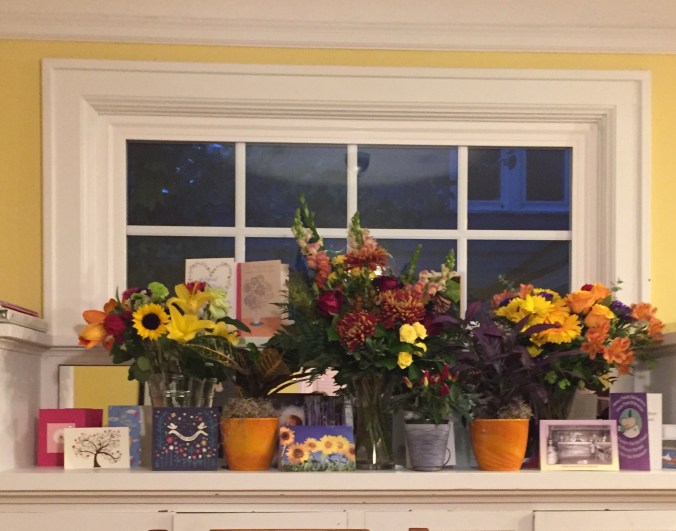
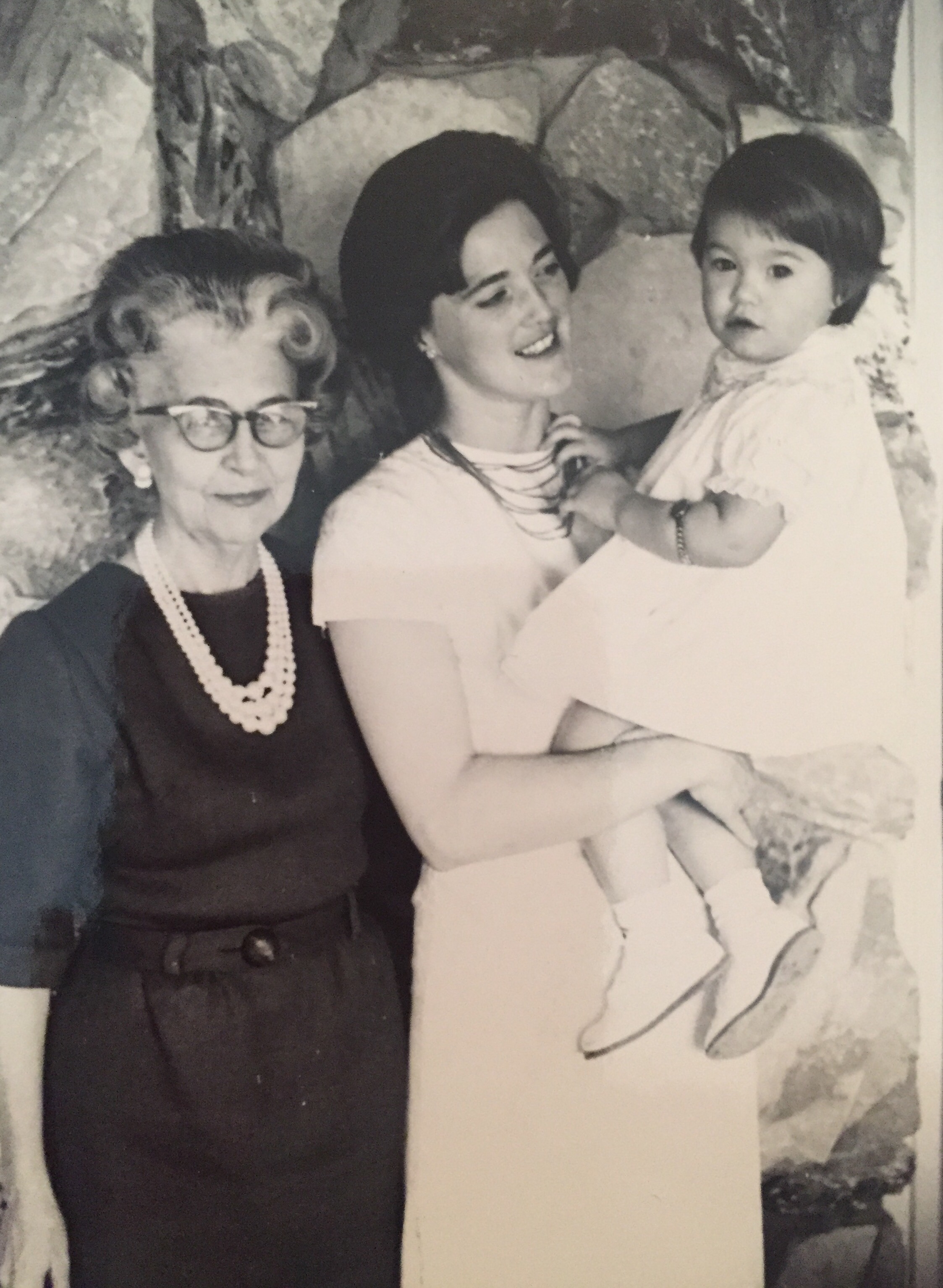
Grandma Sweet Love

Sweet Love.

How my 13-year-old self rolled my eyes and huffed out a sigh whenever Grandma Merrill would call me that. Now I find myself saying those very words to my daughter.  How did I not see how much my grandma loved me?
img_9624

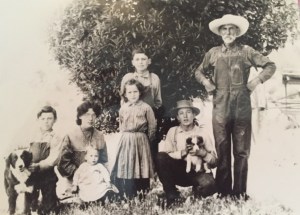
Grandma with her father and some of her siblings.  She’s the girl standing up.

Grandma Merrill – Ann Clark Merrill – was born in January of 1900, so it was always easy to remember how old she was. She was the 11th of 12 children, the second to last daughter who remembered traveling from Utah to California by covered wagon when she was ten.

When she was born, no one owned a car. Women were not allowed to vote.  She and Grandpa raised their family in Anaheim when Disneyland was nothing more than orange groves.  She lived through World War 1, the Great Depression, World War 11, Korea and Viet Nam, the Cuban Missile Crisis, the moon landing, Watergate. She witnessed her husband’s death as he fell from a ladder, victim of a heart attack, while picking peaches.  She outlived her daughter, my aunt who died too soon. She was always cold, and even when she’d visit us in Houston in August, she would wear her cardigan.

Though never much more than five feet tall, she was a woman of no small opinions. She carried the stereotypes of her day, pronouncing them loudly in public places. She was convinced that Michael Landon utterly ruined the majesty of Laura Ingalls Wilder’s books. She had an expectation of how we were to behave, and let us know with a certain look or purse of the lips if we had not held up our end of things.

Two stories capture her for me. She often apologized to my sister and me for having passed on to us what she called “the Clark fanny.”  We were all round in that posterior area and she taught us exercises to reduce the spread. One consisted of sitting on the floor, legs straight out, scooching forward across the room. The other began in the same position. One would then raise one’s fanny of the floor (arms locked at the side with palms on the floor for support) then smash said fanny into the floor. I suppose there was a hope that all that slamming would blast the fat to bits.  It didn’t. It’s no wonder she had both hips replaced. Perhaps no wonder that I just had one replaced as well.

When I was a young adult I lived in New York and my parents were in New Jersey. Grandma came for Christmas one year, and we rented a van and went into the city for a fancy dinner. Grandma had her usual Manhattan before dinner and loved the meal. As we were finishing dessert, she caught the waiter’s attention. “Young man, do you think you might get me a cigarette?” She smoked with elan, in her orthopedic shoes, all 4’11” of her.

Pretty brazen for a woman who never learned how to drive, who did not know how to write a check when suddenly widowed in her mid -60’s.

But that was Grandma. The minute you thought you’d figured her out, the minute you thought she would scold you, out would come “sweet love.” And she meant it.

I do too.

My sainted grandmother

(Note: I think these next seven days are going to be a bit brutal, and the news and social media will not present our better angels.  So for these next seven days, I’ll write posts about something I find beautiful or happy or warm.  Just in case you need a brief respite from the election.)

family-pix-002In some ways, anyone who knew my grandmother would not immediately say she was a saint, not in the traditional “sweetness, goodness, and light” sort of way.  She caught my grandfather’s eye while dancing on a table at the local tavern, or so the story goes.  They married in 1925 and were married until, sixty-three years later, my grandfather died in his sleep in the bed they shared.

This is one of my favorite memories about Mary Hansler.

Every summer we would visit my grandparents in Washington State, and coming from New Jersey, and then Texas, that was a big deal.  It was a big deal for them, too.  We might spend a night at their home in Tacoma, but the real goal was to get to the Ranch, the property they bought in the early 1940’s outside Mt. Rainier National Park.

We’d get up to that mountain air and know we weren’t home.  It smelled of fir trees and mint and we needed jackets to go outside; without television, the most constant sound was the creek babbling near by.  Other family members might come up while we were there, and the siblings and cousins would take turn washing all those dishes by hand.

But the real winner of the whole deal was breakfast.  My grandmother loved to fish, more than anything else in the whole world.  She would get up before dawn, grab her pole and reel, and head to the creek.  While she was gone, Grandpa would light the wood stove and start the percolator.  Grandma would come home, clean the trout, make biscuit batter.  If one of the kids was up, they’d be sent out to the raspberry patch to pick berries.

Then she’d dredge those rainbow trout in flour and lemon pepper and set the big cast iron pan on the stove, and put a slab of butter in it.  Down went the trout, so fresh they’d curl up as they cooked.  Biscuits went in the oven. Juice and milk and cream and sugar and homemade blackberry jelly went on the table.

img_9609And then we ate. We stuffed ourselves silly, to get ready for a day of moving rocks in the creek and hiking up Mt. Osborn and washing dishes by hand.  Grandma sat at the head of the table, her little brown tea pot next to her, her eyes twinkling, her cheeks perpetually rosy.  She could be sharp sometimes, but I think nothing gave her more joy than seeing her family, some of whom lived too far away, gathered at that table devouring the feast she made possible.
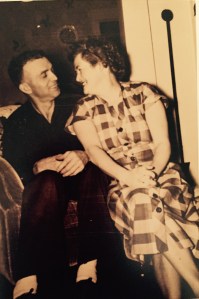
So on this All Saints day, I say a prayer of thanks for all  my grandparents, whose love formed my parents and in turn me. And I say a prayer of thanks for rainbow trout, and raspberries and blackberries, and butter, and biscuits, and family.

img_9608

The ER on a Saturday night: a glimpse of heaven or hell?

Alas, I ended up in the emergency room (or department, as they’re calling it these days) on Saturday night at 2:30 am.  Long story short, the hives that emerged out of somewhere had taken to my lips, and my husband and I worried they might make it to my tongue and throat, so off we went.  And then, because the kid was home alone (sleeping through all the drama, thank goodness) he left me there as I requested.

The guy behind the glass – which I assumed was possibly bullet-proof – was as calm and collected as can be.  Not a lot of warmth, but efficient.  The nurse who saw me in triage was as cheerful as a 7-months-pregnant woman can be at 2:45 in the morning, normal and professional, talking to me, all of which was part of her plan to assess my situation.  Then she said, “I’m going to take you to the lobby while I check on a room in the back.”

She wheeled me back to the lobby.  And what a sight it was.

A social worker was talking to a woman about anger management with children.  I did not want to know what that story was about, but since they were standing two feet in front of me, it was hard not to listen. A homeless man was stretched out over several chairs, getting a good night’s sleep in that clean, well-lighted place.  A person who did not speak English waited too, and I wondered how that was going.  In the 15 minutes I waited there, two more homeless men came in, and the guy behind the glass was as calm and collected – and not warm – with them as he was with me.  The security guy walked through a couple of times.  And then there was me, with my Angelina Jolie puffy lips and my itchy hands and knees, anxious that my throat might close and things might go south, quickly.

But they didn’t.  Instead I spent a few hours waiting, not sleeping, thinking.  Had I caught a glimpse of heaven or hell there in the lobby of the ER?  As far as I could tell, each of us who came through that door was treated equally – assessed, evaluated, left alone, tended to, cared for without a lot of warmth but cared for nonetheless.  Each of us who came through those doors needed help – for medication, for treatment, for sleep, for counsel.  Each of us left our full stories at the door – who we were, what made us laugh or dance, who were the people we counted on, what our last meal was, and with whom.  When we walked in, we were patients with a presenting condition.  That’s all.

Did I get a glimpse of hell in the lobby of the ER?  There were people whose bodies were breaking down, people who didn’t have a place to sleep or a community that would take them in, people who didn’t know how to manage their anger or their immaturity.  Were we a collection of souls in despair, cut off from the wholeness intended for us?

What I know is that I have a lot of resources and know a lot of people who would come to my aid in a heartbeat, especially my spouse, who shows his love for me every single day, even at 2:30 in the morning when I’m asking him to drive faster on our way to the hospital because I’m not sure if my shortness of breath is anaphylaxis or anxiety.  The church provides health insurance that will cover the majority of this bill that will be coming our way.  I know how to assert myself, and ask for what I need.  I am not an addict.  I have a home.  My life is good; heavenly, some of those people in the lobby might say.

When I left at 6:00 the lobby crowd had cleared.  The homeless men had found somewhere else to go.  The staff was in the middle of a shift change, so I didn’t get to thank the doctor or nurses and really, I just wanted to get home.  But I wonder where that woman went, if the conversation with the social worker helped her, helped the situation.  I wonder if the men made it to a shelter, or found a kindly person who would buy them breakfast.  I wonder if the nurses and doctors crawled into bed after their shifts ended, knowing they had done some good in the night.

Heaven or hell?  Maybe the difference between the two has less to do with judgment than with community.  For all of us fall short of the glory of God – the addict, the foreigner, the pastor with hives; all of us might deserve condemnation.

Yet all of us are beloved too, and maybe hell is nothing more than not having someone who will drive you to the ER in the middle of the night; not having someone who will take you in; not having someone who speaks that truth to you in love.

Maybe you and I will be the difference between heaven and hell for someone else.


horizon

Necessary annoyances

A few weeks ago at the dinner table, my daughter asked, “What’s something you really like but don’t respect?”  My answer was immediate.  “Nutella.”

That question has stayed with me and morphed into another: what’s something that is annoying but really necessary?  For aspiring musicians, I would say scales.  That same daughter has brought home a recorder, and let me assure you that the only way she will master this is by practice.  And if you’ve ever listened to recorder practice (or violin or any number of other instruments) you know that it can be a little… annoying.

For some, waiting is annoying.  I’m in the process of healing after surgery, and my mind is raring to go and my body is wanting to rest.  The last weeks of pregnancy can be annoying too.  Waiting for an answer to prayer can cause a mountain of crabbiness.  Good heavens, if God is omnipotent and hears all, why can’t my prayer be answered in neon lights, clear as day, within 24 hours of the request?  Poor customer service on the Almighty’s part, if you ask me.

Of late I’ve thought that democracy can be annoying too.  The process is long and sometimes excruciating, exposing our deep flaws (and maybe the deep flaws of the candidates.)  It’s a wasteful process, in terms of dollars and time and attention.  But in order for everyone to have a voice, and to have a vote, the impracticalities are necessary.  A benevolent dictator could streamline things, but I don’t think we want that.

Meetings in general may be one of the most necessary of annoyances.  In his delightful book Sum, David Eagleman explores what might happen after we die.  In one essay, he suggests that all the time we spend doing a thing will be lumped together; if we slept eight hours a night every day, and lived to be 80, then a portion of our eternity would be spending 233,600 hours sleeping – all at once.  If Eagleman is right (and I don’t think he is but it’s fun to imagine) I would spend a good 10,000 hours of eternity in meetings.  Were they worth it?

Picking up after the dog’s morning constitutional is a necessary annoyance; so is doing the dishes.  These things are annoying because I think there is something else I’d rather be doing, or it’s hard, or it’s dull.  But they’re necessary in order to have the other things I want: a clean house and neighborhood; consensus on decisions; healing; freedom.

But if you figure out the necessity of the annoying fruit fly, please let me know.


nutella


Be Ye Kind

“When I was young, I admired clever people. Now that I am old, I admire kind people.”
Abraham Joshua Heschel

img_9500

Last week I had surgery for a total hip replacement. That has been a long time coming and I can now tell I have parts that move the way they are supposed to.  It’s fantastic.

In these past few days I have been absolutely overwhelmed by kindness and care from so many. At the top of that list are my husband, my child, and my friend Alison, who flew across the country to take care of all of us. And then there is the congregation, and my family, and the school moms, and pastors I’ve never met who’ve held me in their prayers, and old friends around the country who have emailed and texted and messaged, who have baked muffins and sent cards and flowers and chocolate, because they know me well.

I am grateful, too, to the hospital staff.  There they were, taking my vitals, checking in on me, telling me it would be okay when my blood pressure plummeted, putting on the helpful/unsexy white support knee socks, encouraging me through all that initial discomfort  and pain, waking me up through the night as they did their job.

You could say that all those hospital people get paid to be kind and caring. That’s true. As a pastor I know that because, in a sense, we get paid to be kind. It’s a big part of our job.

But what if it were everyone’s job to be kind? What if kindness were the true measure of our worth, and not our social status or our bank account? Wouldn’t that be something?

Kindness is there but it’s usually so small that it gets overshadowed by all that’s loud and angry and grumpy. I’m not sure kindness really works on the grand scale but I know it does on the small scale: helping someone get dressed or making a cup of tea. Bringing a magazine with Benedict Cumberbatch on the cover, and another with the newest, best restaurants. Staying away can be kind; so can stopping by.

Once I’m up and around I’m going to spend more time on the small kindnesses. I can’t fix the world. Hell, I can’t walk without a walker and good meds at this point. But I can be kind, and I will.

And you?

Foul-weather friends

If we weren’t in the midst of a hellish travail, it would be interesting to pay attention to who shows up when we’re in some sort of a crisis.

For as long as I can remember I’ve known the phrase ‘fair-weather friend’ – the kind of person who’s there when life is sunny and you’re at the top of your game, the kind of person who can’t be around tears or silent grief, shame, or failure of any kind.

But I’ve known people who are foul-weather friends. I won’t hear from them for months or years, but if there’s a crisis, they are there with a phone call or email or casserole.  And somehow they know just what to do – how to be present without being pushy, just when to express the gallows humor, to bring the big box of kleenex and not the little travel-size pack.

The best sort of friend to be, I suppose, is the all-weather friend, the one who’s there in that wedding vow sort of way – in sickness and in health, in plenty and in want.

One of the worst moments of my life (so awful I will not recall it here) came when I was away from friends but there was a handful that knew I was facing a terrible difficulty.  They didn’t call me, but when I called them, they picked up.  When I whispered the plea ‘please pray for me’ I knew they would.  I got through it, in part because I was supported by these people invisibly tied to my heart in good times and bad.  They showed up again, months later, for one of the happiest moment of my life.

If it were one of those forced-choice quizzes, would I rather be a fair-weather friend or a foul-weather one?

Truth be told, a foul-weather one.  Friendship takes time and energy and if I’m going to spend some of that time or energy, I’d rather spend it with someone in a bind rather than sitting back and sipping mojitos on some exotic beach with a friend who just won the lottery.

But if I were standing in front of the pearly gates and St. Peter were checking my account, would I be found faithful in my friendship?  Would he say, “There is joy abundant and you missed out on that”?  Or would he say, “You showed up when it was hard and the dawn was far off”?

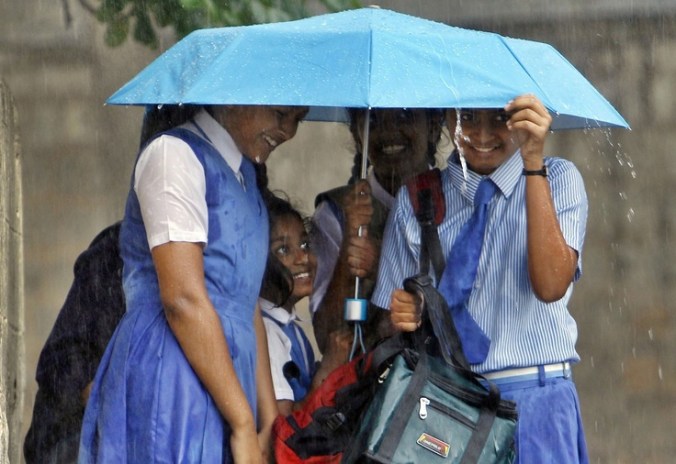
I’ve realized the gift of so many kinds of friendship lately, and I’ll take what I get, which is folks who show up in the rain, and folks who show up in the sunshine, and folks who bring umbrellas, and folks who bring casseroles.

May I do the same.

foul-weather

Leaving a garden

Every morning as I walk the dog I pass by my neighbors’ garden, which is beautiful.  I think it took them a long time to get it to the place it is today, filled with beauty and grace and some whimsy.  They’ve lived there over twenty years, and I imagine they’ve been working on the garden for that long.  It’s a gift to me, and to the neighborhood.

When I was young, my grandparents lived in Tacoma.  The railroad tracks ran a few blocks away from their back yard, and when we spent the night there, we heard the trains go by in the early hours of the morning.  They lived next door to a diner, and when we’d get off the plane and drive to their house, we’d stop for lunch there and get hamburgers and wild blackberry milkshakes.  It was heaven.

My grandparents had gardens there, too – my grandmother grew roses and my grandfather had a vegetable garden.  Tried as he did, he never could get me to like lima beans, but he’d delight us with funny-shaped carrots and new peas.  Standing in the garden you could see Mt. Rainier in the distance, haughty and majestic and cold, such a contradiction from my grandparents’ sweet, small plots.

My grandfather died in that house.  A few years later, as the neighborhood changed and the diner became a massage parlor, my grandmother left.  The gardens went fallow.  The house was sold and eventually some owner tore it down – it and the massage parlor – and now a strip mall occupies that space.

I miss the house, with the view from the upstairs window of the drive-in far away, and the llama rug my uncle brought back from Venezuela.  I miss the dog run and the old black Lab Lady who lived there.  I miss the shed attached to the garage, full of Grandma’s canning.  I miss her roses, and I even miss his lima beans.  I miss them more, of course, but it has been a long time since they died.

I think about what it must have been like for my grandmother to leave that place and that garden.  I think about all those people who spend decades planting seeds, and tending to the plants, pruning and weeding and sometimes throwing something out and sometimes starting all over again.  A garden is so personal, such an effort of labor and imagination and hope.  And patience.  I can’t imagine what it’s like to leave such a labor of love.

I wonder if God was sad when Adam and Eve left that garden, sad that there was no one there to tend it anymore, or simply to appreciate it.  It’s such a lovely founding myth, the Eden story.  We know how Adam and Eve fared; they made it out alive and started over, but life was different after they left the garden.

It always is.

eden

Leaving the spiderwebs

My family has an ongoing internal disagreement about the spiderwebs on the back deck.  I leave them be.  My daughter and my husband like to take them down.  The argument goes something like this:

Me:  “But they’re so beautiful, and the spider worked so hard on it.”

My daughter:  “Yeah, but there’s still a spider.”

Me:  “But they catch the flies.”

My daughter: “I’ve never seen a single fly in one of them.”

Me:  “They’re not bothering us.”

My husband: [wise silence]

I really do think the spiderwebs are beautiful – amazing, even.  That some tiny creature can create, simply by dropping liquid silk into nothing but air and hope, a web of fragile beauty and functional design astounds me.  I can barely make a Zen doodle.  And then, if you catch a web at just the right time in the morning, when the slant light hits it and refracts on the pearls of dew?  Perfection.

Plus I like spiders.  Blame it on E.B. White, blame it on my dislike of other bugs.  I never kill a spider in the corner of a room or in the bathtub.  I’ll chase it away, but I never kill it.  They are artists who perform a necessary function.  Sure, some of them might bite you and a few could kill you, but I have this fantasy that because I don’t kill them or destroy their webs they know I’m on their side so they won’t hurt.

Ah, the webs of deceit we weave.

But maybe it’s all masking my desire that innocents not be hurt, and their labors not mocked.  When my child was in second grade, the teacher assigned the class a project of making a pig’s face out of a paper plate.  My daughter did.  But she was a chatty girl, and when she did not stop talking after being asked more than once, the teacher threw her pig in the trash as punishment.  I was appalled.  By all means, I told the teacher, have a consequence.  But asking my child to create something and then throwing it in the trash?  What kind of message are you sending?  My relationship with that teacher, who really was a good teacher in all other respects, was tense for the rest of the year.

I admire those who are called to protect the vulnerable.  It’s an endless task, as there are always those others who want to take advantage of the innocent or just be plain mean to them.  So I respond by leaving the webs be, and offering a word of thanks for that short-lived web.  Soon enough the wind will blow the web away and the spider will start all over again.

The vulnerable and fragile we will always have with us.

spider

Summer Vacation: Instagramming the Gates of Hell

Beneath the wild beauty of Yellowstone National Park lives a supervolcano,  a cauldron of hellish gasses and liquid rock formed, in part, by the struggle between massive tectonic plates that vie for space under what we call Wyoming.  If that volcano were ever to blow – and it could – it would be the end of the world.  The volume of ash that would enter the atmosphere would cause climate change that would be catastrophic.

Now the odds of that supervolcano blowing in my lifetime or my child’s lifetime are pretty slim, but that gave little comfort to my daughter as we visited the park on our summer vacation.

“Mom, if the volcano blows, where is the safest place to be?”

“Well, honey, I think you’d want to be right in the middle, at the center of it, so you’d die quickly and not have to go through the onslaught of another ice age, panic, mayhem, and all of that.”

So there we were, on a beautiful August day, blithely taking pictures with our phones of the gorgeous canyon that belies the hell beneath it.  Later that day as I posted pictures on Instagram, I wondered about that – is it hubris to do something as mundance as taking a picture of a place that could cause the end of the world?  Do we realize how fleeting life is, and how powerless we are?

On this same vacation, we’ve been watching the Olympics at night.  Every one of those athletes is amazing, and the irony of snacking in a comfy chair while watching feats of strength, speed, and agility has not been lost on me.  It was last night as the women gymnasts competed on the vault and uneven bars, throwing their tiny, solid bodies into the air in crazy moves, that I thought of Instagramming the gates of hell.

Perhaps it is both hubris and courage that allows us to pull out our phones and take pictures of a volcano, and to train and work and compete as we push the limits of what the human body can do.  My family watched those gymnasts in awe – how can they do that?  Beyond the physicality of it, how do they summon the courage to bounce backward up onto a platform?

Vacation has been a time to marvel at the world in its creative, violent beauty; a time to marvel at those people who push the boundaries of human possibility.  So maybe, those two things will merge some day before the volcano blows: courage will meet catastrophe.  Who knows what will happen?


IMG_8998


Mortal, after all

Yesterday I led a memorial service, a celebration of life, for a two-day old.  It was excruciating, as you might imagine.  It was also stunning and beautiful, as you might not imagine.  Pain was real and evident, but more present was the love that surrounded these two parents and these three grandparents.

That service came on the tail of four other deaths in our congregation, all women in their 90’s.  Those deaths were sad, but not unexpected, and really, not tragic. My colleague’s husband finally succumbed to the cancer he fought bravely and vehemently.  That was awful, too.

A long-time friend of mine – would I call him a friend? – lost his battle to ALS.  We went to junior high and high school and college together, but we didn’t run in the same circles and we never really hung out, except for long drives across Texas to out-of-town debate tournaments.  Still, his death has hit me hard.  Maybe I’m facing my own mortality.  Maybe I’m owning up to the fact that we are mortal, after all.

Add to that the violent deaths in St. Paul and Baton Rouge and Dallas, and Baghdad and Nice; aging parents and more cancer and random car accidents and plane crashes: mortality is announcing itself, loudly and proudly, and I want none of it.

My daughter is fed up too, maybe not with death but with the professional call of her parents to deal with death and dying.  It feels like all the time to her.  Evidently there is some sound I make, some short expulsion of air, and a way I say “oh no” that makes her look up from her book or computer screen and ask me, “Who died this time?”

That’s a question I never asked my parents when I was ten.  My grandparents were alive and healthy, as were my friends and their parents.  No one I knew had cancer; no one I knew got shot.  A cousin I didn’t know died in a motorcycle accident, but that’s it.

Why do we have to die?  I know the answer to that, and I don’t know the answer to that.  I also know that getting each other through the grief of death while we’re still this side of the grave is one of the highest callings we have, which doesn’t mean that it’s all pretty and lovely and tied up neatly with a sweet little bow.  Grieving and sitting with the grieving is most often awkward and inconvenient, messy, full of swear words and uncomfortable silence and wadded-up tissues and casseroles that will be reheated for the week.

But then sometimes the light breaks in, through the stained glass window of a sanctuary, or across the row of crosses at a cemetery, or glistening on the water where ashes are scattered.  Sometimes laughter sneaks in, in gallows humor or a hilarious memory. Sometimes some a minuscule thing happens, and the grief is eased an iota, and the future shimmers for a moment with hope – a mirage in the desert of sadness while we wait for the real oasis.

img_8401