Easter Thoughts, A Little Early

This year, I will be leading the Vespers service at a local retirement community on Easter Sunday, and as is my wont, I started looking through old Easter sermons that could be brushed up a little for this upcoming occasion. As I went through them, I kept tearing up. Why? Happily, not because they were terrible, but because they offered a word of hope, and I hadn’t realized how much I needed to hear about hope, even from myself a few years back. It was hard to read the ones I offered during the pandemic, from my home or from an empty sanctuary, remembering the uncertainty of that time and the losses upon losses.

And though Easter is still shy of two weeks away, I offer the conclusion to one of them, if you’re a preacher in need of some hope or joy. I don’t claim that any of my words would even win a preaching prize (which is really a silly thing, after all) but sometimes you need a little bump to get you going.

In the meantime, Lent is still with us, and given all that’s happening, it may feel as though Lent is still with us after April 21. Even so, God always gets the last word, and Love always wins. Here you go.

Joy is the jitterbug meeting the waltz, and Rembrandt and Dr. Seuss comparing notes, and hope disguised as a gardener. And you? And I? What is our joy?

Joy is when the rains cease
Joy is when the baby squeals
Joy is the march
Joy is the old friend who shows up
Joy is the peace accord
Joy is the casserole
Joy is the grave cloths neatly folded away
Joy is the mountain decked in so much snow
Joy is the full table with everyone there
Joy is the story told again and again
Joy is the joke with life as the punchline
Joy is the fern unfurling
Joy is the empty tomb
Joy is the daphne and lilac and lavender
Joy is the gift that will not be taken back
Joy is life, and more life, and life after that.
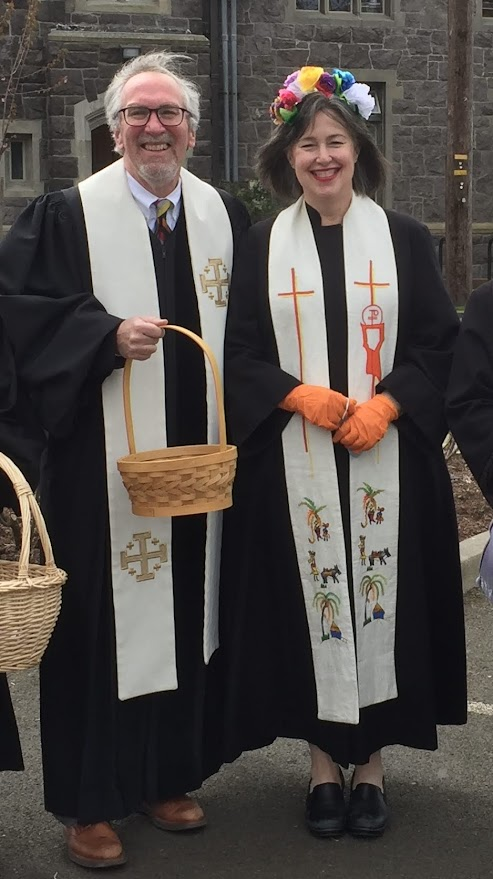
My husband and I on Easter Sunday, 2021, getting ready to celebrate drive-through communion in the church parking lot.

Trees and other things

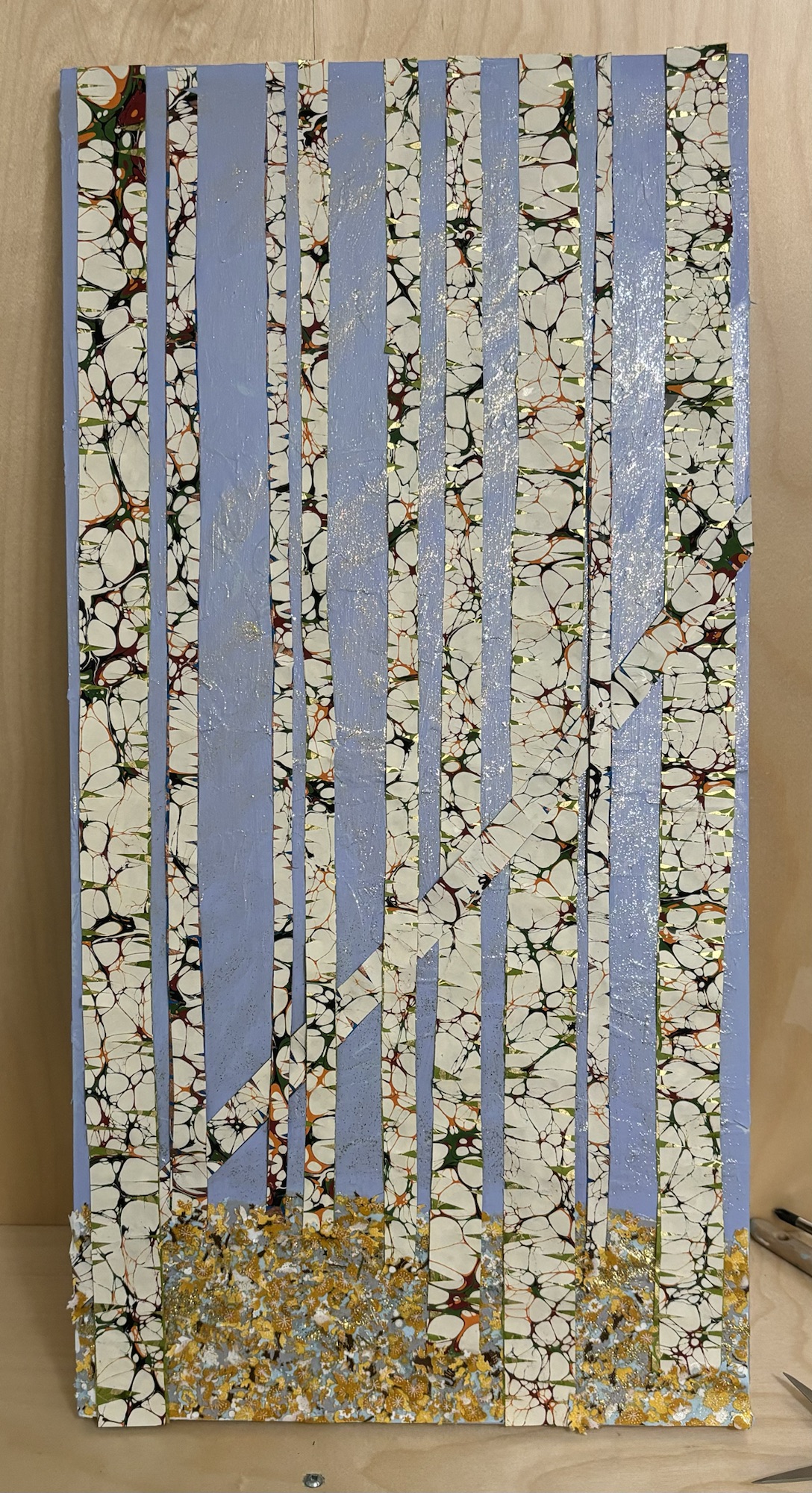
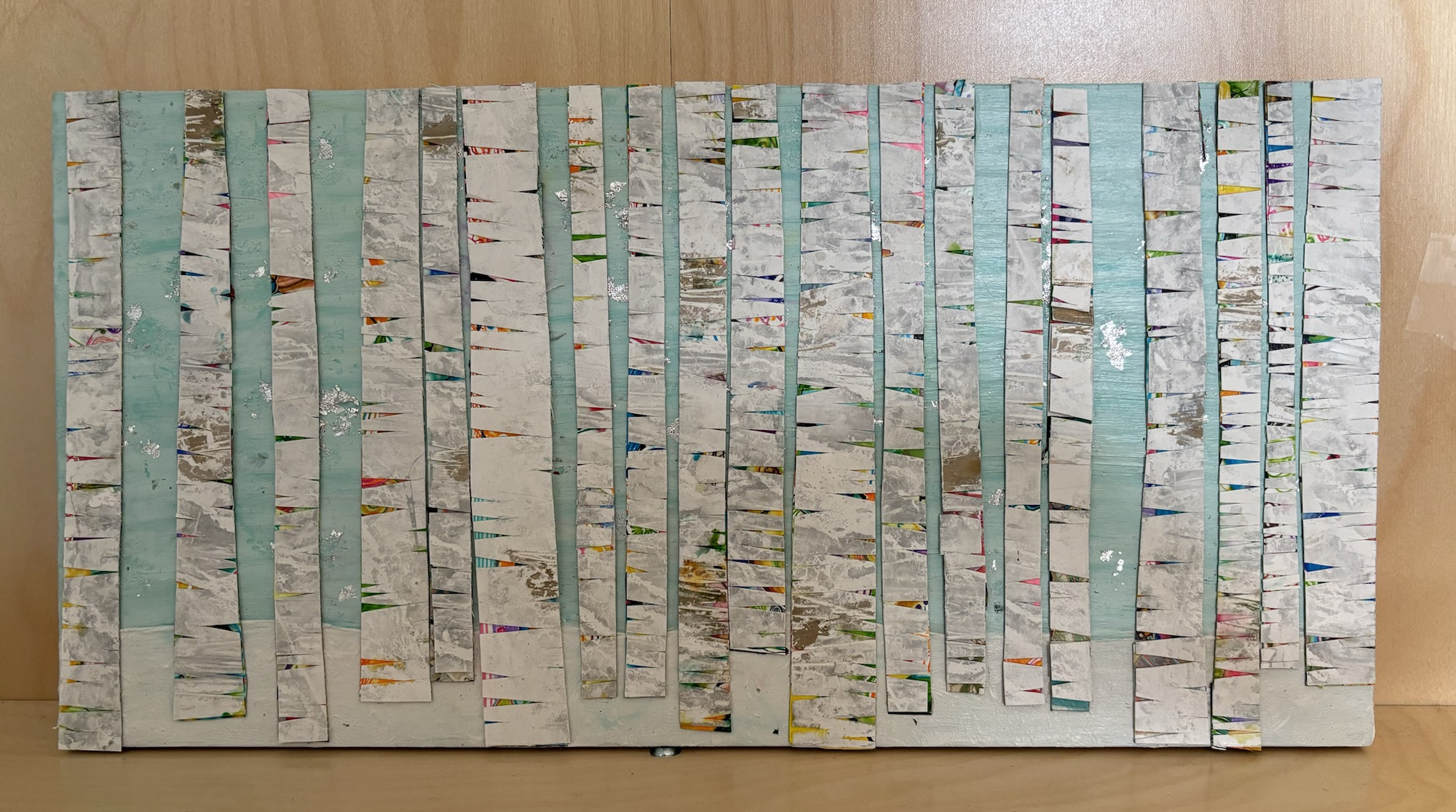
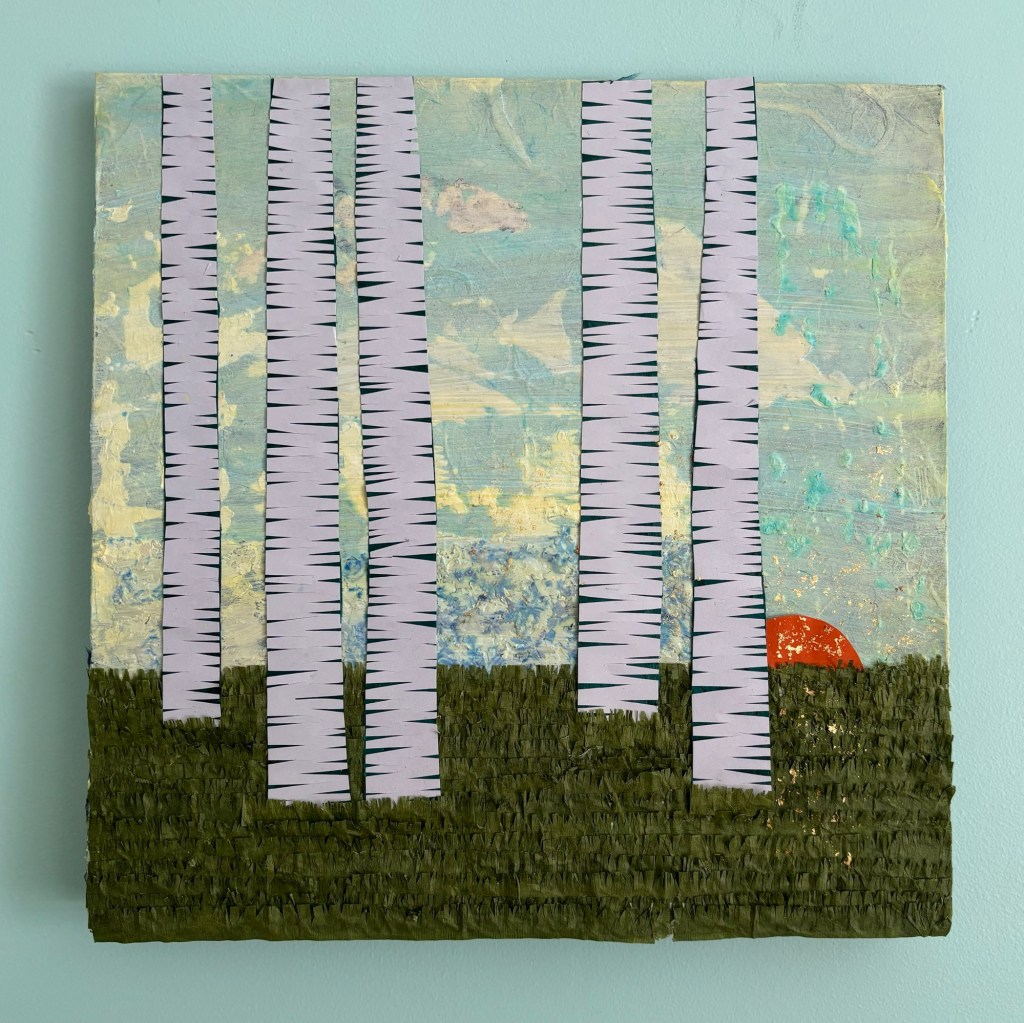
I’ve been on a tree kick lately, art-wise. I think they’re birches, but they may be aspens. They’re not exactly accurate.

I was inspired to make my own trees (paper collage) after seeing the beautiful liturgical banners my friend Nanette created of birches – or aspen – after our clergy group met at Rocky Mountain National Park, where the dining room is decorated with images of aspen (probably not birches.)

To be honest, usually my art reflects something that’s going on inside, so as I’m currently working on my fourth tree picture, I’ve wondered why trees are speaking to me right now, beyond the inspiration from my friend.

A few years ago I had the pleasure of reading The Hidden Life of Trees: What They Feel, How They Communicate by Peter Wohlleben. He opened my eyes to a world I had never known and I was struck by the way trees not only live in community, but thrive in community. As Tim Flannery writes in the foreward, “…the most astonishing thing about trees is how social they are. The trees in a forest care for each other, sometimes even going so far as to nourish the stump of a felled tree for centuries after it was cut down by feeding it sugars and other nutrients, and so keeping it alive. Only some stumps are thus nourished. Perhaps they are the parents of the trees that make up the forest of today…. The reason trees share food and communicate is that they need each other. It takes a forest to create a microclimate suitable for tree growth and sustenance. So it’s not surprising that isolated trees have far shorter lives than those living connected together in forests.”

Then I understood my current fascination with trees. Community is not only fun, and wanted, it is utterly essential for our thriving. I write this three days after the presidential election, at a time when my communities, my circles, are feeling as though they have been clear cut. Devastation. Death. Disregard. All in the name of profit or greed or power. A tree cares about none of those things. I would say a tree is amoral, except that we assign moral value to community and trees are communal beings.

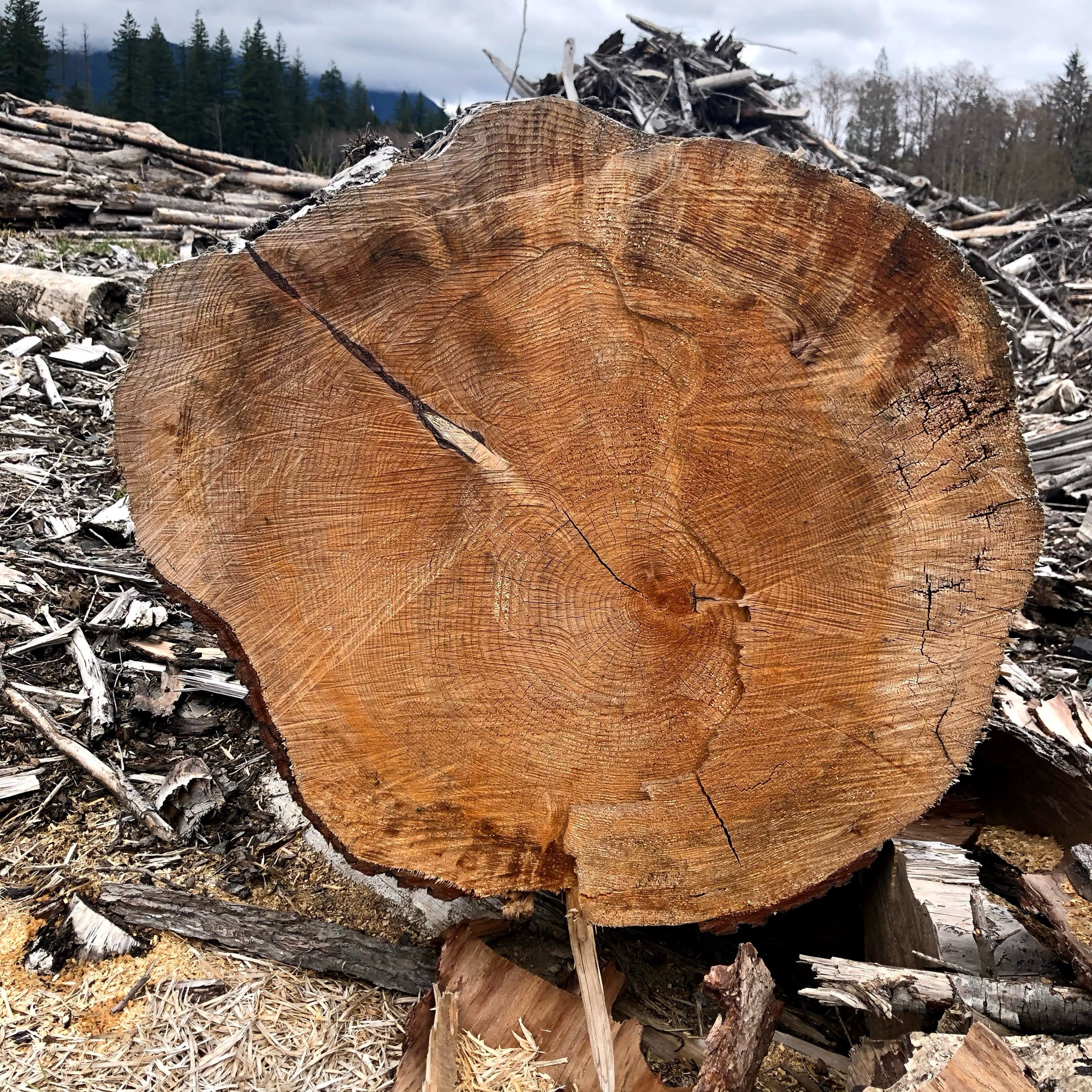
The other thing that struck me about trees is that they have muscle memory of a sorts, wood memory. We see it in the rings they make after they have died or we have chopped them down. We can tell what sort of year it was by the width of the ring – a year of growth, maybe, or a year of drought or some other calamity.

img_1315_original-1

If you cut us in half, right above the belly-button, you won’t see rings. But we carry muscle memory, and gray hairs, and wrinkles in our brow that won’t go away. We carry bags under our eyes, and extra flesh around our middle after indulging in necessary comfort food and drink. We carry stressed-out hearts, and headaches that won’t go away, and are not all that surprised when our blood pressure, like our weight or our bad cholesterol, goes up and up.

Well, then, what are we to do. A sentence, not a question, because I’m not sure anyone is really in a place to answer that yet, and I have a sinking suspicion that any answer would be premature. So for now, I will be like a tree. I will give thanks for my many communities, and however I can, be a resource, a friend, a helpmeet to all those. I hope that my community grows larger, like a forest that is untamed.

If you can, in the next few days, go wander among the trees for a bit. Breathe deeply. Listen to them. Smell their mid-autumn scent. Kick up their leaves. Be inspired. Be like a tree, and take care of your forest.

img_2577-1