After the flood

Soon enough, this election cycle will be over. We will have winners and we will have losers. Some in the country will be relieved; others will be angry or disappointed or elated or packing up their things for Canada. The ads and robo-calls will stop. And that will be good. 

But I wonder, with all the effort that has gone into the election, if we’ve thought about what we will do when it’s over?  How will we make peace with ourselves as a nation? Or does anyone care about peace anymore?

I find Old Testament narratives helpful in giving us an arc for our own stories. For a while, all Noah and his family could think about was the flood – warning people about it, building the ark, gathering the animals, gathering the food. For a while, all they could do was endure the rain and waves and the stench. 

Then one day, it stopped raining and the clouds parted. Then, at long last, the dove came back with the olive branch, and the rainbow appeared. 

Were they ready for dry land? When they stepped onto that mountain, did their gaits shift from side to side as if still riding the waves?  Had they made any plans for after the flood, or had they been so focused on surviving they forgot there would be new life ahead?

This election cycle has felt like the flood for me. I’m just trying to get through it. I’m not pretending there’s no stench anymore. It’s dreary, this rain of ugliness and hate. But it will be over.  Soon. 

Then what?  

New life awaits us and I hope deeply that there are some who are thinking beyond November 8, because we’ll wake up on Wednesday and while we were all glued to Her and Him, other things – maybe more important things – happened. 

Babies were born and old people died. Refugees still sought hope and safety. Haiti was demolished, again. Racism is ever-present. Children in this wealthy nation – this nation which just spent billions of dollars in the election cycle- children still went home from school on Friday with no certainty of a meal until Monday. 

So if, on November 9, we’re licking our wounds or fist-bumping in victory, can we maybe not do that? Can we maybe say, the rain has stopped and the sun has come out and it’s too hot and humid for some, and some can’t get rid of their sea legs, and for others it’s perfect, but for all of us, it’s time to start healing?

I think about that dove coming back with the olive branch. I think too about a small sentence at the end of Revelation, about the tree of life, whose leaves are for the healing of the nations. (22:2)

What branches, what leaves will heal us after this self-inflicted strife?  Listening, maybe. Compromise, maybe. Changing some things, maybe. Letting go, probably. 

We can’t go back to our ante-deluvian days, rosy as we imagine them to have been. That ark has sailed. The dove will land with the branch of hope. There will be a new day. 

How shall we spend it?

Be Ye Kind

“When I was young, I admired clever people. Now that I am old, I admire kind people.”
Abraham Joshua Heschel

img_9500

Last week I had surgery for a total hip replacement. That has been a long time coming and I can now tell I have parts that move the way they are supposed to.  It’s fantastic.

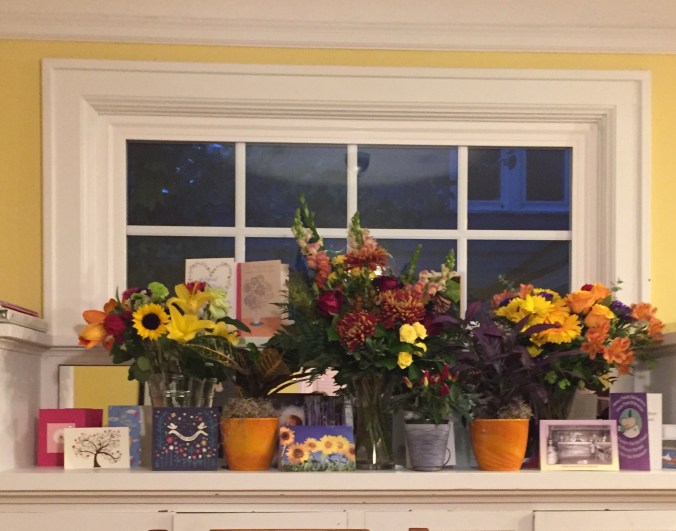
In these past few days I have been absolutely overwhelmed by kindness and care from so many. At the top of that list are my husband, my child, and my friend Alison, who flew across the country to take care of all of us. And then there is the congregation, and my family, and the school moms, and pastors I’ve never met who’ve held me in their prayers, and old friends around the country who have emailed and texted and messaged, who have baked muffins and sent cards and flowers and chocolate, because they know me well.

I am grateful, too, to the hospital staff.  There they were, taking my vitals, checking in on me, telling me it would be okay when my blood pressure plummeted, putting on the helpful/unsexy white support knee socks, encouraging me through all that initial discomfort  and pain, waking me up through the night as they did their job.

You could say that all those hospital people get paid to be kind and caring. That’s true. As a pastor I know that because, in a sense, we get paid to be kind. It’s a big part of our job.

But what if it were everyone’s job to be kind? What if kindness were the true measure of our worth, and not our social status or our bank account? Wouldn’t that be something?

Kindness is there but it’s usually so small that it gets overshadowed by all that’s loud and angry and grumpy. I’m not sure kindness really works on the grand scale but I know it does on the small scale: helping someone get dressed or making a cup of tea. Bringing a magazine with Benedict Cumberbatch on the cover, and another with the newest, best restaurants. Staying away can be kind; so can stopping by.

Once I’m up and around I’m going to spend more time on the small kindnesses. I can’t fix the world. Hell, I can’t walk without a walker and good meds at this point. But I can be kind, and I will.

And you?

Foul-weather friends

If we weren’t in the midst of a hellish travail, it would be interesting to pay attention to who shows up when we’re in some sort of a crisis.

For as long as I can remember I’ve known the phrase ‘fair-weather friend’ – the kind of person who’s there when life is sunny and you’re at the top of your game, the kind of person who can’t be around tears or silent grief, shame, or failure of any kind.

But I’ve known people who are foul-weather friends. I won’t hear from them for months or years, but if there’s a crisis, they are there with a phone call or email or casserole.  And somehow they know just what to do – how to be present without being pushy, just when to express the gallows humor, to bring the big box of kleenex and not the little travel-size pack.

The best sort of friend to be, I suppose, is the all-weather friend, the one who’s there in that wedding vow sort of way – in sickness and in health, in plenty and in want.

One of the worst moments of my life (so awful I will not recall it here) came when I was away from friends but there was a handful that knew I was facing a terrible difficulty.  They didn’t call me, but when I called them, they picked up.  When I whispered the plea ‘please pray for me’ I knew they would.  I got through it, in part because I was supported by these people invisibly tied to my heart in good times and bad.  They showed up again, months later, for one of the happiest moment of my life.

If it were one of those forced-choice quizzes, would I rather be a fair-weather friend or a foul-weather one?

Truth be told, a foul-weather one.  Friendship takes time and energy and if I’m going to spend some of that time or energy, I’d rather spend it with someone in a bind rather than sitting back and sipping mojitos on some exotic beach with a friend who just won the lottery.

But if I were standing in front of the pearly gates and St. Peter were checking my account, would I be found faithful in my friendship?  Would he say, “There is joy abundant and you missed out on that”?  Or would he say, “You showed up when it was hard and the dawn was far off”?

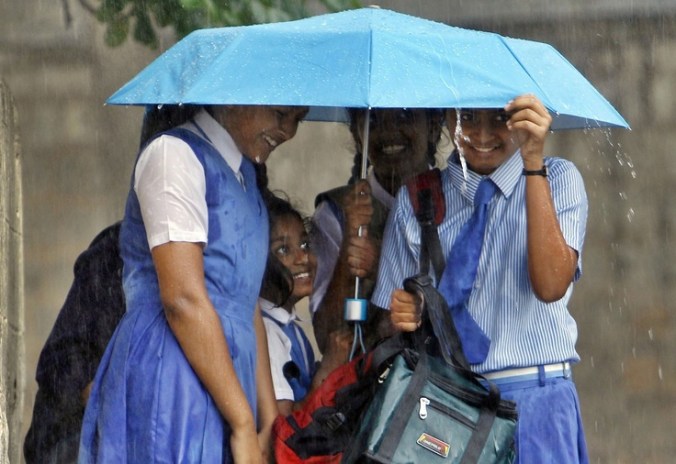
I’ve realized the gift of so many kinds of friendship lately, and I’ll take what I get, which is folks who show up in the rain, and folks who show up in the sunshine, and folks who bring umbrellas, and folks who bring casseroles.

May I do the same.

foul-weather

Leaving a garden

Every morning as I walk the dog I pass by my neighbors’ garden, which is beautiful.  I think it took them a long time to get it to the place it is today, filled with beauty and grace and some whimsy.  They’ve lived there over twenty years, and I imagine they’ve been working on the garden for that long.  It’s a gift to me, and to the neighborhood.

When I was young, my grandparents lived in Tacoma.  The railroad tracks ran a few blocks away from their back yard, and when we spent the night there, we heard the trains go by in the early hours of the morning.  They lived next door to a diner, and when we’d get off the plane and drive to their house, we’d stop for lunch there and get hamburgers and wild blackberry milkshakes.  It was heaven.

My grandparents had gardens there, too – my grandmother grew roses and my grandfather had a vegetable garden.  Tried as he did, he never could get me to like lima beans, but he’d delight us with funny-shaped carrots and new peas.  Standing in the garden you could see Mt. Rainier in the distance, haughty and majestic and cold, such a contradiction from my grandparents’ sweet, small plots.

My grandfather died in that house.  A few years later, as the neighborhood changed and the diner became a massage parlor, my grandmother left.  The gardens went fallow.  The house was sold and eventually some owner tore it down – it and the massage parlor – and now a strip mall occupies that space.

I miss the house, with the view from the upstairs window of the drive-in far away, and the llama rug my uncle brought back from Venezuela.  I miss the dog run and the old black Lab Lady who lived there.  I miss the shed attached to the garage, full of Grandma’s canning.  I miss her roses, and I even miss his lima beans.  I miss them more, of course, but it has been a long time since they died.

I think about what it must have been like for my grandmother to leave that place and that garden.  I think about all those people who spend decades planting seeds, and tending to the plants, pruning and weeding and sometimes throwing something out and sometimes starting all over again.  A garden is so personal, such an effort of labor and imagination and hope.  And patience.  I can’t imagine what it’s like to leave such a labor of love.

I wonder if God was sad when Adam and Eve left that garden, sad that there was no one there to tend it anymore, or simply to appreciate it.  It’s such a lovely founding myth, the Eden story.  We know how Adam and Eve fared; they made it out alive and started over, but life was different after they left the garden.

It always is.

eden

A necessary good

A few years ago an old friend of mine shared an article on Facebook, written by an atheist organization, which advocated for the removal of the tax exemption status that religious institutions enjoy.  I was a bit hurt that my friend did this, in part because she knows I am a pastor serving one of those tax-dodging religious institutions.  I commented on the article and said that if churches had to pay property taxes, most would close, and all those community groups that use our buildings for free or significantly reduced rents- 12 Step groups, non-profits, neighborhood associations, preschools – would have a hard time finding somewhere else to go.  She quickly apologized and said she was trying to make a different point.  It still stings a little.

In the last year I’ve had several experiences of people who identify as spiritual but not religious, or even just plain atheist, asking to use the church.  Some were services of some sort – a wedding, a memorial – actually, not a memorial; a celebration of life.  I’ve negotiated with families and couples in how many times we can say “God” and if we can refer to “Jesus” and whether or not there has to a reading from the Bible.

I’m just about done with the accommodating.  I don’t want to throw Jesus out with the  proverbial bathwater.

I think if you come to church for a wedding or a memorial, you should not be surprised if the pastor mentions God or Jesus.  That’s part of the deal.  I will no longer officiate at a non-religious wedding; a friend can get an online certificate or a justice of the peace can perform the ceremony.  I’ve got to have a little integrity about my call as a pastor.

I know that Christendom is in transition.  I know we must find new ways not only to tell the old story but more importantly to live out the old story.  I know many judge the church as outdated and irrelevant and self-absorbed, and that is often a fair critique.  But I also think that much of the judgment comes from ignorance, from people simply not taking the time to learn about what churches and people in churches do to contribute to a healthy neighborhood and society.

When did Jesus become the bad guy?  Maybe when the followers of Jesus strayed too far from his teachings.  Maybe when Constantine made Christianity the religion of the state.  Blame bad Christian music.  Blame really bad Christian art.  Blame us getting so caught up in the business of the church that we forgot about the call of the church.

Go.  Feed.  Pray.  Listen.  Study.  Hope.  Dream.  Risk.  Heal.  Lament.  Proclaim.  Share.  Believe.  Repent.  Forgive.  Teach.  Live.  Die.  Live again.

IMG_7653

Summer Vacation: Instagramming the Gates of Hell

Beneath the wild beauty of Yellowstone National Park lives a supervolcano,  a cauldron of hellish gasses and liquid rock formed, in part, by the struggle between massive tectonic plates that vie for space under what we call Wyoming.  If that volcano were ever to blow – and it could – it would be the end of the world.  The volume of ash that would enter the atmosphere would cause climate change that would be catastrophic.

Now the odds of that supervolcano blowing in my lifetime or my child’s lifetime are pretty slim, but that gave little comfort to my daughter as we visited the park on our summer vacation.

“Mom, if the volcano blows, where is the safest place to be?”

“Well, honey, I think you’d want to be right in the middle, at the center of it, so you’d die quickly and not have to go through the onslaught of another ice age, panic, mayhem, and all of that.”

So there we were, on a beautiful August day, blithely taking pictures with our phones of the gorgeous canyon that belies the hell beneath it.  Later that day as I posted pictures on Instagram, I wondered about that – is it hubris to do something as mundance as taking a picture of a place that could cause the end of the world?  Do we realize how fleeting life is, and how powerless we are?

On this same vacation, we’ve been watching the Olympics at night.  Every one of those athletes is amazing, and the irony of snacking in a comfy chair while watching feats of strength, speed, and agility has not been lost on me.  It was last night as the women gymnasts competed on the vault and uneven bars, throwing their tiny, solid bodies into the air in crazy moves, that I thought of Instagramming the gates of hell.

Perhaps it is both hubris and courage that allows us to pull out our phones and take pictures of a volcano, and to train and work and compete as we push the limits of what the human body can do.  My family watched those gymnasts in awe – how can they do that?  Beyond the physicality of it, how do they summon the courage to bounce backward up onto a platform?

Vacation has been a time to marvel at the world in its creative, violent beauty; a time to marvel at those people who push the boundaries of human possibility.  So maybe, those two things will merge some day before the volcano blows: courage will meet catastrophe.  Who knows what will happen?


IMG_8998


Living in the tension

“Mom, why do we have guns?” That’s the question my ten-year-old asked as we ran a few errands Sunday after church, when I had referred to the Orlando shooting in worship and she asked what had happened.

“Well, people used them to hunt so they could have food.” But that wasn’t quite right.  Not at all.  “People used them to kill each other in war.”

“Why do we have war?”

“Well, people see someone else as their enemy, as someone who wants to take what they have, as someone who is dangerous.  Or someone who has something they want.”

“Then why do we have enemies?”

Oh, child of mine, I didn’t ask those sorts of questions when I was ten.  The assassinations of the 60’s were not part of my childhood memory, nor was the Viet Nam war.  My first political awareness was Nixon’s resignation, and that didn’t involve guns at all.  My dad and brothers hunted; we had rifles and shotguns in the house that were always locked up and never loaded.  When we were held up at gunpoint at home when I was a teenager, no one thought about getting one of those guns and starting a shoot-out with our assailant.

Maybe the bigger question is why we have enemies.  That same Sunday, at the end of worship, two men experiencing homelessness came to the narthex seeking help.  That’s been happening a lot lately – there are so many people and not enough public bathrooms or soup kitchens or mental  health facilities or shelters.  There may not be enough time or kindness, either.

One of our deacons was talking with them very patiently and I interrupted the conversation.  I thought wearing the big black robe and the pretty green stole would give me some authority when I told them I was so sorry that we weren’t able to give them cash, but it didn’t. I listened.  We prayed.  I’ve remembered their names – A.J. and  Avery.  I’ve prayed for them all week.

Are A.J. and Avery my enemies?  Do I wish them harm? No.  Did I wish they’d go away so I could get off my feet and get a cookie and cup of coffee? Maybe; how horrible of me.  Do they wish they had guns so they could get what they need by force?  I doubt it.

It was an unsettled day, Sunday.  I was so aware of the tension of being safe because I’m a straight woman and the worry that someone might target our church because we have a rainbow on our sign.  I was aware of the tension that I’d had a nice shower in the morning, and put on clean clothes, and had breakfast and would have lunch as I talked with these men who hadn’t seen a shower or a full meal or a sober day in God knows how long.  I was aware of the tension in wanting my daughter to delight in the world while having to tell her the realities of the world.

The tension is still there, and my prayer is that nothing reaches the breaking point.  My prayer is that out of the tension comes something hopeful or healing, maybe even beautiful, the way a beautiful note is played over the taut violin string.

But maybe that isn’t up to me.  But maybe it is.

violin

A Familiar Stranger

We were just about to enter the sanctuary with the Paschal light, when the pastor carrying the Christ candle turned around and said in a stage whisper, “Aaron is here.”  At first I thought he’d said, “Karen is here,” which I already knew – she came to church on Easter even thought her mother had died two days before.  I must have had a weird look on my face because he said again, “Aaron is here.”  And I knew that our second Easter service of the day would now be up for grabs.

Aaron is a familiar stranger around our church,  a man who is in his forties, maybe, who struggles with addiction and schizophrenia and homelessness.  He shows up now and then, during the week, sometimes on Sundays, and then we don’t see him for months, or even a year, and then he makes his way back to us.

So as I processed in behind the acolytes, my brain started going into overdrive.  Some of our regular folks would want us to invite him to leave.  Some of our regular folks would insist that he stay.  Who knows what the Chreasters or the first-timers would think.  During the passing of the peace, he moved from the side transept to the front row. He had plucked a big daffodil from somewhere, and it was pinned to his big winter coat.

We have a tradition of using dyed Easter eggs for the children’s time, and at the end, Aaron asked the pastor leading that part of the service for an egg, which he promptly ate –  who knows when the last time was that he had a decent meal. And then that pastor sat with him, and stayed with him for the rest of the service, offering comfort and community.

Aaron gave me a few chuckles and a few amens during the sermon, and during the prayers he waved his stocking cap at the joys and and moaned “mercy, mercy” during the concerns.  The pastor sitting with him was deeply kind; Aaron considers him a friend.

Just before the offering, I started to imagine Aaron as one of the disciples.  If I had seen Jesus die and then saw him again, I would doubt my sanity, or I might self-medicate.  Who was I to judge this man?  I don’t know all that has happened to him in his lifetime, what he has suffered, how many rejections he has known, what it’s like to live with schizophrenia.  Maybe his joy at our joys and his cries for mercy at our concerns was the most authentic response of the day.

When the offering plate came by, Aaron dug deep into his pockets, and dropped into the plate what little he had – a crumpled bill, some loose change.  If that doesn’t stop you short, I don’t know what will.

At the end of the service, the other pastor walked out with Aaron, and gave him some money and encouraged him to find some lunch.  “Most of the places around here won’t let me in anymore,” he said.  “Maybe Subway will.”

It was an Easter I will not soon forget.  I wonder if the risen Christ visited us anew.

And in the last day, this prayer (author unknown) has stayed with me:

 O Christ, our familiar stranger,
You meet us on our way, and will not let us go.
As we wrestle with your truth, give us your unfathomable blessing,
So that, washed in love, we may lose our fears, and draw closer to you.

Amen.

daffodil

for PGN

Trump as Lenten Discipline

In my Ash Wednesday meditation, I admitted that I wasn’t all that good at spiritual discipline, or even following through on a particular Lenten practice, but my hope this Lent was to do two things: to be more kind to my family, and to learn more about the people who support Donald Trump is his campaign for the presidency.

As I understand it, one option for a Lenten practice is to do something that is not sustainable for the long haul.  I do hope that I will carry on a greater effort at kindness for my family; so far, it has been delightful and not too trying.

And learning more about the supporters of Donald Trump has been interesting and thought provoking.  And a little depressing.  Here’s what I have gleaned: that his supporters tend to be white, male, and blue collar workers with not much education past high school, if that.  There is nothing wrong with being a white male, or a blue collar worker, or having ended formal education at high school.  Some of the people I love most dearly in the world fit in those categories.

What is hard about all of this is realizing that I don’t know most of these people, that I don’t run in any of the same circles that they do, therefore I have little chance of changing their minds.  Because I would really like to change their minds.  I have this romantic little fantasy that if we could just sit down and talk and have a rational conversation, I could show them that Donald Trump will not bring back what they have lost, or what they think they have lost.

Yet reason will not prevail, I fear.  My hunch is that their support of Mr. Trump comes from a deep place of anger and loss that may have begun when Barack Obama was elected president but probably began decades before that.

Still, Jesus calls me to reach out to those on the margins, and I think the supporters of Donald Trump feel that they have been on the margins of the American Dream for too long.  I would argue with that, but am I called to argue or to listen?

In the end, I am comforted that Donald Trump only has one vote, and I only have one vote, and I know I will not use it for him.  Lent will end soon, but I suspect I will continue to read about this presidential race and the candidates and their supporters.  I suspect, too, that I will not find much hope in any of that.

I find my hope elsewhere.  I am ready for Lent to be done and for Easter to arrive.

abstraction white rose number 3

Abstraction White Rose Number 3, by Georgia O’Keeffe