And the greatest of these…

On this Thanksgiving, I am grateful that love exists, that there is this invisible connection among the creation that desires bounty and kindness and acceptance, that there is this force that is not easily broken, that withstands attempts at cheapening it.

This is what love looks like for me today: texts from old friends that remind us that when we met forty years ago, we had no idea we just might become friends for life; a scone and a chai delivered by my friend and pet sitter, which I received happily and in joy because the dog was over-the-moon ecstatic to see her. The guy with the pronounced limp walking his sweet Frenchie named Echo, a pet that he obvious adores with every wobbly step he takes.

I am sad not be with my family this Thanksgiving but I’m nursing an impressive cold and no one needs me to bring these germs to the dinner table. I am sad, but not depressed; Thanksgiving is one day, and I know an embarrassing amount of love in my life, and given that, I cannot be more than just a wee bit sad.

Many years ago when my grandparents were still living, they loved to go fishing, not only because back in those days they could easily catch their limit of rainbow trout but also because after standing in the cold creek water for an hour, their toenails softened up and they could give each other a rudimentary pedicure. That’s the kind of love that abides after fifty-plus years of marriage.

My sister has moved into an ADU in our backyard and she graciously – and maybe even happily – welcomes the dog and me to come for a visit so I can pet her cat and so that the dog can lick the trace amounts of food left in the cat’s dish. She also graciously acts surprised when my husband and I come over after dinner, and with all the sincerity of a nun, asks if we would like a bite of chocolate, which was the whole reason for our showing up but she acts as if it weren’t. That is love.

A video of a flash mob performing the last movement of Beethoven’s Ninth will always get me crying. In it I see a love of music, a love of performance, a love of giving this utterly unexpected gift that costs not what penny and is only meant to be received as love should be.

There are so many loves – love of a person, love of a pet; love of the creation and of the Creator, love of a country, even love of self, when taken in measure. To be loved is the greatest gift, and that sounds so terribly trite that I should give up writing this very moment, but I’ll still claim it. Though sick, I am loved. Though alone, I am loved. For me, a bad cold and some loneliness are temporary things but love, as the apostle wrote, never ends.

On this Thanksgiving, I hope that you too are grateful for the love that surrounds your living. I hope that when you start to count your blessings you run out of fingers and toes. I hope that you are able to pass along some of that love, because when you do, who knows what might happen?

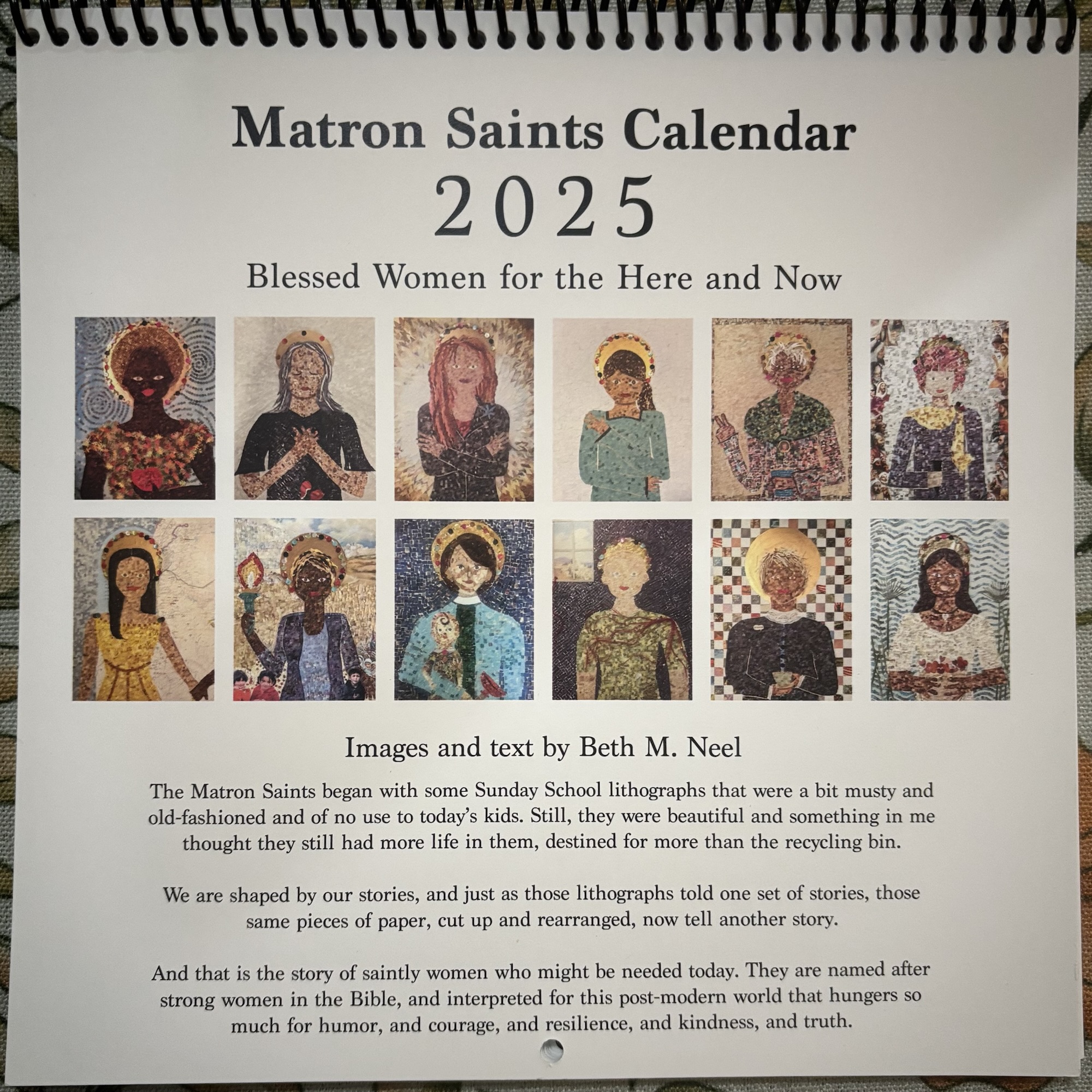
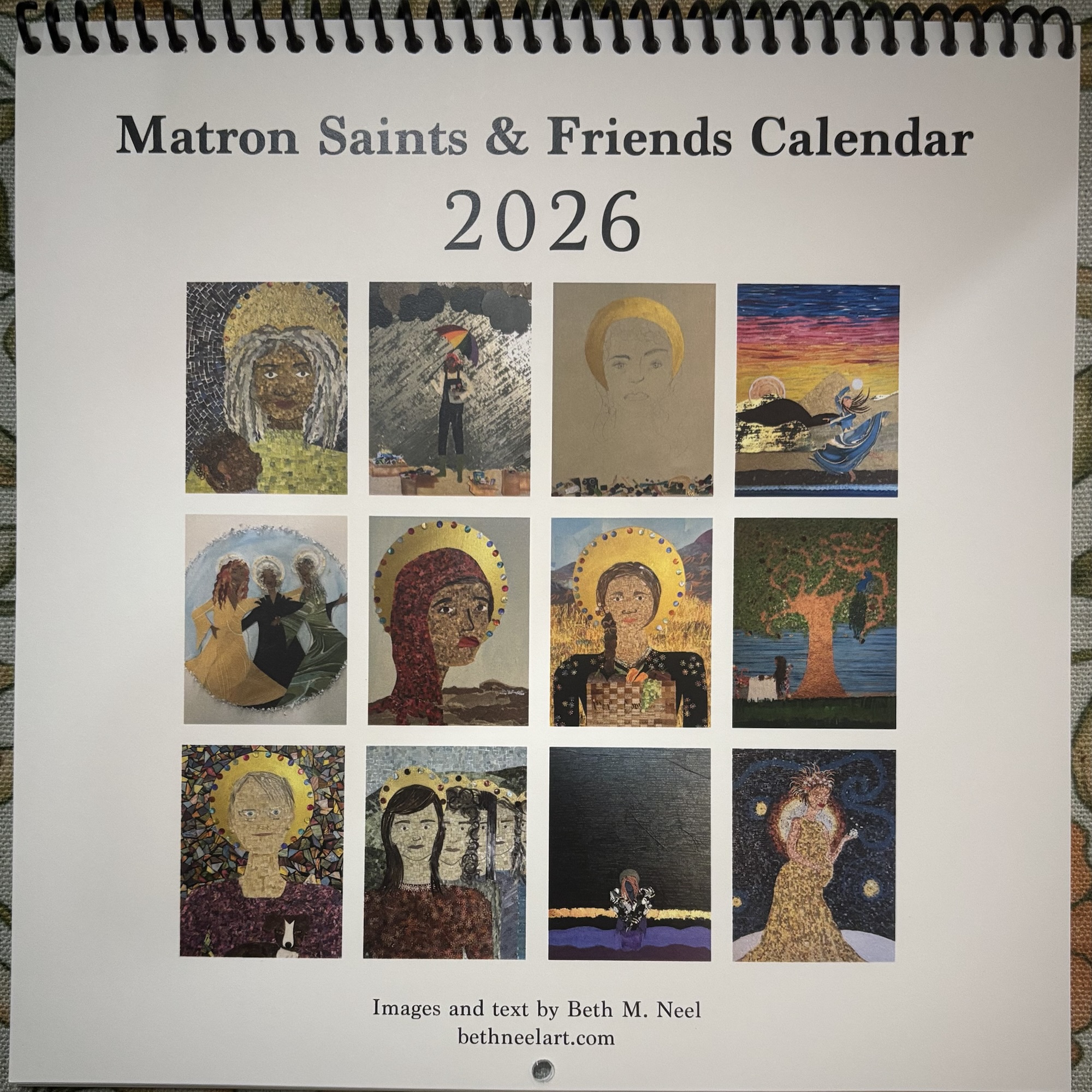
It’s calendar time!

I normally don’t like to think about Christmas until after Thanksgiving, but… I’m very excited that this year I have not one but TWO calendars to offer you! I have reprinted last year’s Matron Saints calendar for 2026, AND, having created six new Matron Saints this year, have also made a Matron Saints and Friends calendar.

How can you order? Just send me a message here, and we will get the ball rolling. The cost is $20/calendar, and shipping is usually around $10.

There are also notecards available for all these saints, so let me know if you’re interested in those too.

Thanks for considering this! And peace be with you.

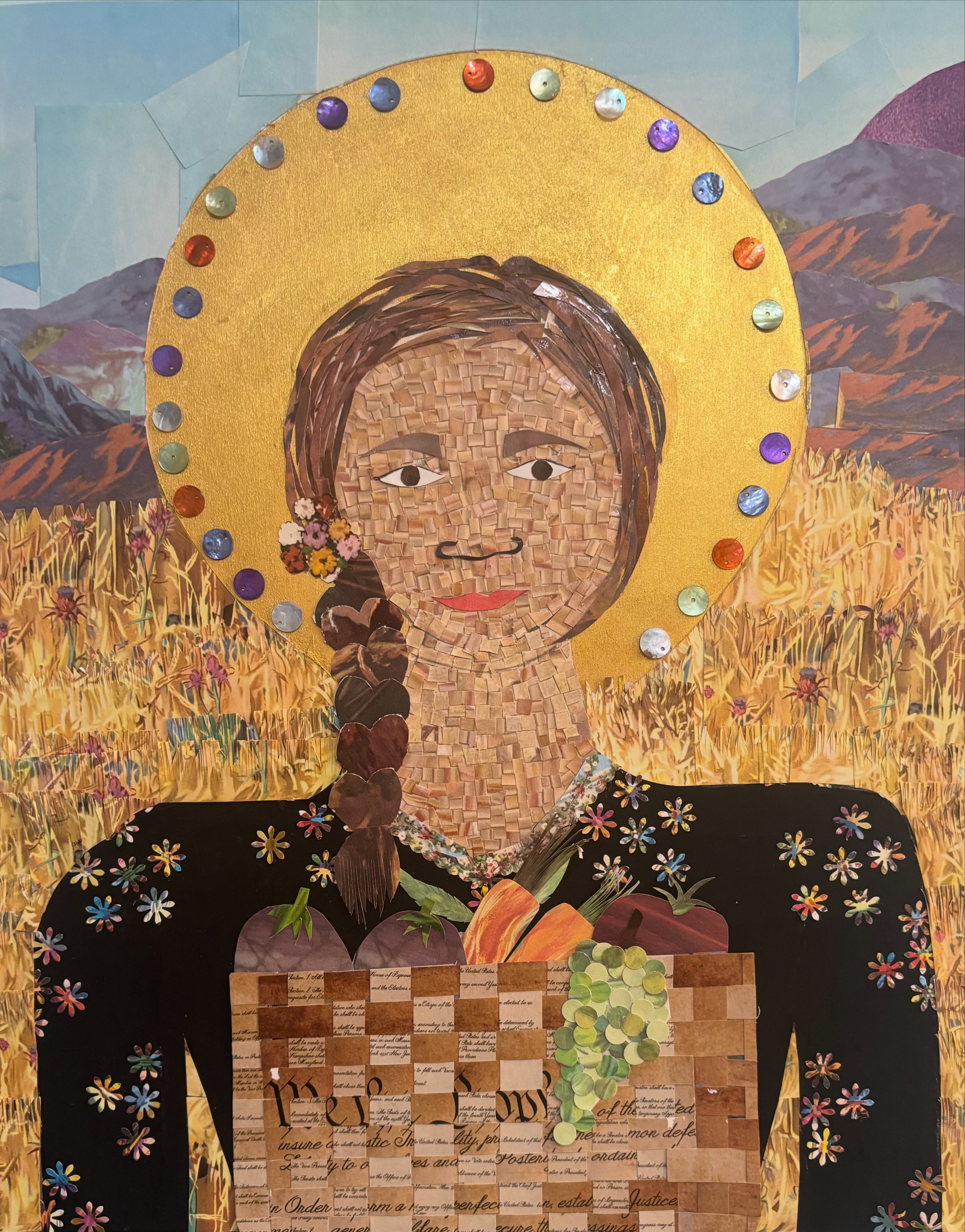
Dorcas, Matron Saint of Those Who Know That Feeding People and Caring for the Poor Is Holy Work

If indeed holy grace has been shed on us,

As we live amid fruited plains and amber grain,

How can we not, in grace,

Share what we have received through no merit

But only through holy grace?

How can we not feed the hungry?

How can we not shelter those with a home?

How can we not care for those who are forgotten?

It is nothing less than holy work of the highest calling.

On killing cockroaches, and other things my dad did for me

It’s been seven and a half years since my dad died, and while I don’t really think about him every day, I do think of him often, and occasionally dream something that he’s a part of, and laugh about something I know he would find funny.

So Father’s Day is different now. Mostly I encourage our daughter to remember the day is coming; I also thank my husband and my brothers for being such great dads. If I’m in a mood, I will say to my husband, “Well, I don’t have to do anything for Father’s Day because my dad is dead.” Like I said – when I’m in a mood.

But today, Father’s Day, I’ve been thinking about my dad and a few memories stand out.

The first is when he taught me to ride a bike. It is a visceral memory, full of emotion, which must mean something since it happened 55+ years ago. We went to the parking lot of my elementary school in Morristown, New Jersey, my hot-pink, banana-seat bike in the back of the station wagon, just me and Dad. He did not believe in training wheels (later, when I was an adult, he would say that training wheels were for candy-asses.) He ran along side me as I wobbled along, holding the handlebars, not letting ago until I found my balance, and then he let go, still running beside me. I don’t know why this has stayed with me all these years. Maybe it has something to do with fear and courage and encouragement and protection and love all wrapped around the asphalt pavement of Hillcrest Elementary School.

The second memory is from my teen years, which were not the smoothest in terms of our relationship. We’ll leave that there but perhaps you can fill in your own blanks about rough patches with a parent. This story is not about that.

When I was eight we moved from New Jersey to Houston – the flatland of humidity and flying cockroaches. There are good things about Houston, but this story is not about that. Anyway, we had not had flying cockroaches in New Jersey and let’s just say they terrified me. Spiders? Bring ’em on! Flying cockroaches? More correctly, palmetto bugs – I would not enter a room where I could see one. It was my habit, when entering a room where there was a cockroach, to get my dad to come kill it, which he did. One night, after he had gone to bed, I went to the bathroom to wash up for the night. There, on the wall behind the toilet, was a big ol’ shiny cockroach. Dad had gone to bed. He hated being woken up. I knew I would not be able to brush my teeth, much less sleep in my connecting room, knowing that roach was just waiting to crawl all over me. So I went in to my parents’ bedroom, woke up my dad, told him the problem. He got up and told me to get a magazine or newspaper, which I did. He strode into the bathroom, whacked the cockroach which fell straight into the toilet, flushed it away, and wished me a goodnight.

He loved to tell me that story. I’m not sure if it had to do with my trusting him to take care of things or with his amazing aim, but it was one of his favorites.

The last memory is from my young adulthood. My parents had moved back to New Jersey and I was living and working in New York City. I had landed what I thought was my dream job – assistant to the artistic director of an arts organization, the perfect jumping-off spot for someone who wanted to go into arts administration, which I did at the time. After five months, my dream job had become a nightmare. I would wake up at 2am on Saturday nights worrying about it, wondering what I had forgotten to do, wondering what my boss would yell at me about on Monday.

I had gone to my folks’ house for the weekend and we talked about everything. Dad finally said to me, with all the wisdom of someone who had had his own career ups and downs, “No job is worth this, honey.” Not long after that, I quit as my boss was firing me, and while my future became less certain, my heart was much happier.

Seven and a half years ago, as Dad was nearing the end of his life, the time came for me to say goodbye to him. That remains the most excruciating thing I have ever done, and if you’ve had to do that, you understand. I told him I loved him, and I thanked him – for teaching me how to ride a bike, for killing cockroaches, for letting me know it was okay to walk away from something; for encouraging me never to carry a credit card balance and to set aside ten percent of every paycheck for savings (that didn’t happen); for being pleased as punch when I told him I was pregnant, for welcoming my husband and then our daughter into the family; for pointing out, every time we sat on the deck of the cabin, how beautiful the cottonwoods were shimmering in the breeze.

Now when I sit on the deck of the cabin, and look at the cottonwoods shimmering in the breeze, I laugh a little, and look up at the sky, and say thank you once again.

Trees and other things

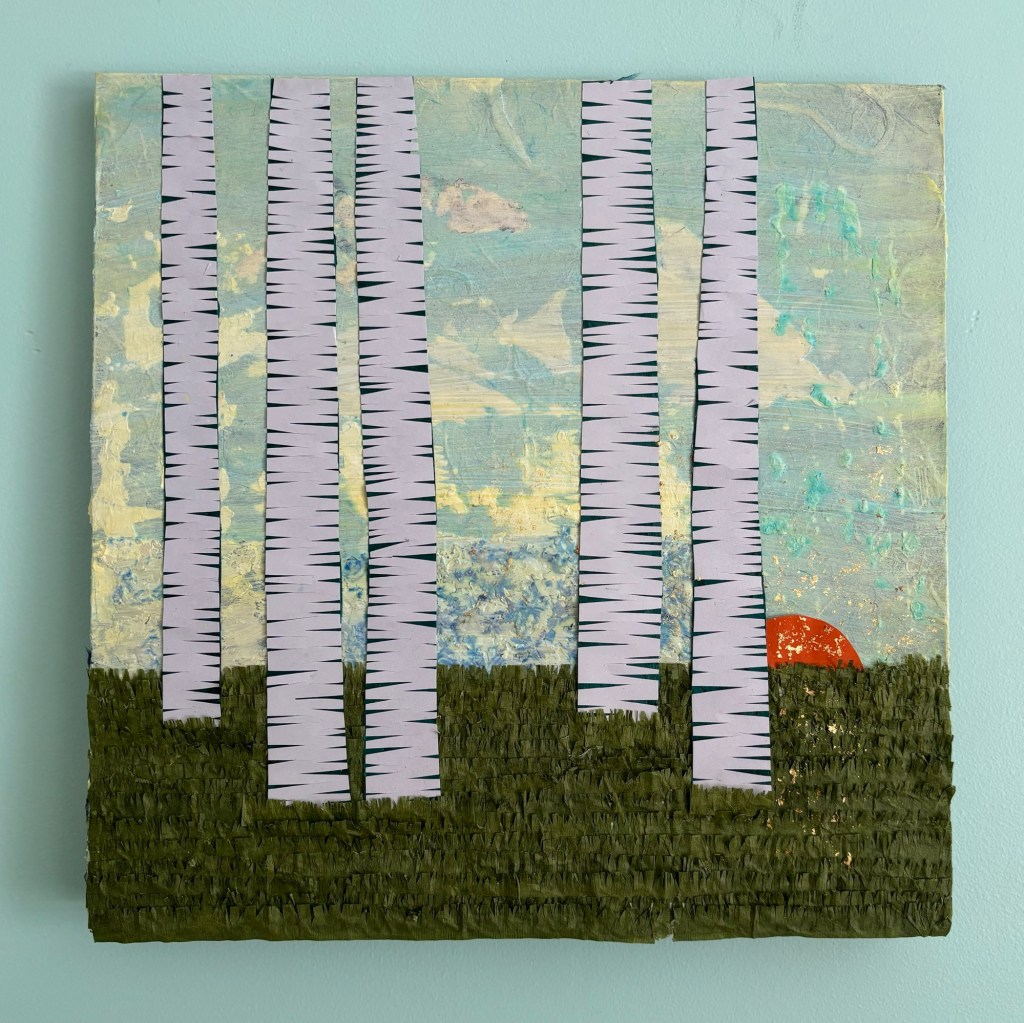
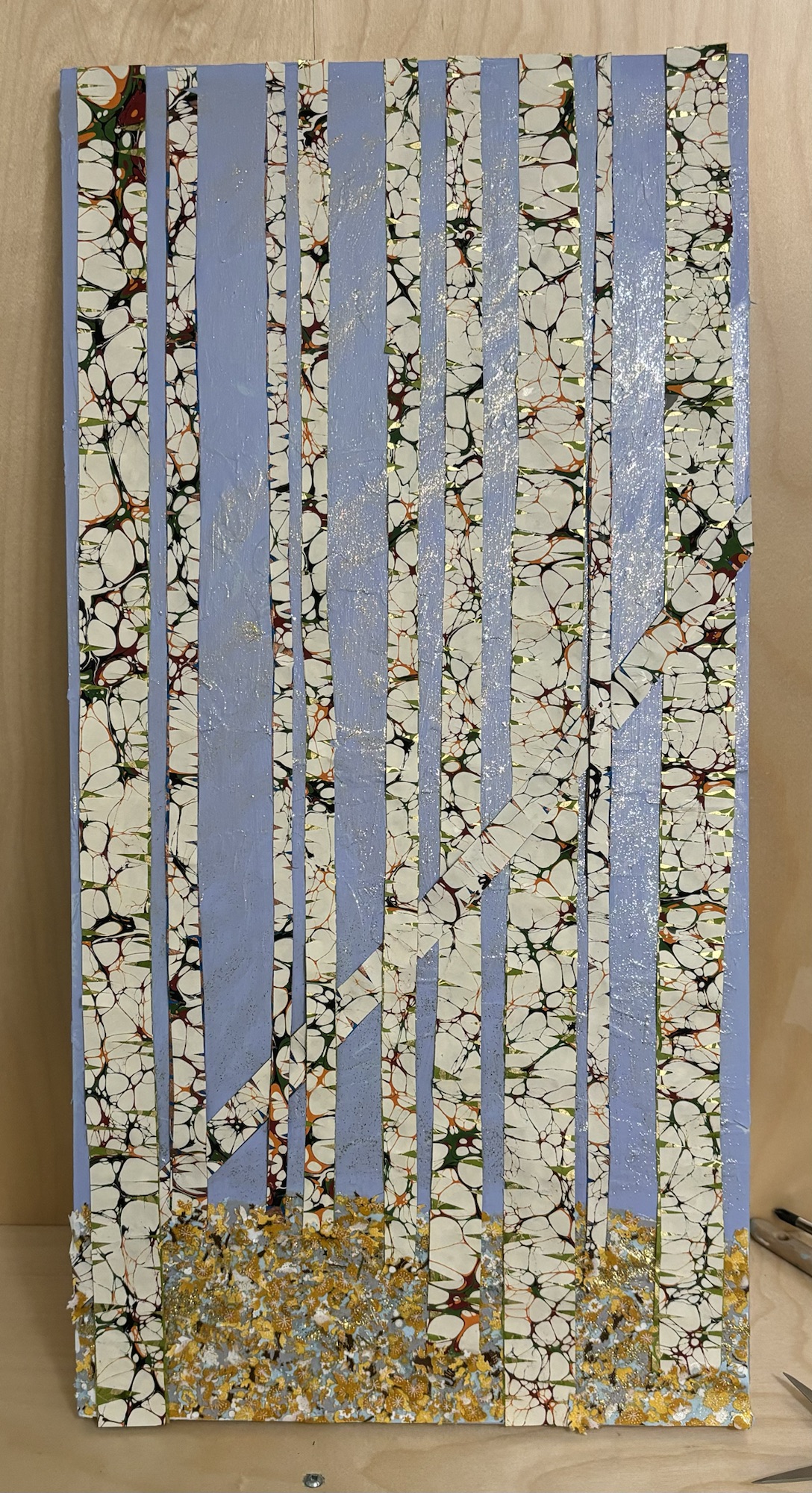
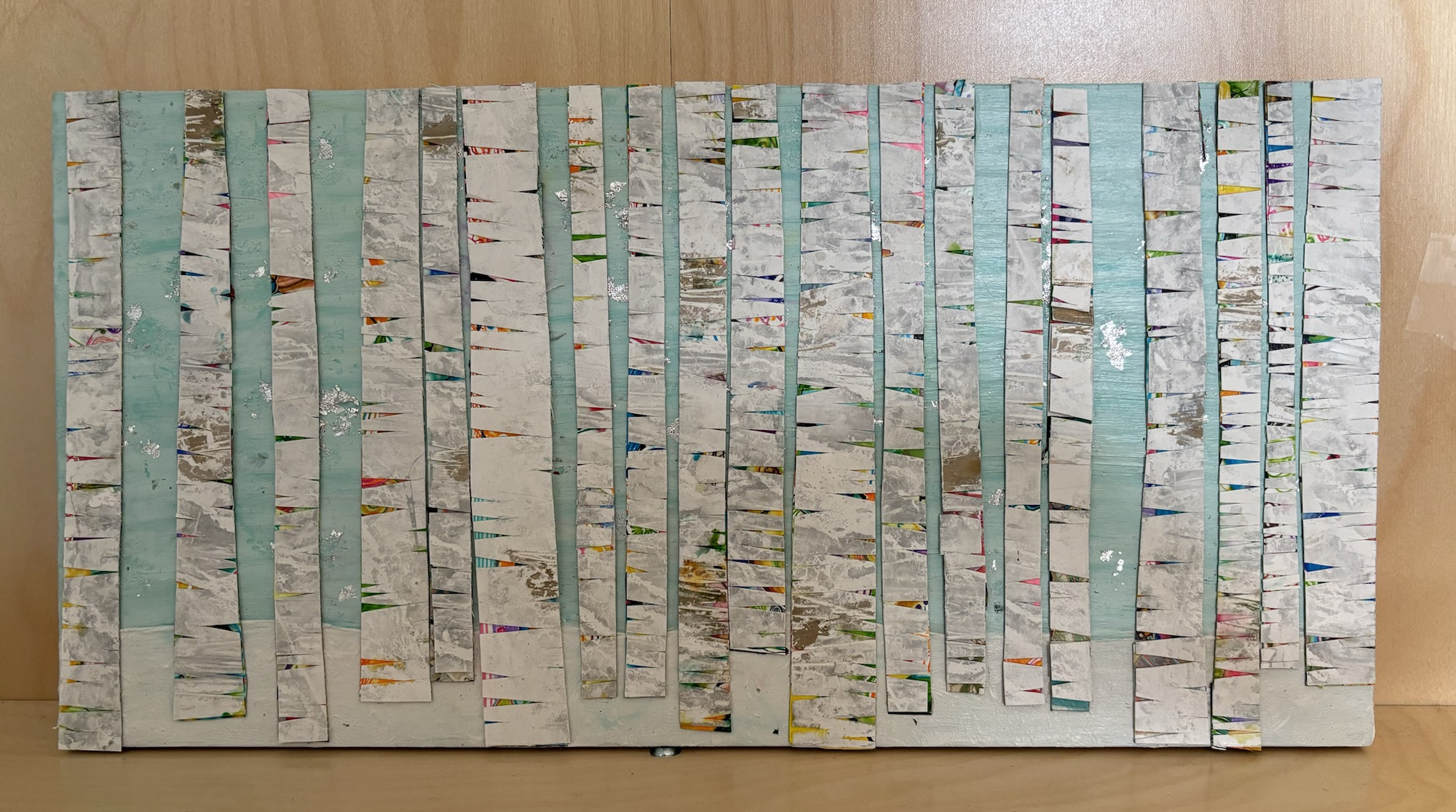
I’ve been on a tree kick lately, art-wise. I think they’re birches, but they may be aspens. They’re not exactly accurate.

I was inspired to make my own trees (paper collage) after seeing the beautiful liturgical banners my friend Nanette created of birches – or aspen – after our clergy group met at Rocky Mountain National Park, where the dining room is decorated with images of aspen (probably not birches.)

To be honest, usually my art reflects something that’s going on inside, so as I’m currently working on my fourth tree picture, I’ve wondered why trees are speaking to me right now, beyond the inspiration from my friend.

A few years ago I had the pleasure of reading The Hidden Life of Trees: What They Feel, How They Communicate by Peter Wohlleben. He opened my eyes to a world I had never known and I was struck by the way trees not only live in community, but thrive in community. As Tim Flannery writes in the foreward, “…the most astonishing thing about trees is how social they are. The trees in a forest care for each other, sometimes even going so far as to nourish the stump of a felled tree for centuries after it was cut down by feeding it sugars and other nutrients, and so keeping it alive. Only some stumps are thus nourished. Perhaps they are the parents of the trees that make up the forest of today…. The reason trees share food and communicate is that they need each other. It takes a forest to create a microclimate suitable for tree growth and sustenance. So it’s not surprising that isolated trees have far shorter lives than those living connected together in forests.”

Then I understood my current fascination with trees. Community is not only fun, and wanted, it is utterly essential for our thriving. I write this three days after the presidential election, at a time when my communities, my circles, are feeling as though they have been clear cut. Devastation. Death. Disregard. All in the name of profit or greed or power. A tree cares about none of those things. I would say a tree is amoral, except that we assign moral value to community and trees are communal beings.

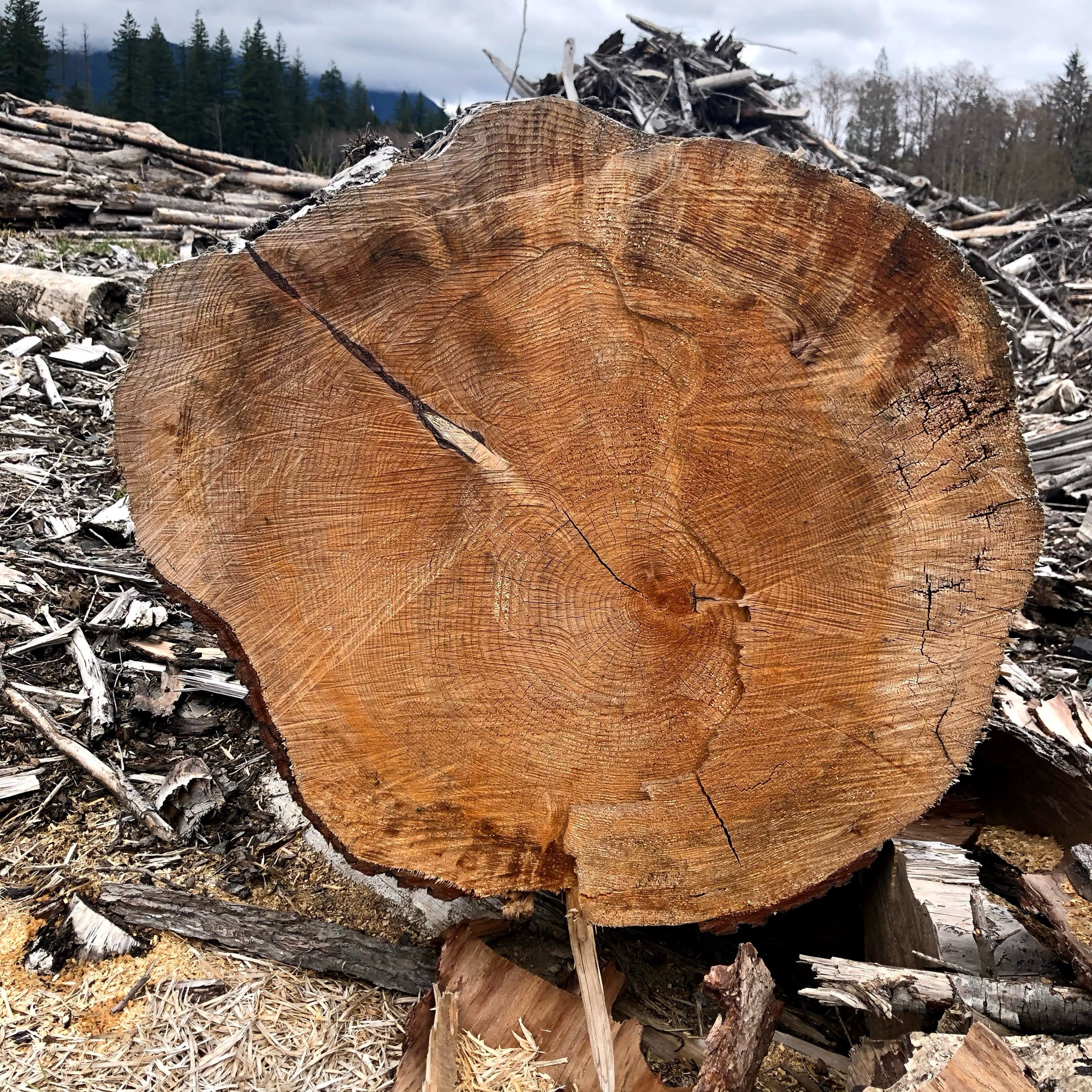
The other thing that struck me about trees is that they have muscle memory of a sorts, wood memory. We see it in the rings they make after they have died or we have chopped them down. We can tell what sort of year it was by the width of the ring – a year of growth, maybe, or a year of drought or some other calamity.

img_1315_original-1

If you cut us in half, right above the belly-button, you won’t see rings. But we carry muscle memory, and gray hairs, and wrinkles in our brow that won’t go away. We carry bags under our eyes, and extra flesh around our middle after indulging in necessary comfort food and drink. We carry stressed-out hearts, and headaches that won’t go away, and are not all that surprised when our blood pressure, like our weight or our bad cholesterol, goes up and up.

Well, then, what are we to do. A sentence, not a question, because I’m not sure anyone is really in a place to answer that yet, and I have a sinking suspicion that any answer would be premature. So for now, I will be like a tree. I will give thanks for my many communities, and however I can, be a resource, a friend, a helpmeet to all those. I hope that my community grows larger, like a forest that is untamed.

If you can, in the next few days, go wander among the trees for a bit. Breathe deeply. Listen to them. Smell their mid-autumn scent. Kick up their leaves. Be inspired. Be like a tree, and take care of your forest.

img_2577-1

Stars, once

The red maple leaf on the wet pavement looks like a star.

Maybe it once was that, a star, a star that

Exploded into infinite piece of dust that

Traveled across the galaxies and eons,

Just to land on earth and dissolve into the ground,

Waiting.

Until the samara whirleygigged one day

Onto the spot where the star dust lay

Waiting.

The seed took root

Nourished by the once-star

And grew and leafed and

Provided shade from a different star.

The leaf blazed,

Its explosion merely a fall to earth

There on the wet pavement,

A reminder of what once was

Eons ago.

And just to show its roots

That tree burst into leaves of orange

Calling back the star it once was.

When chronos and kairos collide

“Chronos time is how we measure our days and our lives quantitatively. Kairos is the qualitative time of life.” (Josep F. Maria, SJ)

I’m thinking about Holy Week, and worship services for Palm Sunday, Good Friday, and Easter. I’m thinking about palms and azaleas and stripping the church. I’m thinking about despair and hope, short-term and long-term wins, and whether or not to invite folks up to the sing the “Hallelujah” chorus this year. In other words, I’m a pastor three weeks out from Holy Week.

On Holy Saturday, our group of dedicated volunteers will decorate the sanctuary for Easter: butterfly banners, white paraments, real azaleas and fake lilies, as the organist and this pastor are allergic to the real ones. The problem is that the flowers get delivered on Good Friday, and must be hidden away lest one preparing for the solemnity and sadness of Good Friday be confronted with the hope and life of Easter.

It’s like chronos time – the delivery of Easter flowers on Good Friday – collides with kairos time – the holiness and presence of God in despair and in joy. Maybe that’s just what life is: flowers in the midst of mourning.

It’s like all the images of sunflowers in social media, signs of support for the people of Ukraine enduring the horrors of war. It’s like wee flowering weeds pushing up between cracks in the concrete. It’s like that grain of wheat which must fall and die in order to bear much fruit.

To be honest, it’s what coming out of this pandemic (please, God; fingers crossed) feels like. There’s the chronos of fewer and fewer requirements to wear masks, and the declining numbers of hospitalizations and death. There’s the wonder of seeing people’s smiles in real life, and sitting in a restaurant and catching up with a favorite waiter.

And there’s the kairos of our emotional and psychological landscape having been forever altered by the experiences of these past two years. We cannot get back the things that we missed. We cannot say goodbye to the people who died when hospital visits were prohibited and memorial services had to be livestreamed. I can count five people who were dying whom I said goodbye to on the phone. It was awful. The sadness, despair, and anger that hung over us and inside us during the pandemic is not something that can be measured, put on a calendar, given an end date. Those things exist in the kairos time.

Some years when Easter morning dawns, I am still in Good Friday. Sure, I’ve written a homily for the day but it feels as real to me as the fake lilies that don’t make me sneeze. And there have been Good Fridays when I’m just pretending to be sad and solemn but my heart and soul are already at the empty tomb. As much as I like things to be in order, I have finally accepted that I cannot plan out my feelings or schedule my soul. And that is good.

So maybe this year, as I walk by the Easter azaleas on my way to conduct the Good Friday service, I will let all of that be, knowing that while God’s time is not my time, nor our time, God is still present with us all the time.

Why Churches Should Continue Their Online Services

Yesterday morning, as I was drinking my coffee and going over my sermon, which would be delivered to an online-only congregation, I read a headline and immediately had some thoughts. As of Monday morning, only two parishioners have sent me a link to yesterday’s New York Times editorial by Tish Harrison Warren, “Why Churches Should Drop Their Online Services“.

In case there is a paywall and you can’t access the editorial, in a nutshell Ms. Warren makes the case for dropping online services (which would include livestreamed and prerecorded) and going back to in-person services only. Her theological point is valid: Christians are an incarnational people, and worship is best in person, when it is visceral, physical, when we get to experience the best and worst of being with other people. We can hear their voices and the cry of babies; we can smell our favorite person’s perfume or shampoo; we hear the whine of hearing aids being adjusted, and truly share from a common loaf and common cup. Some of those thoughts are my extrapolation of hers.

But. But but but but but. I fear that Ms. Warren has not taken in the fullness of the Body of Christ into her argument.

Last night, my favorite group of pastors weighed in on the article in a text chain. I trust these people with my faith and with my life, with laughter and with preferences in bourbon. They agreed with me (which is always nice) and here is what we would say in response to Ms. Warren and maybe anyone who believes that online worship should go the way of tokens for communion, male-only clergy, and a publication of what each family pledges to the church.

First: not everyone can manage the physicality of our worship spaces. The congregation I serve has worked hard to make our sanctuary accessible, and it is, but it’s a long walk or wheelchair ride from the accessible entrance (which is right next to the garbage bin enclosure) to the sanctuary. And frankly, for anyone with back problems, our pews are uncomfortable if not excruciating. Some have a hard time wearing a mask for an hour or so. And some can see and hear better online.

Second: some people cannot come to worship. Some live far away. Some are sick. Some are unable to leave their home. Some live with chronic anxiety and public gatherings are terrifying. Some have a napping baby. There might be a winter storm with icy streets. Offering online worship provides a way to get that weekly dose of Jesus that might not otherwise be possible.

Third: computers are not going away. Online events are not going away. Using technology is not going away. We wonder how many of our committees will choose to continue to meet on Zoom, rather than drive to church on a dark and rainy night, going straight from work to a meeting without getting any dinner. Rather than shun the opportunity that online worship offers, we should embrace it.

There are probably more reasons but three seems a good number. Let me add that last night we made the decision to go back to in-person worship and I could not be happier about that.

And as for me and my house, we will continue to offer both in-person and online worship, to the glory of God.

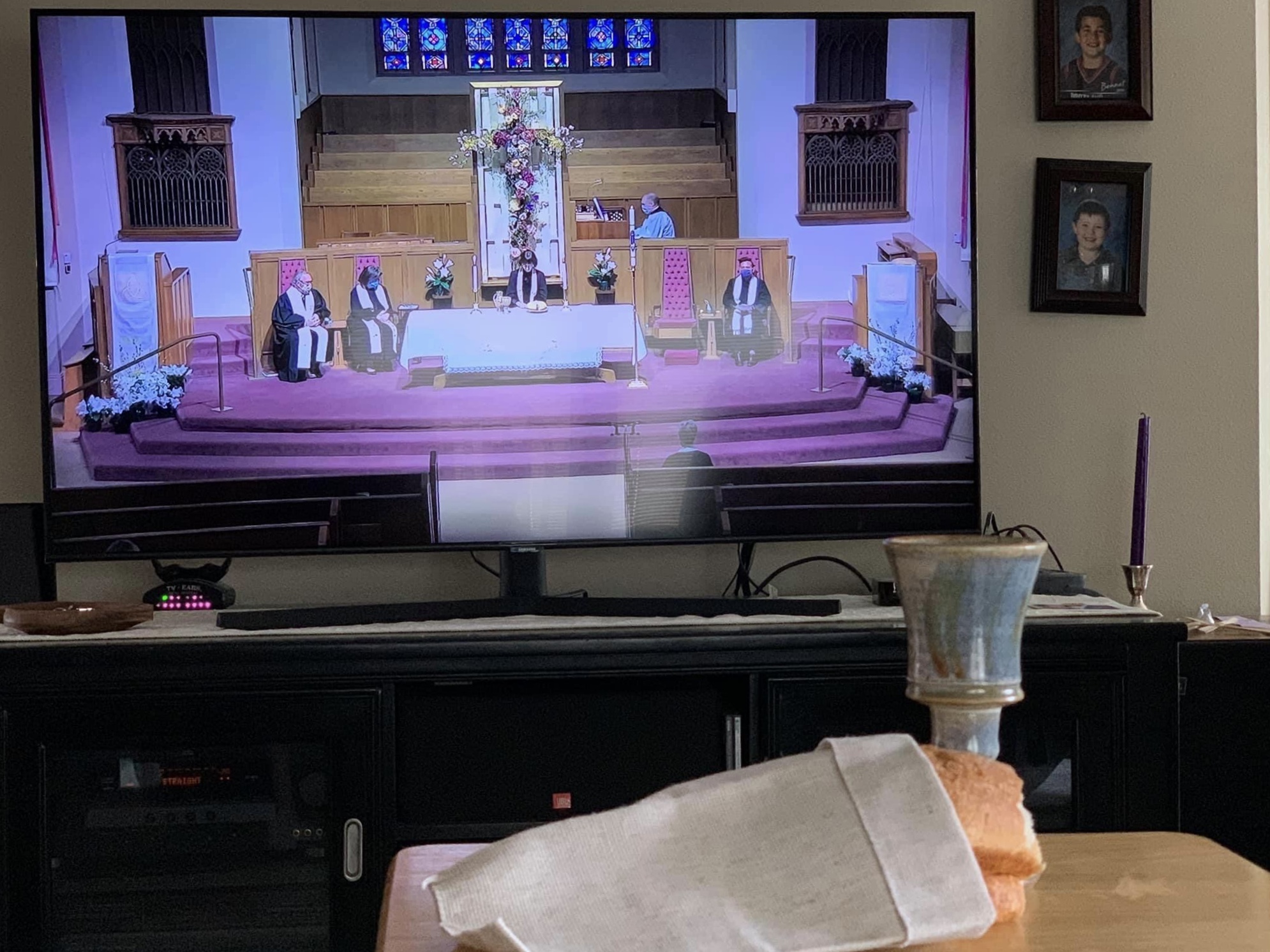
Photo taken by a parishioner worshipping only. She and her husband are unable to attend in person because of health concerns.

Coming Back, a sermon on January 2, 2022

Isaiah 60:1-6

          What is our prayer for this new year?

          Right off the bat, I can think of about a hundred things I would like God to take care of this year. The Coronavirus, obviously.  Climate change.  Poverty. Cancer, Alzheimers, ALS.  Gerrymandering that benefits whatever political party.  Depression and anxiety.  Catalytic converter theft.  I could go on, and so could you.

          Today’s scripture from Isaiah is a kind of prayer for the people of ancient Israel.  You might remember the general arc of the book of Isaiah.  The first part, more or less, is the prophet warning the people of Israel that they have been unfaithful to God and there are about to be some bad consequences.  The second part, more or less, is the prophet comforting the people living in exile that God is not done with them yet.  The third part, more or less, is the prophet speaking to the people after they have returned to their homeland and left their exile. 

          While scholars don’t necessarily agree on this, let’s think of this passage as being addressed to the people who have returned to their homeland only to find that it’s not flowing with milk and honey but a pile of ruins.  Rebuilding awaits them.  But, Isaiah promises, God will be with them in the rebuilding.

They had come through a terrible, devastating time. As Old Testament scholar Walter Brueggemann puts it this way. “What you need to know is that Isaiah 60 is a very old poem recited to Jews in Jerusalem about 580 b.c.e. These Jews had been sent away from Jerusalem in exile in Iraq for a couple generations.  They came back to the bombed out city of Jerusalem, and they found it in shambles without a viable economy and without much ground for new possibility.  They were disappointed and ready to despair, for who wants to live in a city where the towers are torn down and the economy has failed and nobody can think what to do about it. 

          “In the middle of that mess in Jerusalem about 580 b.c.e, there was this amazing poet who invited his depressed, discouraged, contemporaries to look up and hope and expect newness in the city that God would give again. He promised that everything would change in Jerusalem because God is about to do good….”  (Inscribing the Text: Sermons and Prayers of Walter Brueggemann.  Minneapolis: Fortress Press, 2004.  P. 129.)

          I must tell you that when I read what Dr. Brueggemann wrote – “who wants to live in a city where the towers are torn down and the economy has failed and nobody can think what to do about it” – I thought of our Portland. 

          A few weeks ago I was at the Walmart in North Portland trying to take care of the Angel Tree gift cards, and as I went to my next errand I drove through the Delta Park area.  Have you been there lately?  I saw tent after tent after tent, pile of stuff after pile of stuff, burned out cars, and a few of the people who live there.

          My reaction was at it always is, when I see this at Delta Park or downtown or wherever: both deep sadness that people live this way and anger that people live this way.  What have we come to when we think it’s okay for people to live in this filth, without heat or running water?  And why don’t these people want better for themselves? 

          And so we have news article and editorials and tv segments about all of this.  Is Portland over?  Will we ever get tourists back?  Will businesses flee from downtown?  Can we build temporary shelters, transitional housing, affordable housing?  Will we prosper or will we perish?

          I know that the situation is complicated. 

Sometimes people lose their housing because they do not have enough money to rent a place, much less buy one and that involves not making a living wage and the high cost of living here. 

Sometimes people live without shelter because they have an addiction and have lost all their chances to be a part of mainstream society. 

Sometimes people live without shelter because they live with a mental illness that makes navigating the systems for help difficult or frightening.

          The economics of it are also complicated and I’m not sure that capitalism has an answer.  There are plenty of people in our city who make plenty of money, however you define “plenty” of money.  Some are very generous with non-profit causes.  And some ask the question, “Why should I give away my hard-earned money to those people?”  The system itself is stacked against those without resources, especially if they are people of color.  We live with the legacy of Portland’s history of redlining, not allowing people of color to buy property in certain neighborhoods. 

          To the people of Isaiah’s time, coming back to their devastated homeland, the prophet offers a vision of prosperity.  “the abundance of the sea shall be brought to you,

   the wealth of the nations shall come to you.

A multitude of camels shall cover you,

   the young camels of Midian and Ephah;

   all those from Sheba shall come.

They shall bring gold and frankincense,

   and shall proclaim the praise of the Lord.”

          As Brueggemann says, “This is a great cause for celebration, because God, in this poem, has promised to make the great city of Jerusalem work effectively in peace and prosperity.  The poem contradicts the present dysfunction of the city.  This is a promise from God, thus very sure.” (p. 130) He goes on to describe this text as the description of a way that will allow the people of Israel to return to normalcy. 

          Isn’t that what we are longing for – a return to normalcy? Prosperity for our city?  Restoration? 

          I think it is, but I also think we must be careful and thoughtful and compassionate as we move in that direction.  What will ‘normal’ look like after this pandemic?  What will prosperity look like in Portland?  What will restoration look like for any of us and for all of us?

          As we think about these things, maybe we start with our values, hoping that those shape the answers to these challenges.  As people who follow Jesus, we place the highest value on love and grace, which might look like compassion, empathy, forgiveness, and mercy.

          As people who follow the God of Isaiah and all the prophet, we place a high value on justice, which means, as we read the scripture, making sure that the most vulnerable among us are provided for in whatever plans we make.  As people of faith, we value hope – hope that God is not finished with us, with our city, or with our world, that God desires goodness for all of us, even more than we desired it for ourselves.

          And so a cleaned-up Delta Park or a bustling downtown must include, using the values of our faith, a plan for shelter, for addiction treatment, for physical and mental health care.  It’s not enough that the soccer pitches are clean and safe; it’s not enough to move the unsheltered to a different place.  We must also provide for them, those who live on the margins.

          And oh my goodness, that takes so much work.  And patience.  And hope.  It may be true that some who live in dire situations do not want help.  That saddens me, because I make the assumption that they do not think enough of themselves to want better, and I have a hunch my assumption may be totally off.

          So what do we do?  How do recast Isaiah’s vision for our city?

          First we look at what is already being done.  The city is looking into creating three villages with very modest, temporary cabin-like structures where the unsheltered can live.  Other non-profits, including Westminster and a consortium of faith-based communities, are in the process of building affordable housing.  That is an exciting expression of faith.

          For those living with addiction – what do we do?  I imagine every one of us knows someone who is addicted to alcohol, painkillers, or some other substance that tears apart the body and soul.  We might examine our own tendencies toward addiction, to develop our empathy.  We might learn about the neuroscience of addiction.  We might press our elected officials to offer better services.  And we might have to accept that some people will never escape their addiction, and might die from it, and know that they too deserve our love and compassion.

          For those roaming our streets who live with untreated mental illness – that is a hard one.  We have all sort of medications and therapies that help those who live with schizophrenia or bipolar disorder or other illnesses, but – compliance in taking the meds, and access to the meds are stumbling blocks.  We simply need more services to help with mental illness – Unity Center for Behavioral Health is utterly overwhelmed. 

          Over all of that is our understanding of what prosperity means for Portland.  Does it mean business having record earnings, and stocks increasing in value?  Does it mean big bonuses for executives?  I hope not.  I hope prosperity means that everyone lives with the basics – shelter, food, clothing.  I hope it means that everyone has access to medical care for body and mind.  I hope prosperity means that people find community, maybe a church community, maybe a 12 Step group, maybe tiny village of temporary cabins.

          What is our prayer for this new year?  We always pray for those on the margins, and pray for God to show us our role in their prospering.  We always pray for strength and courage to face whatever comes our way.  But in 2022, I think we add prayers to move with openness into whatever our new normal is. 

          As we transition from the old year to the new, and as we move from Christmas to Epiphany, let us remember these words, this prayer, from Howard Thurman.

When the song of the angels is stilled,
when the star in the sky is gone,
when the kings and princes are home,
when the shepherds are back with their flocks,
the work of Christmas begins:
to find the lost,
to heal the broken,
to feed the hungry,
to release the prisoner,
to rebuild the nations,
to bring peace among the people,
to make music in the heart.

To the glory of God.

The Reverend Beth Neel

Westminster Presbyterian Church

January 2, 2022

I miss Brian Doyle

At our Worship committee meeting yesterday, someone commented that they wished Brian Doyle was still alive, so we could read his thoughts on how life has changed in the last year. To that, I decided to write a few prayers in that style of his. Enjoy. Or don’t judge me for being inferior to that beautiful and deeply missed master.

PRAYER WHEN YOU SCREEN FREEZES DURING A ZOOM MEETING
Dear Lord, I know that I am talking and that no one can hear me, so I suppose I understand a little bit what it has been like to be You. So in this pause, which is not of my own making but of the little hamsters who run in the wheel that powers the internet as they need a rest because their tiny legs are so tired, let me pray for the people on my screen. For Nancy, known to this Zoom community as IPad, I ask you to give her a deeper sense of identity. For John, whose face is frozen in what can only be described as mid-yawn scrunched eyes and gaping mouth that exposes a little of his lunch sandwich caught between his teeth, I pray for humility and good humor. For Pat, who is trying to run this damn meeting to the best of their ability while admonishing all of us to mute when not speaking so as not to be interrupted by, say, my dog who is alerting me that evidently Timmy has fallen down the well AGAIN, and to then unmute ourselves when we do have something to say, which might only be, could you please repeat that as I couldn’t hear over the dog’s barking; for all these, I ask a good measure of patience and the reminder that what may be most important is not what is said, but being able to see each other’s faces, so please, Lord, get Nancy to turn her camera on. And so: Amen.

PRAYER FOR WHOEVER INVENTED THOSE LITTLE ALL-IN-ONE COMMUNION CUPS THAT LOOK LIKE JELLY YOU GET AT A DINER
Dear Lord, this is a marvelous little invention for us Protestants who admit so a little lower standard for our bread and wine. And here it is – the body and blood of Christ neatly glued together in what might be mistaken for a half-and-half container. For those whose arthritic fingers cannot peal of the miraculous slive of plastic hold the cardboardesque wafer in place, we pray for agility. For those who accidently drink the grape juice first, we pray forgiveness. For the inventor of such a thing, and the tireless workers at the Amazon warehouses whose labor ensures that pastors who left planning the reorder to a rather late hour are not caught short at Sunday’s communion in the parking lot, we pray your blessing. For parking lots that have turned into sanctuaries, we give you thanks. And for congregations that are muddling through with substitutes that are no where near good but have to be good enough for now, we ask for your love. And so: Amen.

PRAYER FOR ALL PREACHERS WHO ARE SHARING THE WORD OF GOD WITH A TINY LITTLE CAMERA IN THE CORNER OF THEIR MOBILE PHONE
Dear Lord, please help us first to find the right pair of glasses so that we might both locate the 1/4″ circle into which we must pour all the Good News you would have us share while still being able to see the notes to remind us of what we are to say because our brains are overtired and we really can’t remember things or recall words unless they are printed in an 18 point font right in front of us, so if we need bi-focals, please allow us to find the right mask to use to make it to the optician so that both they and we are safe from this vile plague. And let us not confuse our preaching to a camera with the hope that said camera might be saved and need baptism for we know, that while you made all living things, this camera is but a tool for ministry and not a target for conversion though maybe a target for upgrade. And for the preachers, who so dearly wish that their view was of real, live, wonderful, imperfect people, give them a heaping of imagination to see contained in that tiny camera lens a whole congregation, not unlike the way a tiny feeding trough contained the entirety of salvation. And so: Amen.

PRAYER FOR ALL THE DOGS IN THE NEIGHBORHOOD WHO HAVE BEEN KIND ENOUGH TO INTRODUCE ME TO THEIR PEOPLE
Dear Lord, it is not uncoincidental that God spelled backwards is dog, and heaps of gratitude on you for the gift of the canine species, for the mutts and the doodles and wiener dogs with their collapsing hips, for compostable poop bags and extendable leashes and school playgrounds that are vacant and so become a heaven and a haven for dogs and their slimy tennis balls and their humans with those plastic ball-thrower things that are another invention for which to give thanks. Thank you for Kona and Birdie and Mindy and Jack, for Rosie and Tiger and Bean and Emmy; thank you for Chimi and Dora and Archie and Tulip and all those sweet pups who were rescued from overcrowding and death and came to run and play in my neighborhood. Thank you for those who see unclaimed poop and take care of it. Thank you for coats with pockets, laden with said compostable bags, a reminder that unconditional love awaits us at home. Thank you for the constancy of neighbors who are out rain or shine, day or night, so that their dogs can check their p-mail and respond. And thank you for my daughter who still laughs at that term “pee-mail” which she coined when she was but a fourth grader. May our hearts be as big as our dogs’. And so: Amen.

PRAYER FOR ALL THE KIDS WHO NEVER DREAMED THEY WOULD ACTUALLY MISS GOING TO SCHOOL
Dear Lord, this is a hard one, and humor is hard found when kindergartners are clinically depressed. The choice of which risk to take feels pretty cruel, I must admit, and so I ask, in addition to that vaccine being made and distributed and shot as quickly as possibly, that you wrap all of our young people up in your sweet, strong arms that I think would smell like Ivory soap; that you would wrap these children and teenagers up and say, in ways that they will hear, that is is okay to be sad; that is okay to not want to get out of bed; it is okay to be angry that you have to live in such a time as this; that there are grown ups who have let you down. Whisper to them too that there are teachers who think about them every day, even when they’re not on Zoom; there are teachers and school custodians and lunch ladies and principals and staff like Miss Lori at Sabin who would never let a child go hungry during the day who always has a smile and would protect that place and those people with her life. Seriously, God, if you loved us at all you would end this merciless pandemic and let us get back to being with each other because, if my exegesis of Genesis is right and I’m pretty sure it is, you intended us to be together in the first place. Also, please get all those imbalanced chemicals that lead to depression and thoughts of suicide out of the systems of our beloved, precious, irreplaceable children. And so: Amen.