Always the minister, never the bride

bouquetThat was going to be the opening line of my stand-up routine, but I got married and never actually tried doing stand-up comedy, so now this great line is reduced to a blog title.

When I was in my first year of professional ordained ministry, I was visiting a parishioner in the hospital.  He was an irascible guy, and he was dying of lung cancer. Once when I went to see him, he was on his balcony smoking.  In those days at that hospital, if your room had a balcony you were allowed to go have a smoke.  I was appalled, but because I was still so wet behind the ears ministerially speaking, I pretended like that was normal and I saw it all the time.

Anyway, during one of our visits I mentioned that I was meeting with a couple to do premarital counseling with them.  He asked how I could be qualified to do that since I had never been married.  I replied, with no paucity of pastoral insensitivity and a general lack of human compassion, that I had never died but I was still qualified to do funerals.  He was taken aback, as I should have been.

Truth be told, when I was single, I hated conducting weddings.  Hated it.  Once in a while I would find the groom attractive and I would convince myself that the bride wasn’t nearly good enough for him.  Sometimes I was so jealous that these people had found love; why hadn’t I?  And then there was the huge klieg light that shone on me at rehearsal dinners, where I was usually seated with the grandparents and the weird bachelor uncle, and receptions, when I would excuse myself to the ladies’ room when it was time for all the single ladies to fight over the lousy bridal bouquet.

I imagine conducting weddings is also difficult for pastors who have been widowed or divorced.  Baptisms are painful for pastors who struggle with fertility issues or who have lost a child.  I dread my first funeral after my parents die.   The intention of the happy couple, or the joyful parents, or the bereaved family is not to rub salt in a wound they likely know nothing about.  Because we are professionals, we set our own feelings aside and appreciate the joy that others are having.  Sometimes.

Of course, pastors are not the only ones who are required to do things that rub salt in a wound; I don’t mean to imply that we are.  But for all of us in whatever walk of life we walk: how do we manage to “put on our big girls pants” (as a friend would say), fall into professional mode, get through it – whatever that ‘it’ is –  without bursting into tears, or get through ‘it’ with grace or aplomb?

Some would say their faith gets them through; others would say it’s a strong sense of self.  Still others would shrug and say they didn’t know.  But I do wonder the toll it takes if we’re not careful or aware of what’s going on in our own broken hearts while we engage with the breaking and healing hearts of others.  Did I go home from more than one wedding reception to greet my friends Ben  & Jerry?  Yes I did.  Sugar is my drug of choice, but I know others who cope with their hidden heartbreak with booze or porn or really mean behavior to strangers or beloveds.

I never cried “uncle”.  I always steeled myself through the wedding or the baptism or the Mother’s Day litany, for better or worse.  Most of my pastor friends do.  We do because it’s part of our calling.  Most of my pastor friends join me in detesting that phrase “God never gives you more than you can handle”.  We don’t steel ourselves through it with neat little memes. While I can’t speak for all of my pastor friends, getting through those things almost always gave me a reminder of grace and of hope.  Grace to get through that ceremony or that reception to then go home, put on my jammies, and watch Pride and Prejudice again.  And hope that maybe someday I would be up there facing the pastor and not the congregation; I would be in white and not black; I would be taking a ring instead of handing them out.

There’s a great clip out there right now from an episode of Louis CK when Joan Rivers was on.  (http://youtu.be/BnAIX7fWsdU)   Joan and Louis are talking, and she says something along these lines.  “Listen. I wish I could tell you it gets better, but it doesn’t get better.  You get better.”  Maybe that’s it.  We don’t all get married.  We don’t all have kids.  We don’t all stay married.  The people we love don’t live forever.  That stuff doesn’t get better.  But maybe, by the grace of God or by sheer will, we get better.  Our hearts heal a little, and the scar tissue is a little bit thicker than what was there before.  Maybe that’s the hope – we get better.
On being married co-pastors

IMG_4087This is a focused post about being a married couple who serves as co-pastors.  It’s pretty specific, and specifically Presbyterian in its language, so feel free to skip!  That being said…

For the third time this summer, my husband and I have been contacted by church people about being married co-pastors who share one clergy position*.  In no particular order of importance, here are some thoughts.

Background

We have been serving this congregation for three years as co-pastors and co-heads of staff.  Prior to this call, my husband had served in executive work in the church, as an executive presbyter, and as an interim synod co-executive.  Prior to that, he was a lay member of a church staff and before that, a special education teacher.  Before taking this call, I had served in a variety of pastoral roles: associate pastor, interim pastor/head of staff, part-time interim co-pastor of a four-point parish, temporary supply solo pastor, part-time interim associate pastor.  All of which is to say that we had both served in a variety of roles in church work.

But then our child was going to be in school full-time, and I was itching for something more permanent, and my husband was ready for a different direction of ministry.  We agreed that we wanted to be pastors of a congregation.  We agreed that we did not want to serve two different churches.  We decided (and yes, discerned it as a call) to be co-pastors serving the same congregation.

We applied to twenty congregations, none of which was looking for co-pastors.  We heard back positively from two, one of which is the congregation we now serve.  We did file with the denomination’s matching system, which matched us twice, once with a three-point parish and once with a two-point parish.  Not what we were looking for.

Suggestions for couples looking to serve as co-pastors

1.  Do not rely on the denomination’s matching system.

2.  Be creative in your cover letter.  We used that as a way to extol our virtues without bragging – I wrote about my husband’s gifts for ministry and he about mine.  The cover letter is KEY.  Use it to (briefly) lay out how you would be co-pastors.

3.  Be clear about whether you would share one position and each be part-time or if you want more than that.

4.  Once you get your foot in the door, look at the church MIF and using the job description they provide, explain who would do what, and what you would both share.

5.  Be realistic about the hours you will work.  When we began serving, we were each half-time, and that meant for us each working about 30 hours per week, because some of those are overlap hours.  When we are both at a session meeting or leading worship or conducting a wedding or funeral, those are overlap hours.  It was our choice to share a position, and the church was not looking for two people.

6.  Be honest with each other about the state of your marriage.  If you are in a rocky place, serving as co-pastors is no way to strengthen your relationship.

7.  Be clear with the search committee about office space.  Most churches don’t have a spare office hanging around.  We shared one office for two years, which had its pluses and minuses.  Let the committee know if you are willing to share an office or if that’s a deal breaker – but wait until you’re into the process.

8.  Be clear with each other from the beginning about accountability and critique.  When is this person a spouse and when is this person a colleague?

9.  Leave domestic things in the domicile. Do not fight with each other at staff meetings, committee meetings, or for God’s sake, in worship.  Also, be aware that public displays of affection might make folks uncomfortable.  Never kiss each other at a staff meeting.  Trust me on that one.

10. Engage the services of a coach, counselor, or therapist to work with you both.  If this is the first time you’ve worked together, it will be really helpful to have a neutral third party who is not a part of the church to talk things over with.

Suggestions for committees considering clergy-couple co-pastors 

1.  Be open to the possibility; a blanket “we won’t consider a clergy couple” might keep you from looking at some great folks.

2.  Talk with congregations that have a clergy couple as their co-pastors, and ask good questions about how that’s working.

3.  If the couple has served together before, ask about that.  If they have not served together before, ask them how they envision dividing the work.

4.  While you cannot ask them direct questions about the state of their marriage, look for signs of the health.  Our PNC was impressed because we never interrupted each other.

5.  On the plus side:  when you call a clergy couple, you get a wider diversity of gifts.  You get two for one, even if each one is only part-time.  There are benefit benefits, too technical to explain here.  You get two personalities and working styles.  If the couple is heterosexual, you get a woman and a man.

6.  On the minus side, when you call a clergy couple you take some risks.  The marriage could end.  Family crises affect both pastors.  They usually take vacations together.  If it’s a staff situation, there are now two people in the authority position rather than just one; it could feel overwhelming for other staff members.  You might have to find a second  office.  You might like one better than the other but you’re stuck with both.

7.  If you do consider a couple, be clear with them about the time of the position.  Is it one position for two half-time people?  Is there room to expand – each become three-quarters time or full-time?

8.  If you do consider a couple, and if there is/are another pastor/pastors on staff, be clear from the beginning about things like the preaching schedule.  If there are two co-pastors and one associate, does the associate then preach less often?  Do the co-pastors share equally in preaching?  Who superivses whom on staff?

9.  Understand that this is a couple who will take vacations together and who may go on study leave together.  That’s fine and good.

10.  Generally speaking, be as clear as you can as you go deeper into the conversation and ultimately into a call about things.  The more clarity there is from the beginning -about time, roles, expectations, job descriptions, office, benefits, other staff members – the better.


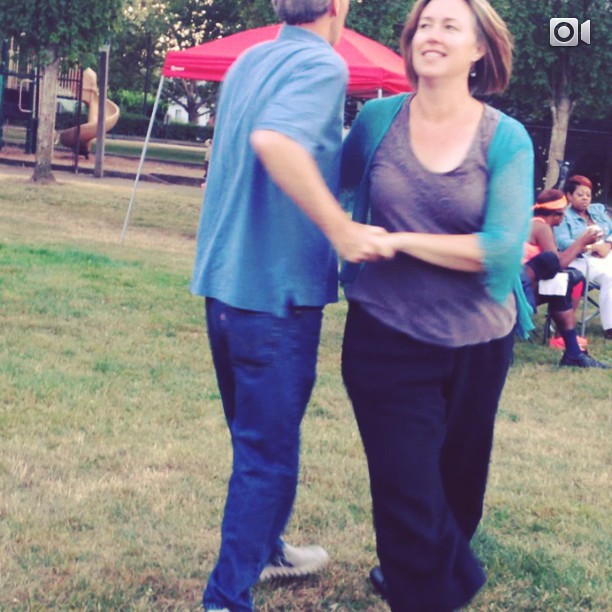
So if you would like to talk more or if you’d like to talk with a member of our PNC or the congregation, send me a message.  My husband or I would be happy to share with you about our experience, which we love!  And we’re grateful to our congregation for taking a chance with us. It’s been a great dance so far!


*Last December, one of the two part-time associate pastors moved on to another call, so now my husband and I are both serving 2/3 time.

Family Reunion

ranch oneMy extended family – parents, siblings, aunts, uncles, cousins, first cousins once removed, first cousins twice removed – owns property together.  It’s land that my grandparents bought over seventy years ago, land that they have passed down to their children which they, in turn, are passing down to their children.  It’s home to me, in a way; it’s the place we went to every summer, whether my address was in California or New Jersey or Texas.

Because we own this property together, we have an annual meeting to talk about the management of the place.  Some years the annual meeting goes well, and some years there is contention, as happens when more than one person is involved in making a decision.  But always after the meeting, we gather for a potluck lunch.  Some of the family stays around for a few days afterwards; others go back home, promising to see us the next year.  Because we own this property together, we know each other. We’re spread out from New Jersey to Wisconsin to West Virgiania to Washington but I know my cousins; I know the names of their spouses and kids.  My kid will know her second cousins and her great aunts and uncles.

My grandparents left us a treasure.  Sure, the land would be worth something if we ever sold it, but it’s a different kind of treasure. I know my family; I know their joys and quirks.  I have shared their heartaches, and so often they make me laugh out loud.  That’s priceless.

This last week I’ve been at a different kind of family reunion.  The General Assembly (national gathering) of the denomination in which I minister (the Presbyterian Church U.S.A.) has met, as we do ever other year.  We are not bound because of a piece of property.  Rather, we are bound by faith.  We are each other’s beloved because we are all God’s beloved and we know this because of Jesus.  We get together to talk about our mission and ministry and our rules.  Sometimes the meeting goes well; usually there is contention.  Actually, always there is contention.  But that’s okay, because we talk about things that we feel passionate about, things we believe deeply about, things that have called us together and things that threaten to tear us apart.

I’ve had such a sense of reunion this week, seeing old friends from so many times of my life.  My internship buddy.  A guy I dated in seminary.  A woman who moderated the presbytery when I was examined for ordination.  Seminary mentors and classmates.  Former members of my pastor’s group (all of whom absolutely shone this week.)  Friends who challenge me to act beyond the role society has proscribed for me.  Friends who inspire me to love Jesus more.  Friends who irk me into speaking up.  Friends who took a taxi with me because my hip hurt too much.  Friends who laughed at my bad jokes.  Friends who walk the walk of faith and ministry and Presbyteriana with me.

We are family, in the best and worst sense of that word.  We are bound by love, but thank God it’s not our love doing the binding but God’s love.  And we fight the way families fight.  Sometimes we fight and make up.  Sometimes we let ourselves get rent apart.  I know for some the metaphor of family describing church doesn’t work because their own families are so messed up and a source of deep pain. I know there are some in the Presbyterian family that feel that way, especially after some of the decisions made this week about marriage equality and Israel/Palestine relations.  I think about that with my own family experience, and I hope they will be willing to come back to the table after the meeting, and I’ll be as gracious as I can be if they choose to find another table.

But I’m feeling so grateful at this moment.  I am so grateful to remember the cloud of witnesses, friends who weren’t at this Assembly because they are with God, earthly witnesses with whom I broke bread and raised a glass.  I’ll be at the next reunion, too, and so the goodbyes didn’t really seem like goodbyes as much as see-you-soons.


Tomorrow night I get to have dinner with my family, my husband and child, for the first time in ten days.  I can’t wait for that family reunion – it’s been too long without them.  Sometimes you have to be apart to appreciate the good of being together.  May that be true for Presbyterians in the next two years.

ranch 2

A Century-Worthy Sermon?

future wesminsterThis week, our congregation is celebrating the 100th birthday of the dedication of our sanctuary.  It should be a festive day with a few fun extras planned, but since it’s the anniversary of a building, and not of the congregation itself, we are limiting the festivities to just Sunday. A task force has been at work planning this, and we had the opportunity to watch some stonemasons dig around behind the building cornerstone to unearth the time capsule (actually, a lead box) that the congregation had set in one hundred years ago.  We weren’t sure what we would find.

In it were papers, photographs, and a Bible – a little damp and moldy but all still very much readable.  They included the roll of the church,various rolls of Sunday School departments, a list of those who were on the planning committee, a list of the founding members of the church, the history of the Women’s Missionary Society, the Oregonian from the day they placed the time capsule, and photographs of the previous locations of the church.  What was not in their time capsule was interesting:  no program from the service of dedication of the sanctuary or laying of the cornerstone (we have those elsewhere) and no remarks by any pastor.

So our task force has been thinking about what we will put in the new time capsule that will be set in behind the cornerstone, hopefully to be opened in the year 2114.  A membership directory, which is about as close as we can get to the official church roll.  The bulletin from the 100th anniversary worship service.  A book about our needlepoint pew cushions.  A copy of tomorrow’s Oregonian.  And a copy of my sermon.

I’ve wondered all week what the people of Westminster in 2114 (if there is a Westminster in one hundred years) will think of my sermon.  Will it be one for the ages?

Probably not.  I can count on one hand the sermons I’ve read that are for the ages, at least for me: John of Chrysostrom’s Easter sermon.  Jonathan Edwards’ “Sinners in the Hands of an Angry God.”  Fosdick’s “Shall the Fundamentalists Win?”  C. S. Lewis: “The Weight of Glory.”  James Forbes “The Battle of Bethlehem.”  Frederick Buechner’s “The End Is Life.”  Yes, it distresses me that there is not one sermon by a clergywoman there and I promise to work on that.

For the most part, I think sermons, or at least my sermons, are for the moment. They might have impact in the hour that they are delivered, or maybe for the day  or even the week, but after that, their “use by” date passes and it’s best to let them go like old mayonnaise.  I’m fine with that – truly – because God is always doing a new thing, so why should last year’s sermon matter in the context of a new day?

But I think too about language and images and metaphors I use today, and how they will be received in one hundred years.  I quote two people: John O’Donohue and Winston Churchill.  I refer to two anthems the choir will sing.  I make a joke about bikram yoga.  Will anyone still be doing bikram yoga in 2114?  Will everyone be doing it?  Will they think the sermon is awfully long or inadequately short?

It’s one thing to write a sermon and picture various people you know responding to it; it’s another thing altogether to imagine people who aren’t born yet, who live in an unknown future, responding to it.

In the end, I suppose the audience that most matters is God, whether yesterday, today, or tomorrow.  I wish that caused more fear and trembling in me than it does.  Fortunately, God has better preachers – many of whom never use words – to get the message across.  That will be true a hundred years from now, so Amen and Amen.photo-2

Sometimes there are no words

angel weepingSometimes there are no words for the things that human beings do to each other.

Sometimes there are no words to express our horror, or our sadness, or our fear.

Because we humans are capable of being so very inhuman. We forget that we have minds that allow us to think before acting. We forget that we were created to love. We forget that we don’t have to go through this alone, but we have friends and strangers who will help us get through the rough spots.

At the end of his life, Jesus had very few words. “I thirst.” “Forgive them.” “It is finished.” But in those few words he spoke there was no hatred. There was no blame. There was no judgment. There was pain in his words, of course. He had been in physical agony as he died. His spirit was in agony, too, wondering if God had left him there.

But at his core, Jesus was love, and so even in the pain of his dying, love shone through.

At his core, was Jesus expressing his human side, or was he expressing the God part of him? Because if he was expressing his Godliness, then there is no expectation that we should show love whenever we are in pain. But if it was his humanity showing, if that was Jesus the man who loved even at the end, well then, we are not off the hook.

Sometimes there is only one word that will get us through this life, and that word is love.

Holy Week

Holy week is

fits and starts.

The rush to get all the information in, to choose the scripture, choose the hymns, update the publicity; Maundy Thursday prep: check; Good Fridayprep:check;SaturdayprepcheckEasterSundayprepcheckaretherenougheggsforthechildren’stalk dowehavenoughenvelopesfortheofferingwhenisthebrassrehearsingandwillthatconflictwiththe placementofflowersandwhowilldrapethecrossandwhowilltaketheddrapeoffandarethebatteriesworking

Yes to all.  So we are ready.


And then

the waiting


The waiting for inspiration or the Spirit or my muse to show up and, you know, inspire

Waiting to set hands to keyboard, pen to paper, mouth to microphone


But really

it’s the rush of accusations, arrest, trial

rush of adrenaline watching the agony

rush to get things done before the sabbath comes


and then

waiting


waiting for the cold stone tomb to receive her most precious gift

waiting for the mystery, the light, life,

waiting for resurrection


Resurrection comes in fits and starts, too.

Too early in the morning, but they bring their spices anyway

No stone, no body, but angels

The women believe, the men do not

Silence

Then Peter looks in

and rushes home

amazed.


Fits and starts

and endings and beginnings

and

life

“I didn’t know girls could be ministers”

rev barbieSeveral years ago, while serving a church in the capitol of a midwestern state, I went to a friend’s bridal shower. Chatting with another woman there, we started talking about what I do.  “I’m a Presbyterian minister,” I said.  “Pardon me?”  she said.  I, more slowly and with more enunciation.  “I’m a Presbyterian minister.”  “Really?  I didn’t know girls could be ministers.”

Sigh.  I once told someone I was a minister and she thought I said “mistress.”  That one was pretty funny.  But my favorite is “you’re so normal for a minister.”  Sigh.

There’s a new twist on this whole female clergy thing for me.  This week our local paper ran an article about a new church in town, founded by musicians, worshipping in a cool space, growing, and attracting folks in their 20’s, 30’s and 40’s.  A member of my congregation emailed me about it, because they’re doing a lot of things we’ve talked about doing.  But then, as he noted, all the pastors are men, all the elders are men, and of the twelve member staff, only three are women.  They’ve outgrown their facilities twice since 2009, and they have worship four times on Sunday.  In other words, they are alive and growing.  Without leadership from women.

They are not the only thriving church that does not have women in leadership.  There are thousands of growing churches out there that do not allow  women into positions of leadership.  And that’s fine for them (not really) but sometimes I want to say to some of their people in their 20’s and 30’s, “Really?  It’s okay with you that your church does not allow women to be in leadership here?  That’s really okay with you?  What if that happened at your workplace – what if only men could be executives and directors – would you work there?  What if only men could be in management at your grocery store?  Would you shop there?  What if  only men could be teachers and principals?  Would you want to go to that school?”

To be honest, it ticks me off that these churches are growing without women’s leadership.  Then again, the theology in these churches would probably tick me off too – too much literalism and judgment, not enough questioning and grace.  There have been hints that one of the reasons mainline Protestantism is declining is because we decided it was okay to ordain women, that the church has somehow lost its luster, power and voice because women are at the table, too.  No, no, no, no, no.

So here’s the thing for me, today: if you want to go to a church, hear great music, hear a message that makes the gospel very clear, black and white without a shade of gray, if you don’t care that only men are up front and around the decision-making tables, that’s fine.  Really, it is.  Our souls are all fed in different ways.  But please don’t assume that your church is awesome because of the kind of music it has, because of its particular theological take, because women are not allowed.  If your church is awesome, it is because of the Holy Spirit, not because of anything you do.

Most days, I love being a pastor.  Most days I am grateful that I bring particular gifts because I am a woman.  In my twenty years of ministry, no one has left a congregation I’ve served because they called a woman.  (They left for other reasons, but that’s another post.)  There are folks in my congregation who used to attend those growing, hip churches with music they loved but left because they couldn’t bear the theology, missed seeing women up front, did not believe that God hates gay people.  They’ve found their way to us, and put up with the classical music that doesn’t move them, and yawn their way through a Sunday morning service when they would just as soon be sitting in a coffee shop.

I really don’t have an answer.  All I’ve got today is some good ol’ righteous indigation that these churches are thriving without women leaders.  Their loss, I say.  Sour grapes, they might say.

A New Thing

20140402-142447.jpg

I’ve been feeling old lately.  I have a tear in some tissue in my hip that’s causing me no small amount of pain and discomfort and causing me to limp.  I’ve decided to stop coloring my hair and am a bit surprised by just how much gray I have.  I turn 50 this year, and, well, that’s not the age of a young person.

This week I attend a church conference – a really good church conference – and I feel both old and strangely young and renewed and a bit excited about the future.  Because here’s the thing, at least for me as I limp into the conclusion of my fiftieth year: I’m not really afraid of the things I used to be afraid of.  I don’t really get too excited about pies in my face, epic fails, minor fails, or not being one of the Beautiful People in whatever circle I happen to be traveling.

There is a great freedom in not fearing failure. (I am so sorry for that alliteration.)  Not fearing failure opens up so many doors.  I lived whole lot of my life not doing things because I was afraid I would not do them well, or not be able to do them at all.  And that’s a terrible way to live – a safe way, yes, but a terrible way.  It’s more existence than living, really, and since we only get one go-round on this life thing, maybe we should live it.

Because I’ve been at this church conference, I think about what it means for the church to live and not merely exist.  Maybe some of you who read this blog don’t care much about the churchy posts, so you can just skip this one.  But my vocation and avocation are in the church, the mainline Protestant church, the Presbyterian Church (U.S.A.).  This is the church that raised me, formed me, challenged my, called me, disappointed me, bored me, inspired me, gave me the best friends one could ask for, and where I found my husband.  It’s the church into which I was baptized and in which I was ordained and married.  I love this church and I want it to live, and not just exist.

That’s true for the congregation I serve.  I am blessed beyond measure to have been called, with my husband, to serve where I do.  There are not mean people in this congregation.  There are not people who complain after every worship service, no people who leave snarky notes in my hymnal.  They are lovely, faithful, honest people, and I hope they are ready because I think I am going home from this conference ready to light some fires under our collective patookies.  (Please substitute your favorite euphemism here.)

One of my favorite lines from the musical Mame is “life is a banquet and most poor suckers are starving to death.”  Well, little baby Jesus grew up and gave us a banquet and we act as though we’re getting soda crackers and room temperature water most of the time.  To hell with that – literally.  To hell with the tepidness and things that won’t upset our stomachs.  To hell with fear, because that’s where it belongs.

Come Sunday, I’ll be limping into the chancel because of my hip.  But I’ll be dancing on the inside, up to the pulpit and around the table and down the aisle.

Join me!

There is an “I” in “Worship”

groovy jesusA few Sundays ago, as the deacons brought the offering up to the table and the congregation sang the Old 100th doxology, I found myself doing what I always do when singing that doxology: changing the words to make the God-language more inclusive.  It’s just a thing I do, week after week, my little stab at feminism in the midst of a tradition that is slowly, but perceptibly, moving away from patriarchy.

And then I felt like David when Nathan said to him, “You are the man.”  Not in the “you da man” way, but in the “you yourself do what you’ve been critiquing others for doing” way.  It all started with the Apostles’ Creed.

Our Presbyterian Rules of How To Do Things, otherwise known as the Book of Order, says that the Apostles’ Creed shall be said as part of the baptism liturgy, so when my husband and I arrived at the church we serve as co-pastors, we put the creed (which had been taken out at some point) back in the liturgy.  At first we introduced the creed saying the words I’d memorized in my early years of pastoring.  “Let us stand and affirm our faith and the faith of our church, using the words of the Apostles’ Creed.”

We got some feedback on that, so we changed the intro.  “Let us join in the historic tradition of the church, saying together the Apostle’s Creed, which the church has said in baptism for thousands of years.”  Feedback on that too, but it’s still in.

There are some people who really like saying the Apostles’ Creed, like the way it ties us to the ancient church; some of them probably wish we’d say it, or another creed, every week.  But there are people who really, really, REALLY don’t like it.  They don’t believe some or most of the stuff in there.  They don’t like the Father language.  The Virgin Birth seems to be a tricky part, as is the descent into Hell, as is the resurrection of the body.  (For me, Virgin Birth is non-essential; descent into Hell is another way of saying Jesus died; I love the doctrine of resurrection and believe in it.)

There are some people who don’t like to pass the peace, or to say “the peace of Christ be with you.”  There are some who don’t like opening the service with the words “This is the day the Lord has made; let us rejoice and be glad in it.”  There are some who wish we didn’t do Moments with Children, and likely more than a few who wish there were no sermon, or a more intellectual sermon, or a less intellectual sermon.  Some don’t like the prayers of the people.

You get the picture.  What’s a poor pastor to do?

First, I am grateful that people in our pews take theology seriously, and want to be authentic about what they say they believe.  We have a broad array of theological beliefs in the congregation, and I would have it no other way, because it enriches our conversation and our life together.

Second, there is room for all of us.  If I choose to sing different words to the doxology, why can’t someone else stand but not say the Apostles’ Creed?  Why can’t someone who is new to Christianity say “Good morning” and in time, may learn to say “The peace of Christ be with you”?

Third, we’re keeping the tricky bits in.  Sure, we could take out “This is the day the Lord has made”, and the passing of the peace, and the children’s time, and the sermon, and the prayers, and the creeds, and a lot of people would be happy.  A lot of people would be unhappy.  A lot of people would be comfortable that we don’t have complex things, or blatantly faithful things, in the service, but without those things, worship would be pretty watered down and if I went to a worship service that didn’t challenge me, or even make me mad or questioning just a little bit, then I might as well go to Starbucks, drink a latte, and read the Sunday New York Times.

Which a lot of people do.  But not those who show up Sunday after Sunday to sit in our pews, to sing, to pray, to get bothered, to be comforted, to be told they are loved, with all their questions and opinions and preferences.  They are loved, and so am I.

Praise God from whom all blessings flow;

Praise God all creatures here below;

Praise God above, ye heavenly host;

Creator, Christ, and Holy Ghost.

But about that “Ghost” part….

Ashes, ashes, we all fall down

Cigar-and-ashes-0cI was thinking back to the handful of times in my life when I smoked a cigarette or two.

Usually there had been a drink or two or four in my hand,

which made me lose my inhibitions

which made me forget how dorky I looked when I took a long drag and then coughed

which made me forget how my mouth tasted like a cold furnace the next morning.

Nothing against smokers, mind you; it’s just not for me.

The other morning I stepped out into the backyard early to let the dog out and something reminded me of smoking, and the taste of ashes in my mouth, and my regret about all of that.

I suppose a few people have Fat Tuesday regrets on Ash Wednesday –

a few too many indulgences,

too much gluten, too many Hurricanes, too much, too many.

I wonder if Ash Wednesday is a day of repentance as much as it is a day of regrets. Regrets for those cigarettes and those drinks and the ice creams and the harsh words and the apathies and the lies and the cruelties and all those ashes that pile up, in our mouths and in our hearts and in our souls.

We really are all dust, and really, that is our only destination.

But out of the ashes, the phoenix rises –

And out of the dust life bursts forth, shaking off the dirt, proclaiming green in the monochrome scene.

So maybe Ash Wednesday is as much about hope as anything else.