 Does a prayer have staying power? Does a litany change anything, or anyone?
There are prayers I treasure; I particularly love Cardinal Newman’s “O Lord, support us all the day long, until the shadows lengthen….” When leading worship, I sometimes worry I will forget the Lord’s Prayer right in the middle. I find comfort, before preaching, in saying the words out loud “may the words of my mouth, and the meditations of our hearts…”
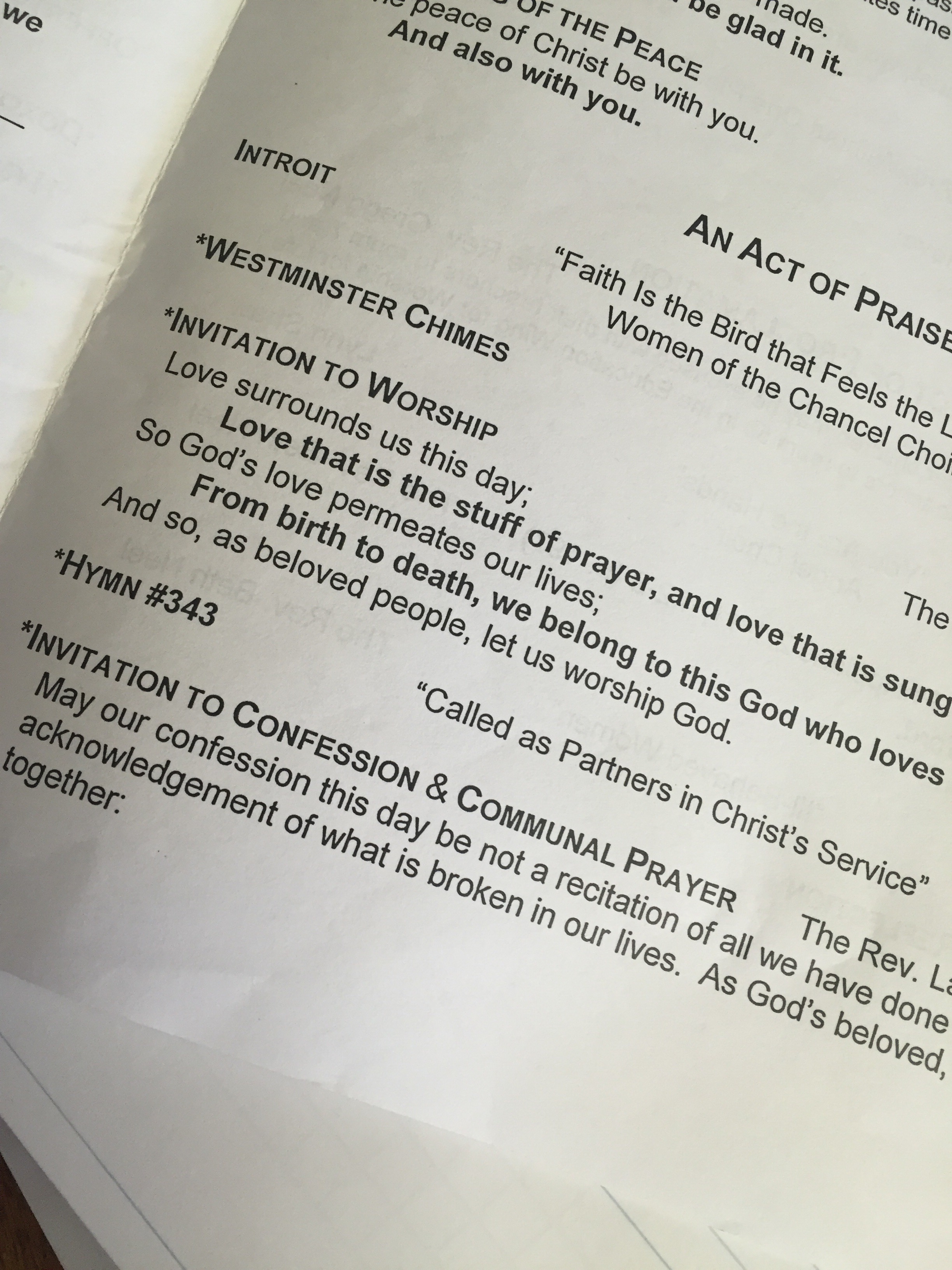
Almost every week I write liturgy for the bulletin, usually a call to worship and a prayer of confession, maybe communion liturgy. I spend a fair amount of time on it (and make it available elsewhere on this blog). I enjoy the process; it adds the sense of poetry to my usual to-do list. Some of the stuff I write isn’t half-bad, if I do say so myself.
But occasionally the thought comes: does this make a difference? People get one shot at their part in the call to worship, and then we’re on to the opening hymn. Did a word catch them? Did a phrase redirect their thoughts? Do the words of confession that I put together resonate at all with at least one person in the pews?
Lately I’ve decided that the liturgy – or at least the liturgy in our Presbyterian worship – is momentary. The grass withers, and the liturgy fades, but the word of the Lord will stand forever.
And maybe that’s not bad. A petite-four is a momentary thing; so is a sidewalk drawing. Which is not to say those things aren’t beautiful, brief though they are. If everything were eternal, we’d be overloaded.
Maybe liturgy is like KonMari for worship – something non-essential that is done with once uttered. I think I’m okay with that.
But I’ll write on, not for eternity, but for the moment.




 Hold Fast to What Is Good