On cousins

IMG_6390I recently spent a few days with some of my cousins on my mother’s side.  Our families share land that is dear to all of us, and once a year we meet there to do some business and have a picnic and get caught up.

I never lived near any of my cousins; the closest was when three of us lived in a hour’s triangle from each other, and mostly we got together for Thanksgiving a few times.  But cousins were never part of my everyday life.  They were a part of my summers, as we would fly or drive from all over the country to meet at the family place near Mt. Rainier, to be loved by our grandparents, to throw rocks in the creek when we were little and to build dams in the creek when we got older.

Now that we are all older, I have a different appreciation for my cousins.  We’re in various stages of child-rearing.  A few are grandparents while youngest child of our children’s generation is just four.  We’ve had successes and less so of careers and marriages and managing it all.  The oldest of our generation died forty years ago, and I hardly knew him.

* * * * *

This week I am away at Lake Tahoe, the worship leader at a conference for church music leaders.  Needless to say, it’s a good gig.  Lake Tahoe.  Gorgeous choral music all day long. Leading in worship, which is one of my favorite things.  Lake Tahoe.  Our church’s music director is here too, one of four music directors who each brought two pieces for the concert we’ll have on Thursday night.

One of the pieces she chose is a favorite of our choir and of mine: “Entreat me not to leave you” by Dan Forrest.  It’s based on the text from the book of Ruth, when Ruth says to her mother-in-law Naomi, after both have been widowed,

‘Do not press me to leave you
or to turn back from following you!
Where you go, I will go;
where you lodge, I will lodge;
your people shall be my people,
and your God my God.
Where you die, I will die—
there will I be buried.
May the Lord do thus and so to me,
and more as well,
if even death parts me from you!’

The song begins with a pattern of the voices singing the words “entreat me not to leave you,” building to this anguished plea that ends when the altos come in with one note that stops the anguish.  And then, like leaving a dense forest to walk into an open meadow, come those words: “For where you go, I will go; And where you live, I will live….”

Last  night I sat in on the rehearsal, listening to the choir learn this, and I started thinking about my cousins and my siblings and I and our parents.  Because that’s the other thing we’re doing now: watching our parents age.  I don’t really like this, but I’m not in it alone.  Some of our parents, these siblings five, are doing well and some are slowing down.  The hearing isn’t what it used to be; neither are the joints.  There’s been more talk of “after I’m gone, this will be yours to take care of.”

So when my cousins and siblings and I get together, we don’t throw rocks in the creek anymore.  Our kids build the dams.  But we sit by the creek, sometimes with our parents, with our aunts and uncles, because we know this time is precious and will not last forever.  We’re all the more mindful of that now.

And I think about the commitment our parents made to their spouses, and in a way to us their children, and the commitment we now make to them: where you go, I will go; and where you live, I will live.  We can’t always fulfill that promise, but more true are the words that begin and end the song: Entreat me not to leave you.  I am not ready to let you go, not to follow you, not to live near you or even visit you.  I am not ready for death to part us.

So, cousins, here we are.  I am grateful for you, and I have your back whatever will come.

IMG_6392

Clang, clang, clang…

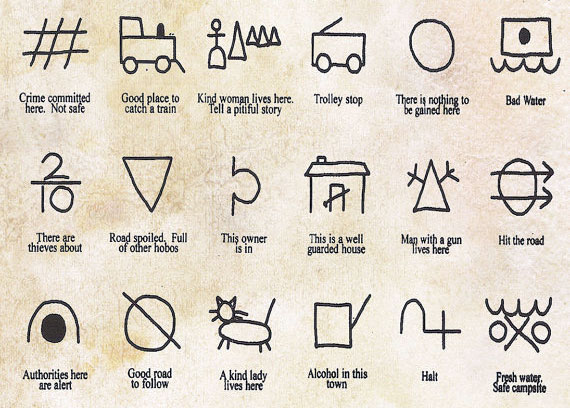
trolley song“Went the trolley.”  You knew that.

I think my favorite role of Judy Garland’s was as Esther Smith in “Meet Me in St. Louis.”  The Gibson-Girl look suited her well, and she was so young and vibrant and in such good voice. There is nothing quite like the joy of “The Trolley Song”.  Ah, love.

I recently had dinner with two of my friends who have fallen in love, and hearing their story of getting to know each other and realizing, pretty early on, that there was something very good there made my heart go zing.  At one point during the conversation, one of them turned to me and said, “Could your smile get any bigger?”

No, it couldn’t, because I love these two people and they suit each other so well, and finding that Someone is one of life’s grandest joys.  Hearing their story took me back to my own story of falling in love with the man who would eventually become my husband – pretty much once that train left the station, it was never going back.  We thought we had been quite clever keeping our relationship secret, but once we started telling people, they all had a “No duh” kind of reaction, which was a little anti-climactic, but I was in love so I didn’t care.

“Meet in St. Louis” ends with the family and love interests gazing at the lagoon at the World’s Fair.  All is well, all crises averted or resolved, all unrequited loves requited.

Life isn’t like that.  People don’t spontaneously burst into song and dance, and happy endings are never perfect.  Some love goes unrequited; some relationships don’t last.  Judy Garland lost that voice and that vivacity, but she never really lost her presence.

My friends who have fallen in love know that, because they’ve endured their fair share of disappointment and sorrow.  That does not erase the elation they now know.  And if this relationship moves to something deeper, that elation will get burnished and shine differently.  I hope that for them.

When I was growing up, my parent had this funny whiskey decanter set that was a trolley car.  The center held two different cut glass decanters, and at each end of the car, roped off with a little chain, were two shot glasses.  When you lifted one of the decanters, a music box started playing “I Left My Heart in San Francisco.”

I supposed we all leave our hearts somewhere.  Perhaps it’s best to leave our hearts with someone.

Clang, clang, clang.


heart

“May I speak with you…”, part 2

OpenDoorLogoYesterday’s post about my visit from Joy was read by many, at least in terms of my stats.  I appreciate the comments, likes, and shares.  Today I received a message from a minister colleague in another part of the state a few hours away.  Joy had visited her, too, a few weeks ago, and my friend had a similar experience of listening to her and helping her out.  I am grateful she let me know.

And then I checked to see if I felt that thing I sometimes feel when I’ve helped a complete stranger: did I feel as though I had been duped, taken advantage of, conned?

In every church I have served,  people come to church to ask for help, some in truly desperate situations and some looking for a handout.  I believe in handouts, to a point; I think sometimes what a person most needs is $20 to buy what they want.  But I also know that sometimes I have helped someone who then tells all his friends who also come seeking help.  Or in one town where I worked, I listened to a guy poor out his soul about his family being innocent bystanders victimized by a crime, only to learn a a few weeks later that another pastor in town had heard the same story from the same guy the year before.

After twenty or so years of pastoring, I’ve decided I would rather err on the side of kindness, knowing that some of the people I help are really not all that desperate. So with regards to Joy, did I feel duped?

No.

Anytime I hear a stranger tell me his or her story and then ask me for help, I know that person might not be telling me the truth or even the whole truth.  I know people take advantage of the kindness of churches and pastors and church secretaries.  I also know that sometimes a church is one of the few places where someone will be treated with dignity and respect, regardless of their truthfulness.

My parents were both born in the 1930’s and their early childhoods were marked by the Great Depression.  Neither grew up in families that were neither destitute nor wealthy; my grandfathers were both employed and my grandmothers ran their households with great efficiency.  My dad was one of three children, my mom one of six.  My mother remembers that whenever someone would come to the door looking for food, my grandmother would give that person something – a sandwich, an apple, toast with jelly.  My grandfather worked in construction, and if a day laborer was needed, my grandmother would mention that to the person at the door.

To be kind is to risk being taken advantage of.  To be generous is to choose to use resources for one thing and not for another.  As a pastor, I have a sense that the time I have and the resources I offer are not solely mine; they are part of the congregation as well, and I want to be a good steward of their gifts. And sometimes I act on behalf of the congregation to live out the commands that Jesus gave.

So I don’t know if my Joy will come your way, or when another Joy will present herself to you.  I don’t know what you will decide to do. I don’t know how you will make your decision.  But maybe we all need a little Joy in our lives, for so many reasons.

noted_symbols_header

“May I come speak with you about a religious matter?”

I was expecting a call like this, on a Monday after the Supreme Court’s decision about marriage.  Our office manager buzzed me.  “There’s someone on the phone who would like to speak with a pastor about a religious matter.”  Sigh.  “I’ll take it.”

“This is Reverend Beth Neel.  How may I help you?”  I usually don’t refer to myself as Reverend Beth Neel, but when strangers call and want to talk about a religious matter, I do like to be clear about my role and authority.

“I’d like to come speak with you about a religious matter.”  We agreed on  the time of 11:30.

Here’s what I assumed: that this woman, who self-identified as Presbyterian, wanted to talk with me about either the SCOTUS ruling or about what had happened in Charleston.  I confess that normally I try to pass this sort of thing along to one of my colleagues, but it was just me in the office today.

At 10:15 I ran downstairs to look at something in the building, and when I came back up to my office, she was waiting for me, 45 minutes early.  I took one look at her, wearing her down coat on a day when it was supposed to get up to 90, carrying two laden shopping bags, smelling a bit of stale cigarette smoke, and I knew that the SCOTUS ruling was probably the last thing on her mind.

She did mention it, sort of.  She said when she got off the bus in Portland and saw two men holding hands, if her mother had been with her and had seen that, she would’ve had a fit.  So much for hearing a proof-text about the sin of gay marriage.

We talked for an hour.  She poured out her life story without any self-pity, talking about her family, her mom and dad who married and divorced three times.  Her sister, who married the wrong guy.  A Mexican restaurant in the Memorial area of Houston; did I know it?  Her work at a car dealership.  Her time in Oklahoma, in Nebraska, in Seattle.  When she worked at a hotel run by East Indians, and their conversations about the Gideons Bibles and why her boss would need to talk to Jesus if he wanted her to work on Sundays.

After an hour, I asked her what her religious question was.  “Religious?  I don’t believe in God anymore.  I’m so tired I just can’t believe in anything.  I don’t know if I can go on.”  Turns out she had no where to stretch out and sleep; at her age, sleeping under the bridges wasn’t an option.  She tried to sneak in naps at Denny’s or Shari’s, but that’s no rest at all.

“Can we provide a motel room for you for a couple of nights?”  Sure.  We did, and gave her something for some food.  Should I have done more – connect her with social services, give her a ride to the motel?  Should I have done less – tell her we couldn’t help but that I’d pray for her?”  She was grateful for what we offered, said yes with dignity; she didn’t ask for anything more and I sensed (rightly or wrongly) that she really wasn’t looking for anything else.

Her name was Joy, and I don’t know if there was a higher purpose to Joy showing up in my office this morning.  Was it to challenge my assumptions that gay marriage is on everyone’s mind?  Was it to remind me that a big part of my calling as a pastor is not time efficiency but kindness?

Maybe there was no higher purpose.  Maybe there was just a child of God who needed a little help today.  And so Joy came in.  And so Joy left.

leaving

A prayer for such a time as this

Holy God,

We are appalled – but not enough.
We are grieved – but not enough.
We are fed up – but not enough.

Our hearts are breaking for the loss of those nine beautiful lives, nine of Your faithful children who were killed doing what You ask us to do – study and pray.  So however appalled and grieved and fed up we are, You most be all those things to the millionth degree.

But God, I’m not sure our feelings are enough; I’m not sure my feelings are enough.  I have spent the last day with tears in my eyes, learning the names of the dead, reading about their lives, reading about their church, and that is not enough.  I have spent time learning about the hate in my own city’s past, about the exclusion this state used to practice, and I have listened to conversations by those who are displaced because their neighborhood suddenly becomes “desirable.”

And God, I’m not sure my knowledge is enough.

Please, Holy God, do not let us go back to the same-old same-old.  Please do not let us mourn for a week or so, and sign some petitions, and shake our heads and cry, and then be done.  Hold our feet to the fire, to the refiner’s fire.  Let us not speak but listen, and when we are done listening, let us act.  Do whatever You have to do to make us so outraged that Your children were gunned down in your house, make us so ashamed of our own complicity or inaction in matters of race, that we don’t sit and tsk-tsk anymore.

But what do we do, O God?  Show me the way.  Show us the way.  Lead us out of this abyss we have gotten ourselves into.

And comfort the families of Reverend Clementa Pinckney, and Rev. Daniel Simmons, Sr., and Ethel Lance, and Cynthia Hurd, and Rev. Sharonda Coleman-Singleton, and Myra Thompson, and Tywanza Sanders, and Rev. DePayne Middleton-Doctor, and Susie Jackson.  And comfort the family of the shooter, because although I do not believe it, I think You would say that he is Your child too.

Amen.

And then we built a life together

IMG_5708Two friends of mine are courting in a way that reminds me of the courtship my husband and I had.  We had been friends for a few years before we started dating, and when we did start dating, we tried to keep it under wraps for a while.  We had a lot of friends in common, friends who had been wanting for a long time to see each of us meet that someone, friends who would jump up and down that we had in fact met that someone, and it was us.

So I’ve been thinking about our courtship then and our life now almost twelve years later.  That fall when we were falling in love, it was as though everything smelled like honey coming from bees wax, and dating on the sly (or so we thought) added an element of intrigue, and when I would get to see him it felt like it was sunny and 70 or a full moon with a light breeze for those days we did get to spend together.

Now we’ve been married for ten years, and we’ve moved a few times.  We were thrilled to have one child, and disappointed at times and crushed at other times not to have another.  We work together now, too, and in so many ways the bloom is off the rose.

But the bloom never stays on the rose; what fun would that be?  We’re more tired than we were when we were courting.  We have more gray hairs.  We don’t dance nearly as often as we used to.  But we still have this sense that we are in this together, and when it’s good that’s a good thing, and when it’s not good it can feel like a bit of a millstone.  But we’re lucky, I guess, because the times when it’s not good are few and far between.

It is hard to work together when we’re both under stress and under the same stress – we have nowhere to escape to, really, and the person I would normally turn to wants to turn to me and then we get in this self-perpetuating cycle of angst, so he goes to watch a rerun of “Friends” and I bury myself in a crossword puzzle until we’re settled enough to come out of our respective corners and put down our dukes and figure out what to do next.

Yes, after ten years of marriage, the bloom is off the rose, or better, the hydrangea is starting to fade.  We have a bright blue hydrangea in our yard, and I love it when it belts out this cobalt blue that seems somehow Mermanesque.  But the blue only lasts for so long.  And then the really interesting thing starts to happen.  The blue fades to purple, and then to an oxblood sort of red, and then green comes in, so that when I finally cut it, it’s these subtle shades that emerged almost impossibly from the cobalt of those first blossoms.

Our marriage is like that – the usual and unique experience of our first love burst out one day when we were ready to tell our friends.  And then we married, and moved, and changed jobs, and had a kid, and didn’t have another kid, and moved, and changed jobs.  We’re not starry-eyed anymore; rarely does everything smell like honey.  There’s more silence, sometimes full and beautiful and sometimes tense and wary.

But it’s interesting, this marriage.  And still beautiful, in its own way.  The colors have changed, but there are colors still.

IMG_6083

For Pauly G.

On thoughtfulness and reunions

My friend told me a lovely story today.  Over the weekend she received a letter from a stranger, and the opening line read, “I hope this is not intrusive.”  The letter was from a person working with the state hospital; the hospital has hundreds of containers of people’s cremated remains, and they are attempting to return them to the family of the deceased.

My friend learned that the hospital had her great-grandmother’s remains; would she like them?  She said yes, and plans to take them to the cemetery where her mother and grandmother are buried.  She will go with her daughter and granddaughter to the graveside, and there will gather six generations of strong, beautiful women.

As my friend told me this story, I got a little teary.  Maybe it was the thoughtfulness of the gesture.  I think that’s part of it, but part of it too is this strange thing I have about reunions, even beyond the grave.  (Or at the grave, in this case.)

Now I don’t believe that those cremated remains or any decaying body of flesh and bone have any power in them.  There is no life there; they are going back to the dust from whence they came.  The souls that inhabited those bodies have gone on, I believe, and while the soul makes its home in skin and sinew, it is not confined there.  The souls of my friend’s mother and grandmother and great-grandmother have gone on.

And yet.  And yet there is a poignancy to reuniting these ashes with those of a daughter and granddaughter.  I have no idea what happens when we die.  Maybe this faith thing has been one big crap shoot and when it’s over, it’s over.  Or maybe we fall asleep for a while, and wake up when Gabriel blows that horn.  Or maybe we die and boom we go to heaven and the reunion is instantaneous.

If we die and sleep for an eon, imagine the waking up.  Imagine my friend’s great-grandmother waking up, and those ashes and pulverized bones coming together again, kneaded back into vibrant form; imagine her waking up and seeing her daughter and granddaughter with her.

Wouldn’t that be something.

church-210-edit

Many waters cannot quench love

A few days ago I asked my Facebook world what they were hankering to read a blog about; the answers were few.  But two friends both said they wanted to read something about love.  One of them, a former college professor of mine and a drama queen in the absolute best sense of the term, said this:  “The mystery of love is greater than the mystery of death.”  I don’t think my former professor is a religious sort of person, but her suggestion immediately took me to the Song of Songs.

Set me as a seal upon your heart,
as a seal upon your arm;
for love is strong as death,
passion fierce as the grave.
Its flashes are flashes of fire,
a raging flame.
Many waters cannot quench love,
neither can floods drown it.

Death has been around more than usual of late, and I find little mysterious about the deaths nearest me.  A member of my extended family died after a long illness, and there may have been some small mercy that he died before the disease took a more humiliating and painful toll.  A young child in our congregation’s circle had a brain tumor removed and the family faces a very different future than the one they imagined for her; their original dreams have died.  Little disappointments add up to small deaths.  And all this in the midst of Eastertide.

Death has not felt mysterious lately, but I know that it does feel that way sometimes.  To be with someone in his last hours; to sit with a family as tears pour out when their 102-year-old aunt steps through the veil, tears of gratitude and relief; to walk a cemetery like a tourist, an unintentional voyeur of another’s grief: there is mystery in death.  It’s not the mystery of why lungs stop inflating and deflating or why a heart stops beating.  It’s the mystery of the silence after, the vacancy of a life.  It’s the void that some of us fill with hope that there is more.  It’s the moment after the conductor picks up the baton, before the music begins.

Love usually feels mysterious.  On any given day I would be hard-pressed to say why I love my spouse and child.  I could tell you what I love about them, but if you asked my why I love them, I’d likely stammer out, “Because I do.”  It’s a privilege to love others in the cloud of mystery – some bosom friends, a parent or two.  Some loves defy explanation.  I will not name their names in order to protect the innocent, but I have two relatives, married to each other, and for the life of me and everyone else in the family, we cannot figure out what ever got them together, but fifty years later, there they are, tending to each other and bickering and getting creaky together.

Maybe love is more of a mystery because unlike death, we cannot always point to its work.  We see the still, yellowing body and we know that death has come; mystery solved.  But we see a garden, or a child, or we stand in a field in the middle of nowhere and look up at the shimmery night sky, and wonder if love made those things come to be.  We watch the protests, and volunteers going through the rubble, and watch the watchers of the Supreme Court, and wonder if love is the force that weaves them together.

Would I say love is stronger than death? I would. I believe I have evidence to support the claim.  But I would rather join Oscar Wilde in saying that the mystery of love is greater than the mystery of death.  It is in the mystery where we find ourselves without answers or solutions or our usual bag of tricks. It is in the mystery where we have only ourselves, and those few friends who will stay with us in the uncertainty, and for some of us, the Divine.

It is the mystery of love where I find my greatest hope, because if I cannot explain it, then it must be true.

http://www.forestwander.com

For Jim and Zinnia, with love

Handing over what is not mine, or, Learning to let go

I was up worrying the other night.  It happens.  Worry is a spiritual gift I received from my mother, and I have worked hard to perfect that which was passed on to me.  I also work not to pass it on to my daughter, but I worry that I am failing in that.

Anyway, I was worrying the other night when what I really wanted to be doing was falling asleep.  It was the end of a long day, the house was quiet, all other living creatures under our roof were asleep, and there I was, worrying.  Someone once defined worry as “misuse of the imagination.”  Yes, it is.  Finally my desire to sleep won over my need to worry, and I decided to hand it all over to Jesus.

Now I really don’t consider myself that kind of Jesus person.  I usually don’t hand it over to the Lord, nor do I think that he walks with me or talks with me in the “In the Garden” sort of way.  My prayers tend to be to God, not to Jesus.  I mean, I’m good with him, but I do like to keep my distance.  But that night I decided I really needed to hand it all over to him.  So I pictured what I was handing over, and it was a spherical-shaped thing, a tangle of worries that might best be represented by barbed wire, lima beans, the insoles of my daughter’s summer Keens, and all those random electronic cables you stick in a drawer because you have no idea what they’re for.  Roll all that up into a ball, and those were the worries I wanted to hand over to Jesus.  Lucky him.

So I did.  In my mind’s eye I pictured handing him this messy, sharp bundle, and I pictured him taking it.  And then a funny thing happened.  As soon as he took it, it turned into a beach ball- one of those big plastic, colors-in-pennant-shapes beach balls.  It was like he was taking all my worries so very lightly, like he was saying, “Hey, I know there’s stuff that’s getting you down but I think we should go play on the beach.”

What the hell, Jesus?

Okay, not really.

But somehow, it worked.  He took my ball of lima beans and barbed wire and turned it into a beach ball and I fell asleep.  Not only that, but that night I dreamed I was about to marry George Clooney.  (I did confess that to my husband the next day and assured him that George Clooney was no match for him.)

The next day I had coffee with a friend who is a 12-stepper.  I am remarkably proud of her, and often inspired by the rigorous and truthful way she looks at her own living.  We talked about whatever step it is where you let go and let God, and she talked about the deep meaning the serenity prayer has for her.  While I listened, I was having my own internal conversation about letting go and the whole Jesus-turned-my-worry-into-a-beach-ball thing.  Here’s where I ended up.

Sometimes, in order to sleep, in order to get the rest our bodies, minds, and souls need, we have to let it go.  (Apologies for cueing that particular song.)  It’s not always ours to keep, the things we worry about.  But sometimes, after that rest, we take some of it back.  Some of it is mine to carry, or to deal with, or to wrestle with.  But maybe when I take it back, there are fewer lima beans and more grains of sand.

a-beach-ball-ron-dahlquist

Confession of faith, sung

“O to grace how great a debtor daily I’m constrained to be
Let that grace now, like a fetter, bind my wand’ring heart to Thee.
Prone to wander, Lord, I feel it; prone to leave the God I love;
Here’s my heart, O take and seal it, seal if for Thy courts above.”

The Sunday after Easter is such a relief.  I do love all the pageantry and crowds and flowers of Easter, but somehow the Sunday after Easter feels more real and more to the point.  There are no processions to organize, no flowers to maneuver around, fewer handshakes and smiles after the service, and no eggs to clean up.  It’s normal worship again – or as normal as worship ever gets – and the folks who are there are there because it’s their church and they come rain or shine, flowery holiday or regular holy day.

Which is not to say that things cannot be wonderful and gut-wrenching and good.

It was the offertory that got me.  Our choir (who did not take off the Sunday after Easter because they love singing in worship) sang a beautiful arrangement of “Come, Thou Fount of Every Blessing.”  Now I love that hymn.  I love the poetry of the words and I am a complete sucker for any tune out of the Southern Harmony tradition.  So the choir starts in, the women first, and a little organ interlude, the men coming in on a new verse in a new key, a cappella.  And then it gets going with the culmination of that line “O to grace how great a debtor daily I’m constrained to be” and it hit me:

That is why I do all of this.

That was my first sense of call, my push toward ordination, the thing that motivates me week after week and year after year to be a part of the gorgeous flawed thing called church and to be a member of this hilarious and weird and flawed thing called the clergy.  It’s because I am indebted to the grace of God every single moment of my life, and in gratitude and penance and hope I do this Christianity thing and I do this ministry thing because grace has overpowered my will, my guilt, my ego, my sense of worthlessness, my sense of awesomeness, and all the misery the world can throw at me.  That is why I do all of this.

We have an ongoing conversation, the congregation and I, about the Apostles’ Creed.  Some aren’t happy we ever say it, some wish we said it more, and I insist on saying it when we have baptisms.  As I said, it’s an ongoing conversations and nobody’s really budging. But that’s okay.  Last year our choir sang Robert Ray’s Gospel Mass as the sermon one week, and the Credo in that is pretty much spectacular.  One of our folks, one of the ones who wishes we would never say the Apostles’ Creed again, did admit that if we could sing that Credo instead of saying the words, she’d be good.  But we don’t – not yet, anyway.

But what if our creed were those words Robert Roberston wrote in 1758?  What if our creed were the admittance of our utter reliance on the grace of God, and the hope that God would fetter us, and that all of this life is just part of sealing our hearts for something more?  What if those words were our confession of sin, and our profession of faith, and our proclamation of the good word, and our marching cry every week?  Would that my heart were tuned to sing that grace.

chains-of-love