Christmas Eve Meditation

I wrote this several years ago, and am preaching it again this Christmas Eve. I hope it might bring some solace to those who might need it. Peace, friends.
There once was an old man whom we will call Joe.  Joe was single, never married, didn’t date much.  He was an only child, his parents were gone, and he was a bit crotchety, which is to say he was all alone in the world.  He had long since retired from a job which brought him a modest income, a few acquaintances, and no friends. 

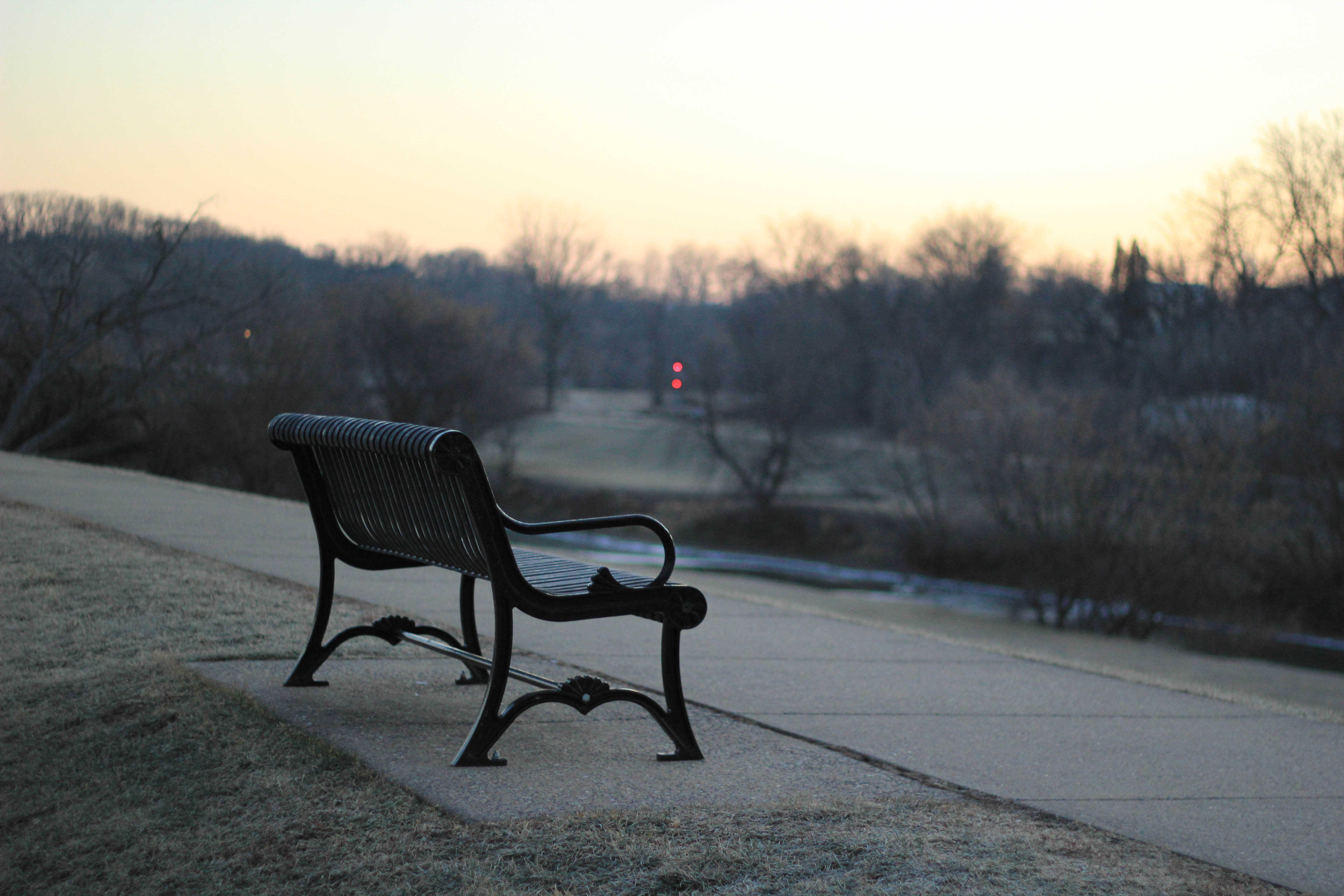
In his retirement he spent his days as he pleased – checking the morning headlines, washing up the coffee cup and cereal bowl.  He’d run the few errands he had, get the daily special soup at the diner counter, run a few more errands.  Late afternoon would find him on a park bench, alone.  It was always the same bench, in the northwest part of the park, near a sidewalk but blissfully far away from the children’s playground.  He would sit there, all alone, and with a fair amount of disinterest, he would watch the world go by.   

And most days, that was enough for old Joe.  Once in a while he would break his routine – he’d give a smile to the cashier as she handed him his change, or he’d bark at the server who overfilled his coffee cup.  Most days his routine was enough.  But every so often as he’d sit all alone on that park bench, a terrible melancholy would overtake him.  That happens sometimes at dusk – babies instinctively cry and the colic worsens, or harassed parents, home from work, stress out as they try to transition from employee to chief cook and bottle washer. 

Every so often, as he sat on that bench at dusk, Joe would be overcome by a sadness he could not name, and all he wanted was for someone to come sit next to him.  They didn’t have to talk, process feelings, make a plan to have dinner.  All he wanted was company, a companion to sit with at dusk after years of going through life all alone. 

As the seasons changed, Joe would change his routine ever so slightly and unconsciously so that he was always on the bench at dusk, be it a winter’s 4:00 or summer’s 8:00.  The years passed, and the spasms of melancholy grew a little more frequent, and Joe, already so miserable in his aloneness, became all the more brittle, and a little desperate. 

He tried ways to make the bench inviting.  He’d move the newspaper he’d been carrying around, as if to say, this seat isn’t being saved for anyone.  He’d brush off the leaves.  Once he even wiped off the residue from the pigeons – all to no avail.  For whatever reason, no one ever sat by Joe. 

Maybe passers-by feared that his loneliness was contagious, and they hurried past him so as not to catch it.  Maybe after years of trying to smile and say hello only to be rebuffed, people stopped trying.  Maybe after years of sitting on that same bench in the same park at dusk, year after year, Joe became invisible, the way the guy on the corner with the cardboard sign “Will work for food” becomes invisible.   Whatever the reason, no one ever sat by Joe. 

He could’ve died on that bench, so deep was the melancholy, so deep the despair, so piercing the loneliness he could no longer avoid.  He wondered if that’s how he would end up – forgotten and ignored, sitting there one minute and dead there the next without a soul to notice that his life had ended.  He wondered if there would ever be anyone who would care.  He wondered if he would live out however many days he had left sitting alone at dusk on that park bench. 

There may be some here tonight who have felt like Joe at some time in their lives, who feel like Joe every day.  There may be some here tonight who know someone like Joe, who have passed him by, who realize that for all his ordinary loneliness he has become invisible.  There may be some here tonight who wonder how this story will end, and some who believe they know how it will end. 

Tonight, on this holy night, this is what I know.   

Our world has been like Joe, battling melancholy.  The children of our world have known isolation; they have known what it’s like to be ignored or forgotten; they have felt, deep in their bones, what it is like to be alone. 

Our world has been like Joe, going through the same routines day after day without reason or purpose.  The people of the world have known what it is to live by rote, to live in that routine of work and play and rest, of work and shopping and rest, of work and shopping and entertainment, confusing shopping and entertainment with godly play and holy rest. 

Our world has been like Joe, desperately trying to make that park bench a little more palatable, aching to have someone simply sit down next to us. 

Tonight, on this holy night, this is what I know: 

The miracle of the incarnation is like God coming to sit down next to us on our park bench. Because while the world might have forgotten or ignored all the Joes of the world, God hasn’t forgotten.  God cannot ignore this world that was created by deep love.  God will not forsake this world so plagued by fear and greed and pride.   

Ours is a visited planet, it’s been said.  Ours is a visited planet, and God is no theist watchmaker kind of God, setting the world a-ticking and then moving on.  Ours is a visited planet, but not in the way you or I might want to visit Tuscany or the Grand Canyon. Our is a visited planet, the way we might want to sit and visit one more time with a beloved grandmother who died, whose advice and date pinwheel cookies we still crave; the way we might want to visit with our best friend who is doing his best to beat cancer; the way we might want to visit forever with a child or parent or sibling who is wedged deeply in our hearts. 

That is how God has visited with us: with the love a Creator has for his creation, with the love a mother has for her child.  Why God would choose to do this is beyond my ken, and all that I know on this holy night is that it has something to do with love. 

This love transformed God from being a mere visitor to being an inhabitant of the world, like we are.  God visited us, and came to us, and became one of us so that you and I and all the Joes of the world would know that we are not alone.

On this holy night, it is as though Joe is sitting on the park bench again.  He has put his paper in the recycling can; he has brushed away the pigeons’ offering.  He has waited for the light to dim, once again, alone.  But this dusk, this time, this holy time, Someone sits down next to him.  He just sits down with Joe, and Joe is not alone. 

We are not alone; we are loved.  Thanks be to God. 
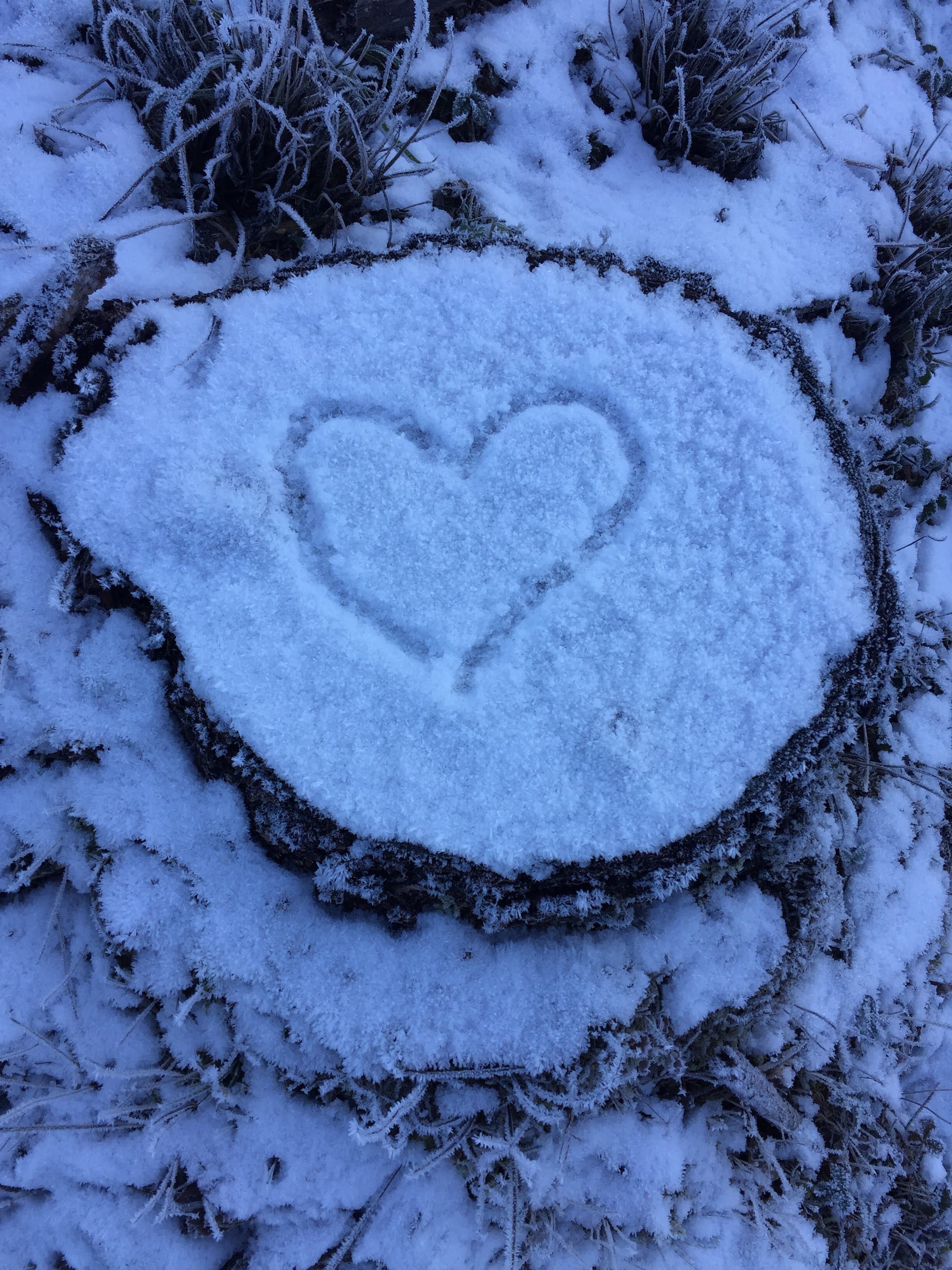
And the greatest of these…

On this Thanksgiving, I am grateful that love exists, that there is this invisible connection among the creation that desires bounty and kindness and acceptance, that there is this force that is not easily broken, that withstands attempts at cheapening it.

This is what love looks like for me today: texts from old friends that remind us that when we met forty years ago, we had no idea we just might become friends for life; a scone and a chai delivered by my friend and pet sitter, which I received happily and in joy because the dog was over-the-moon ecstatic to see her. The guy with the pronounced limp walking his sweet Frenchie named Echo, a pet that he obvious adores with every wobbly step he takes.

I am sad not be with my family this Thanksgiving but I’m nursing an impressive cold and no one needs me to bring these germs to the dinner table. I am sad, but not depressed; Thanksgiving is one day, and I know an embarrassing amount of love in my life, and given that, I cannot be more than just a wee bit sad.

Many years ago when my grandparents were still living, they loved to go fishing, not only because back in those days they could easily catch their limit of rainbow trout but also because after standing in the cold creek water for an hour, their toenails softened up and they could give each other a rudimentary pedicure. That’s the kind of love that abides after fifty-plus years of marriage.

My sister has moved into an ADU in our backyard and she graciously – and maybe even happily – welcomes the dog and me to come for a visit so I can pet her cat and so that the dog can lick the trace amounts of food left in the cat’s dish. She also graciously acts surprised when my husband and I come over after dinner, and with all the sincerity of a nun, asks if we would like a bite of chocolate, which was the whole reason for our showing up but she acts as if it weren’t. That is love.

A video of a flash mob performing the last movement of Beethoven’s Ninth will always get me crying. In it I see a love of music, a love of performance, a love of giving this utterly unexpected gift that costs not what penny and is only meant to be received as love should be.

There are so many loves – love of a person, love of a pet; love of the creation and of the Creator, love of a country, even love of self, when taken in measure. To be loved is the greatest gift, and that sounds so terribly trite that I should give up writing this very moment, but I’ll still claim it. Though sick, I am loved. Though alone, I am loved. For me, a bad cold and some loneliness are temporary things but love, as the apostle wrote, never ends.

On this Thanksgiving, I hope that you too are grateful for the love that surrounds your living. I hope that when you start to count your blessings you run out of fingers and toes. I hope that you are able to pass along some of that love, because when you do, who knows what might happen?

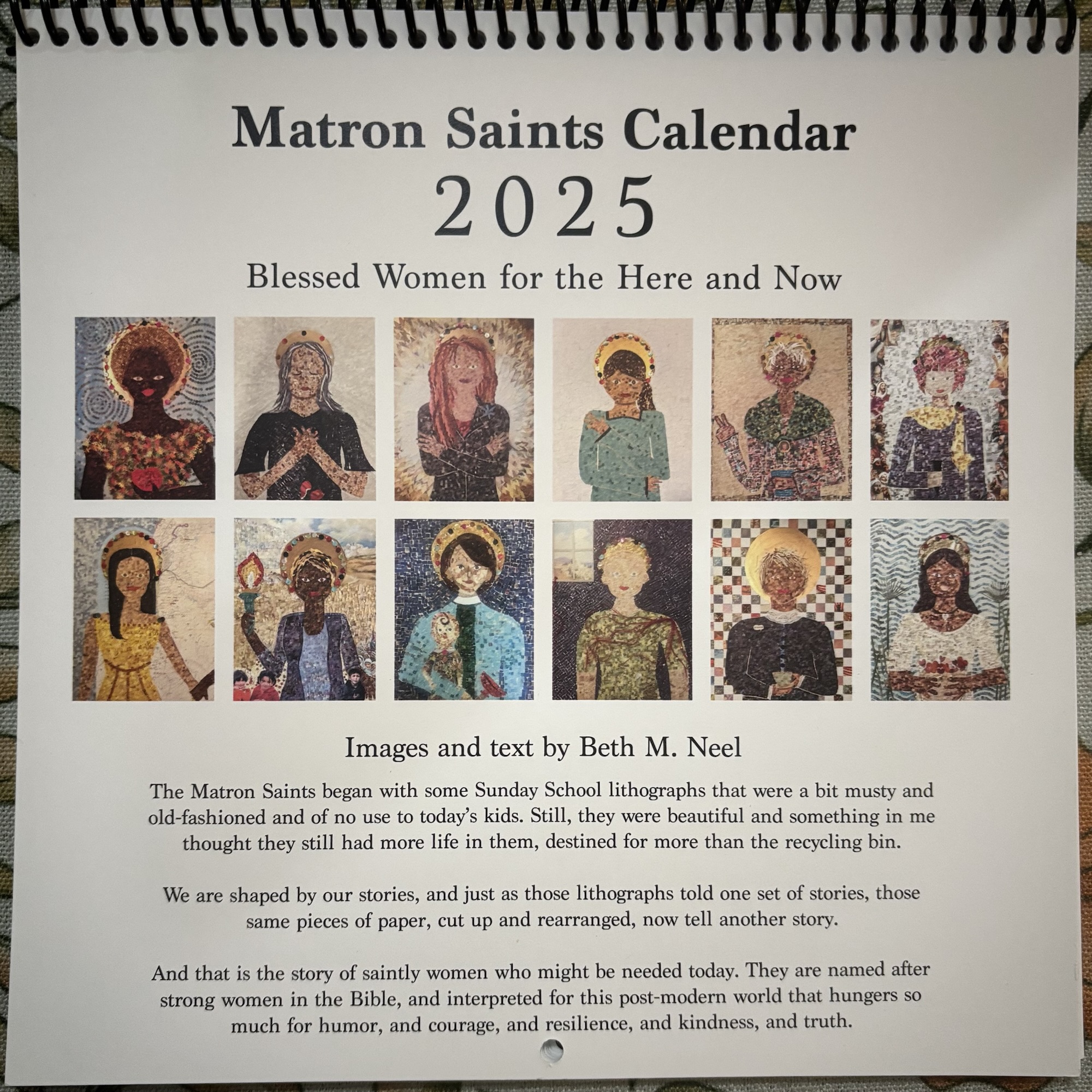
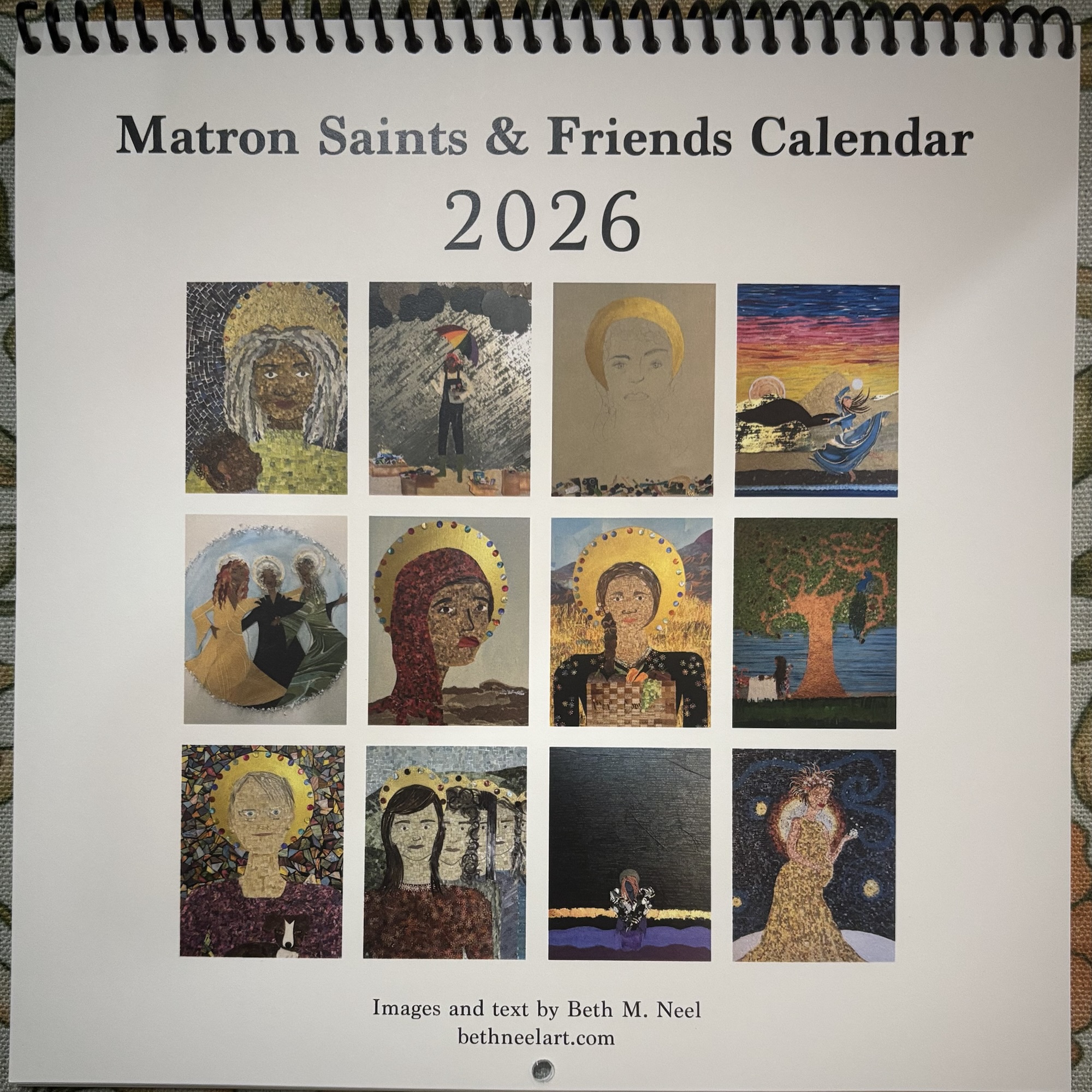
It’s calendar time!

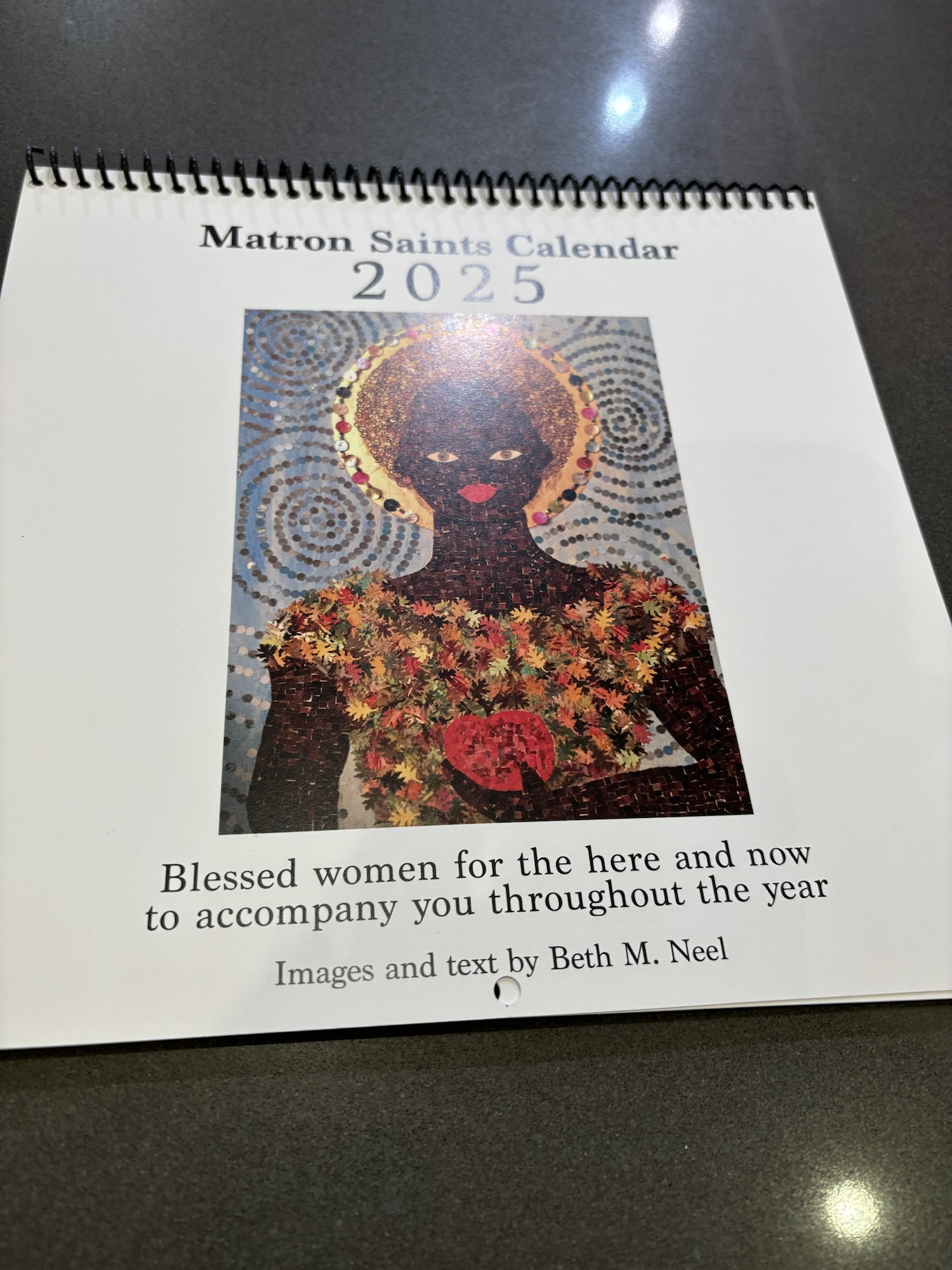
I normally don’t like to think about Christmas until after Thanksgiving, but… I’m very excited that this year I have not one but TWO calendars to offer you! I have reprinted last year’s Matron Saints calendar for 2026, AND, having created six new Matron Saints this year, have also made a Matron Saints and Friends calendar.

How can you order? Just send me a message here, and we will get the ball rolling. The cost is $20/calendar, and shipping is usually around $10.

There are also notecards available for all these saints, so let me know if you’re interested in those too.

Thanks for considering this! And peace be with you.

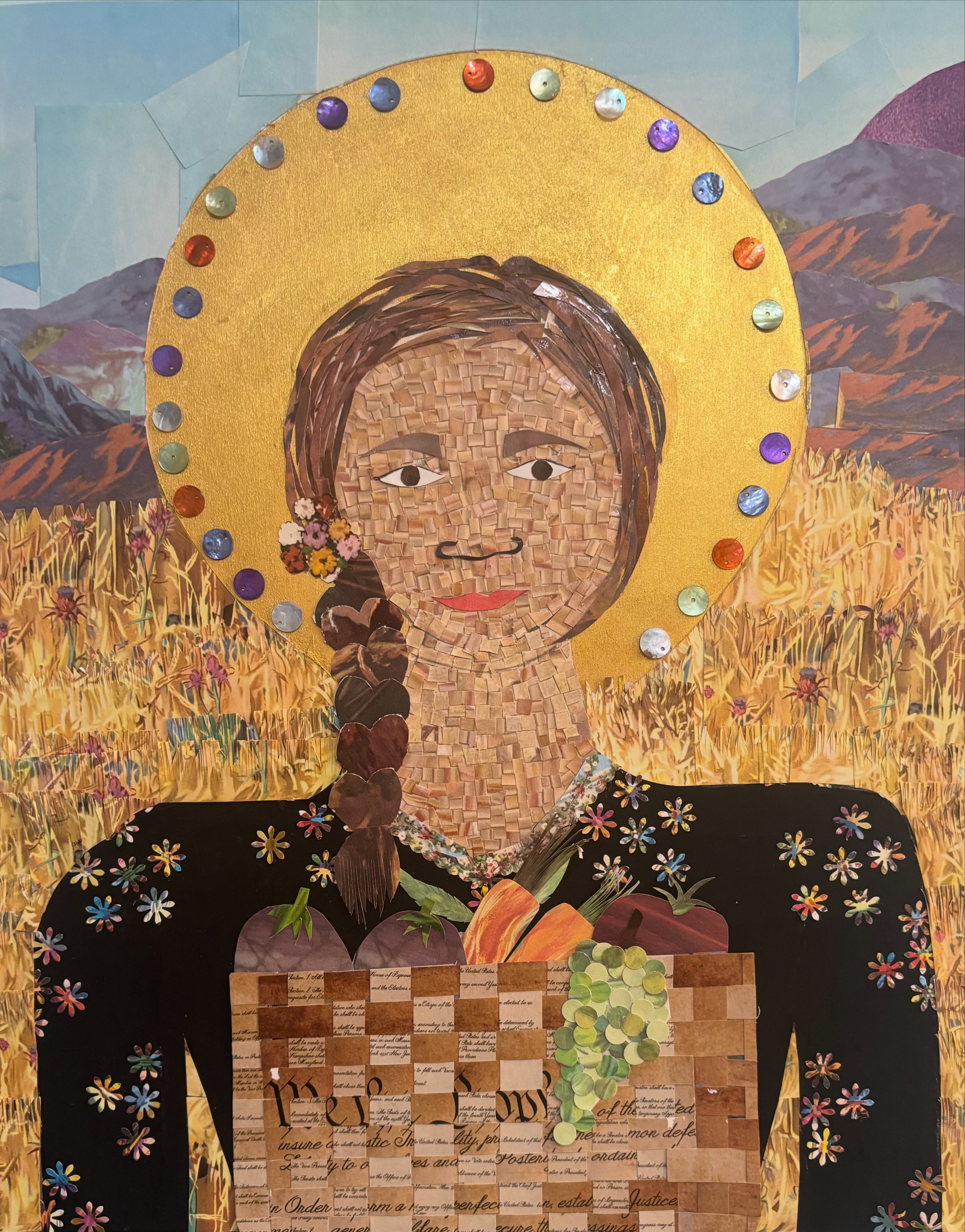
Dorcas, Matron Saint of Those Who Know That Feeding People and Caring for the Poor Is Holy Work

If indeed holy grace has been shed on us,

As we live amid fruited plains and amber grain,

How can we not, in grace,

Share what we have received through no merit

But only through holy grace?

How can we not feed the hungry?

How can we not shelter those with a home?

How can we not care for those who are forgotten?

It is nothing less than holy work of the highest calling.

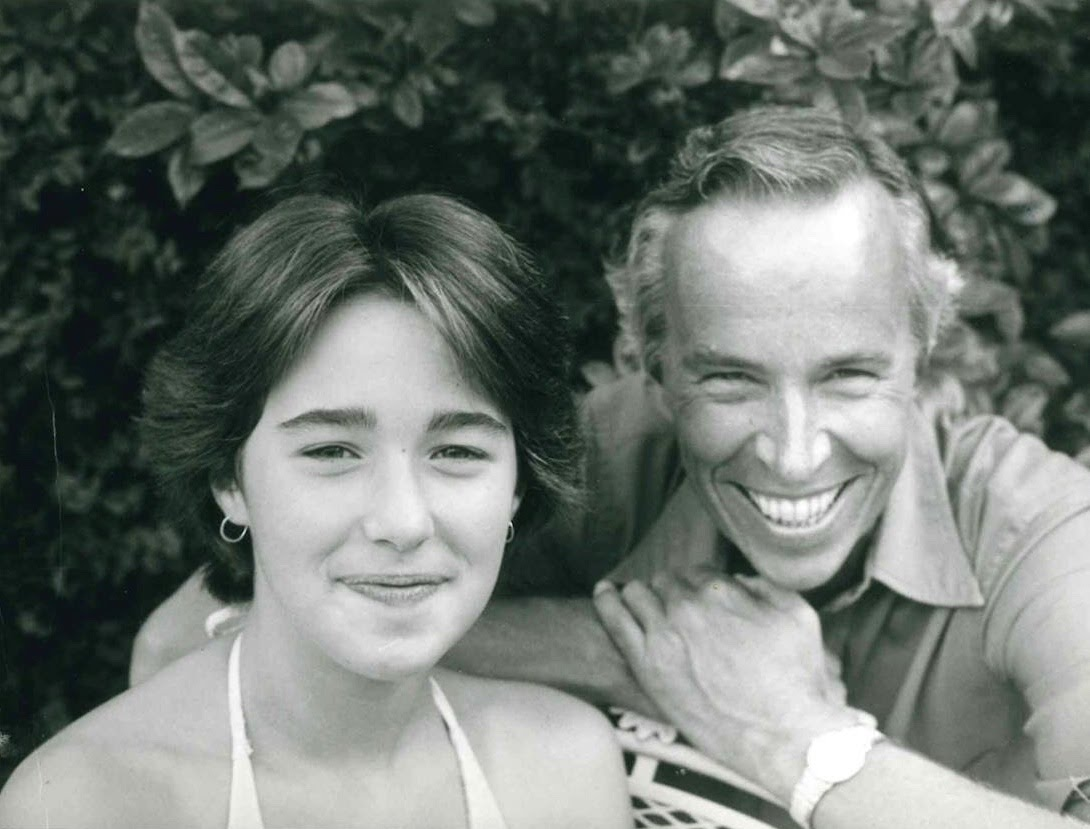
On killing cockroaches, and other things my dad did for me

It’s been seven and a half years since my dad died, and while I don’t really think about him every day, I do think of him often, and occasionally dream something that he’s a part of, and laugh about something I know he would find funny.

So Father’s Day is different now. Mostly I encourage our daughter to remember the day is coming; I also thank my husband and my brothers for being such great dads. If I’m in a mood, I will say to my husband, “Well, I don’t have to do anything for Father’s Day because my dad is dead.” Like I said – when I’m in a mood.

But today, Father’s Day, I’ve been thinking about my dad and a few memories stand out.

The first is when he taught me to ride a bike. It is a visceral memory, full of emotion, which must mean something since it happened 55+ years ago. We went to the parking lot of my elementary school in Morristown, New Jersey, my hot-pink, banana-seat bike in the back of the station wagon, just me and Dad. He did not believe in training wheels (later, when I was an adult, he would say that training wheels were for candy-asses.) He ran along side me as I wobbled along, holding the handlebars, not letting ago until I found my balance, and then he let go, still running beside me. I don’t know why this has stayed with me all these years. Maybe it has something to do with fear and courage and encouragement and protection and love all wrapped around the asphalt pavement of Hillcrest Elementary School.

The second memory is from my teen years, which were not the smoothest in terms of our relationship. We’ll leave that there but perhaps you can fill in your own blanks about rough patches with a parent. This story is not about that.

When I was eight we moved from New Jersey to Houston – the flatland of humidity and flying cockroaches. There are good things about Houston, but this story is not about that. Anyway, we had not had flying cockroaches in New Jersey and let’s just say they terrified me. Spiders? Bring ’em on! Flying cockroaches? More correctly, palmetto bugs – I would not enter a room where I could see one. It was my habit, when entering a room where there was a cockroach, to get my dad to come kill it, which he did. One night, after he had gone to bed, I went to the bathroom to wash up for the night. There, on the wall behind the toilet, was a big ol’ shiny cockroach. Dad had gone to bed. He hated being woken up. I knew I would not be able to brush my teeth, much less sleep in my connecting room, knowing that roach was just waiting to crawl all over me. So I went in to my parents’ bedroom, woke up my dad, told him the problem. He got up and told me to get a magazine or newspaper, which I did. He strode into the bathroom, whacked the cockroach which fell straight into the toilet, flushed it away, and wished me a goodnight.

He loved to tell me that story. I’m not sure if it had to do with my trusting him to take care of things or with his amazing aim, but it was one of his favorites.

The last memory is from my young adulthood. My parents had moved back to New Jersey and I was living and working in New York City. I had landed what I thought was my dream job – assistant to the artistic director of an arts organization, the perfect jumping-off spot for someone who wanted to go into arts administration, which I did at the time. After five months, my dream job had become a nightmare. I would wake up at 2am on Saturday nights worrying about it, wondering what I had forgotten to do, wondering what my boss would yell at me about on Monday.

I had gone to my folks’ house for the weekend and we talked about everything. Dad finally said to me, with all the wisdom of someone who had had his own career ups and downs, “No job is worth this, honey.” Not long after that, I quit as my boss was firing me, and while my future became less certain, my heart was much happier.

Seven and a half years ago, as Dad was nearing the end of his life, the time came for me to say goodbye to him. That remains the most excruciating thing I have ever done, and if you’ve had to do that, you understand. I told him I loved him, and I thanked him – for teaching me how to ride a bike, for killing cockroaches, for letting me know it was okay to walk away from something; for encouraging me never to carry a credit card balance and to set aside ten percent of every paycheck for savings (that didn’t happen); for being pleased as punch when I told him I was pregnant, for welcoming my husband and then our daughter into the family; for pointing out, every time we sat on the deck of the cabin, how beautiful the cottonwoods were shimmering in the breeze.

Now when I sit on the deck of the cabin, and look at the cottonwoods shimmering in the breeze, I laugh a little, and look up at the sky, and say thank you once again.

Easter Thoughts, A Little Early

This year, I will be leading the Vespers service at a local retirement community on Easter Sunday, and as is my wont, I started looking through old Easter sermons that could be brushed up a little for this upcoming occasion. As I went through them, I kept tearing up. Why? Happily, not because they were terrible, but because they offered a word of hope, and I hadn’t realized how much I needed to hear about hope, even from myself a few years back. It was hard to read the ones I offered during the pandemic, from my home or from an empty sanctuary, remembering the uncertainty of that time and the losses upon losses.

And though Easter is still shy of two weeks away, I offer the conclusion to one of them, if you’re a preacher in need of some hope or joy. I don’t claim that any of my words would even win a preaching prize (which is really a silly thing, after all) but sometimes you need a little bump to get you going.

In the meantime, Lent is still with us, and given all that’s happening, it may feel as though Lent is still with us after April 21. Even so, God always gets the last word, and Love always wins. Here you go.

Joy is the jitterbug meeting the waltz, and Rembrandt and Dr. Seuss comparing notes, and hope disguised as a gardener. And you? And I? What is our joy?

Joy is when the rains cease
Joy is when the baby squeals
Joy is the march
Joy is the old friend who shows up
Joy is the peace accord
Joy is the casserole
Joy is the grave cloths neatly folded away
Joy is the mountain decked in so much snow
Joy is the full table with everyone there
Joy is the story told again and again
Joy is the joke with life as the punchline
Joy is the fern unfurling
Joy is the empty tomb
Joy is the daphne and lilac and lavender
Joy is the gift that will not be taken back
Joy is life, and more life, and life after that.

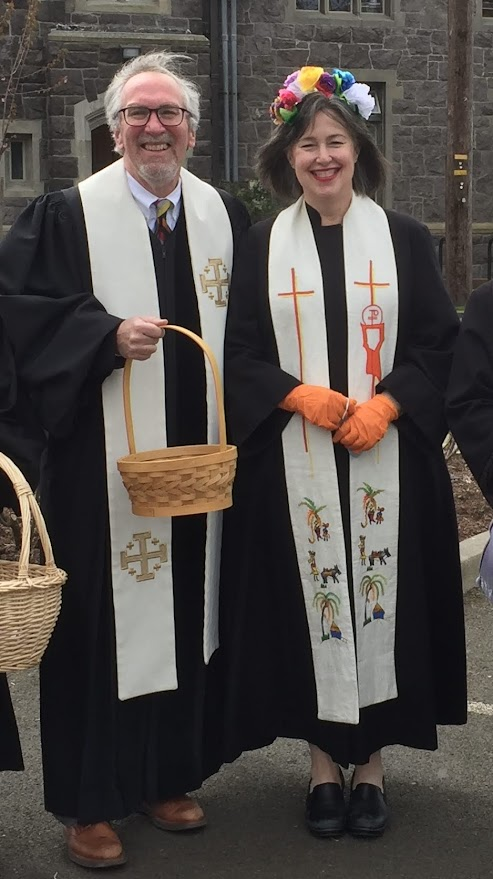
My husband and I on Easter Sunday, 2021, getting ready to celebrate drive-through communion in the church parking lot.

Love and Dust

Our daughter was born on Fat Tuesday, which meant I spent Ash Wednesday 2006 in a hospital room, recovering from a C-section and trying to figure out how to breastfeed. After experiencing the joy and fear of giving birth, I really did not need to remember that I was dust and to dust I would return. At the time, I felt more like I was made of blood and colostrum and placenta, which are very much things of birth.

That was the last time I was not marked with ashes on Ash Wednesday. This year I repeat that, for reasons that seem a bit inconsequential and maybe a little lazy. Last September I left the congregation I happily served for thirteen years, and I have not yet found a new worship home. To be honest, I haven’t looked for one yet. After serving congregations for thirty-one years, I need a break. I need to let go of all my expectations of how worship should happen, what fills me in worship. I need to empty myself of all of that, and then start fresh.

I imagine for many folks there is no need to be reminded that they are dust and to dust they will return. The world tells them that all the time. The White House tells them that in cruel tweets. Rude customers, impatient drivers, racists, misogynists – there is a message of death and hate that pervades so much of every day life. Why add ashes as another reminder?

I dare not speak for anyone , but I will say that there was something honorable and profound and horrific about making the sign of the cross on people’s foreheads. Honorable because they trusted me, their pastor, to say these true words with love. Profound, because death is so wrapped up in the mysteries of creation and incarnation and resurrection that mere words cannot begin to convey all that is meant by the ashy cross. And horrific, because the woman who has lost all her hair from her chemo treatments doesn’t need to be reminded that she will die, because the precious child, conceived by IVF after years of miscarriages, needs to live a full, long life, and not think about death for a long, long time.

Receiving the ashes is another thing. Sometimes a fellow pastor would mark me, and sometimes my fellow pastor/husband made the sign of the cross on my forehead. Sometimes a parishioner would make the sign. It didn’t matter who did it, though I always knew the person. Someone who loved me, or who worked to love me in that Christ-way, was telling me the truth that I would die some day, that all of us will die some day. On Ash Wednesday, that’s as far as we get in the story.

And so Lent has begun, and for me, without ashes. My daughter sent me a picture today of her and her friend who made it a point to go to chapel and get marked today. I’m a bit filled by that. A stranger told her that she is dust. While I clung to her in that hospital bed at the beginning of Lent nineteen years ago, now I let her go into the world, full of dust and life, to make her own way. For a long, long time, I hope.

So given the state of the world, perhaps this year I would offer these words:
“Remember you are made of love, and to Love you will return.”

The Passive Voice

The other night my husband and I went to an art show opening at the church I used to serve and left in September. It was quite fun, with beautiful art and old friends. Several people made it a point to say to me, “You are missed” which was lovely, and which got me to thinking.

Of late I’ve also noticed several social media posts which say something along the lines of “remember you are loved.” I wholeheartedly agree with that sentiment. I think it can be the difference between life and death for some people. I think it can melt the heart of grinches and open the eyes of Scrooges. And yet….

And yet I’m curious about the choice to use the passive voice. I enjoy writing and I hope to be a decent writer, and something my high school English teachers and preaching professors drummed into me floats up to the top of my brain and into my fingers on the keyboard: avoid using the passive voice. It’s less powerful. It’s murkier. And more than that, I think using the passive voice lets us off the hook.

Granted, to say “I love you” or “I miss you” is an act of vulnerability. It risks our not being loved back, or not being missed in return. “You are loved” or “you are missed” becomes this general statement, but I wonder who loves me and who misses me. Do you, the say-er or writer of these words? Or are you speaking on behalf of someone else? Or are you speaking for that anonymous ‘they’ that pervades the social world?

I don’t know, and I certainly do not mean to discount the kindness and grace of saying to another “you are loved”, “you are missed.” But maybe we can take an extra step, because I know for a fact that there are people out there in the world who, if told they are loved, would wonder who exactly loves them. It might mean so much more to have a real human being say to them, “I love you. I value you. I see you. I miss you.”

In these days of meanness and cruelty, of greed and power grabs, maybe one of the great acts of resistance we can do is to say clearly and actively to people that we love them. To do that is an act of kindness, and act of truth (hopefully!), and an act of resistance against the powers that say that some people are worthless, wrong, or forgettable.

I will not tell you I love you, the person reading this, because I do not know all of you. But I do appreciate your taking the time to read this Sunday morning’s musings. Be strong, and be courageous, and be well.

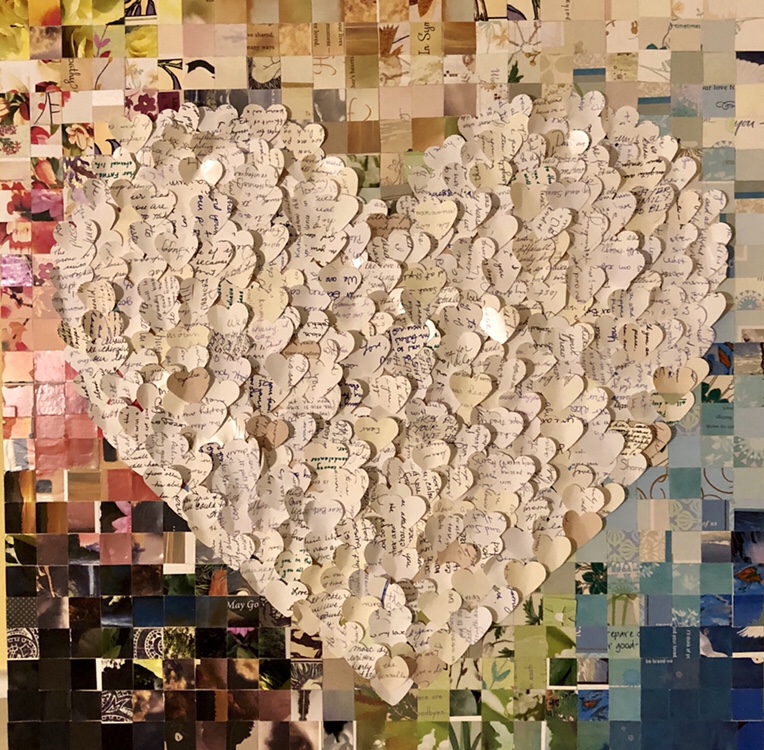
(One of three paper collages I made out of the sympathy cards I received after my father died. The love expressed in them continues to carry me through my grief. Today would be my dad’s 94th birthday; he told me he loved me, which is the world.)

Women, Ancient and Present

The Daughters of Zelophehad: Numbers 27
“Then the daughters of Zelophehad came forward. Zelophehad was son of Hepher son of Gilead son of Machir son of Manasseh, of the clans of Manasseh, son of Joseph. The names of his daughters were Mahlah, Noah, Hoglah, Milcah, and Tirzah. They stood before Moses, Eleazar the priest, the leaders, and all the congregation, at the entrance of the tent of meeting, saying, ‘Our father died in the wilderness; he was not among the congregation of those who gathered themselves together against the Lord in the congregation of Korah but died for his own sin, and he had no sons. Why should the name of our father be taken away from his clan because he had no son? Give to us a possession among our father’s brothers.’

Moses brought their case before the Lord. And the Lord spoke to Moses, saying, ‘The daughters of Zelophehad are right in what they are saying; you shall indeed let them possess an inheritance among their father’s brothers and pass the inheritance of their father on to them. You shall also speak to the Israelites, saying: If a man dies and has no son, then you shall pass his inheritance on to his daughter. If he has no daughter, then you shall give his inheritance to his brothers. 1 If he has no brothers, then you shall give his inheritance to his father’s brothers. And if his father has no brothers, then you shall give his inheritance to the nearest kinsman of his clan, and he shall possess it. It shall be for the Israelites a statute and ordinance, as the Lord commanded Moses.'”

Years ago, when I was in seminary, we were studying the Hebrew Scriptures. At some point in the semester the professors assigned us an article by Dr. Katharine Doob Sakenfeld, Professor of Old Testament Literature and Exegesis Emerita at Princeton Theological Seminary, having previously been William Albright Eisenberger Professor of Old Testament Literature and Exegesis. This story – unknown to me – took place during the Exodus, as the people who have been wandering the wilderness are about to enter the promised land. Well, the article opened my eyes, not only to this story of five sisters who plead their case before Moses and Eleazer, but also to the possibility of feminist biblical interpretation. Whether this story is historically true, which it is likely not, it is a curious thing that in all of the Torah, the story of these sisters – Malah, Noah, Hoglah, Milcah, and Tirzah – is included.


Is it a dangerous passage, this story of women challenging the patriarchal rule that only sons can inherit land? Does granting women access to things that historically belonged to men and men only open the floodgates to women doing all sorts of things that might give them power? What does this story tell us about the lives of women in ancient scripture? And how does this ancient story speak to the lives of women today?


I wish this story ended beautifully, all tied up with a neat bow, but it doesn’t. At first, Moses consults God who says yes, these women may inherit their father’s land. That’s Numbers 27. But jump ahead to Numbers 36 and we learn the inheritance comes with a condition: that the five sisters marry only within their own tribe, so that the land does not end up with someone outside the family. Of course.


A few years ago I discovered the work of Dr. Wilda C. Gafney, (The Right Rev. Sam B. Hulsey Professor of Hebrew Bible at Brite Divinity School of Texas Christian University), a biblical scholar who writes from the Womanist tradition. She, too, is interested in the stories of women in scripture, but from the perspective of Black women. Her writing has inspired me to consider even more women in the biblical stories, to look deeply at their lives, and to consider what they might say to us today. If you’re willing to face some Hebrew and academic terms that might be unfamiliar, I heartily recommend her book Womanist Midrash: A Reintroduction to the Women of the Torah and the Throne.


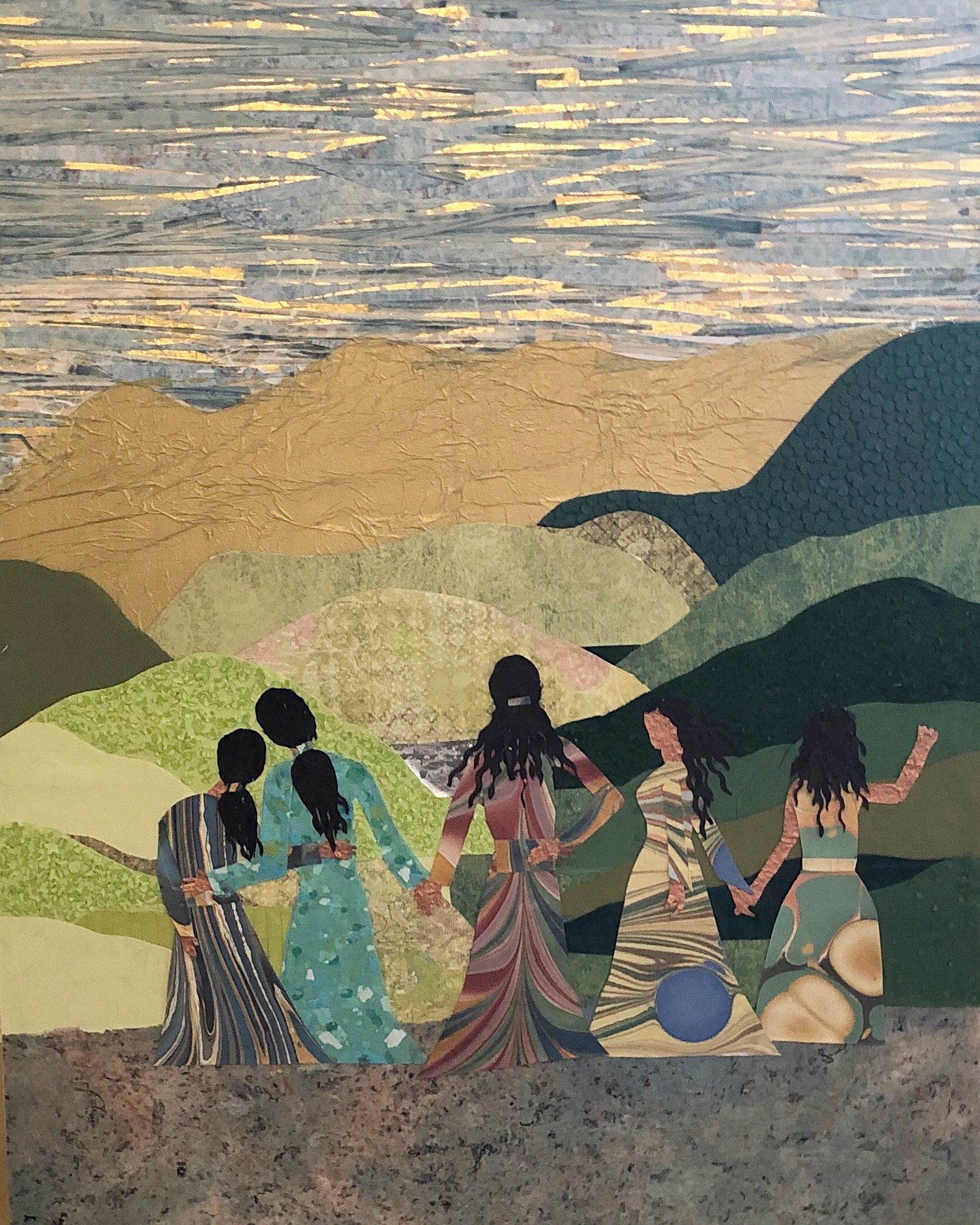
Anyway, I will get to the point. Since that Old Testament class in 1989, the daughters of Zelophehad have stuck with me. A few years ago I was working on an art series, “Unknown and Unnamed: Women of the Bible” and made this picture, “The Five Sisters Who Inherited Their Father’s Land.” It’s been a fan-favorite of my ten fans, and I have promised my own daughter I will not sell it.


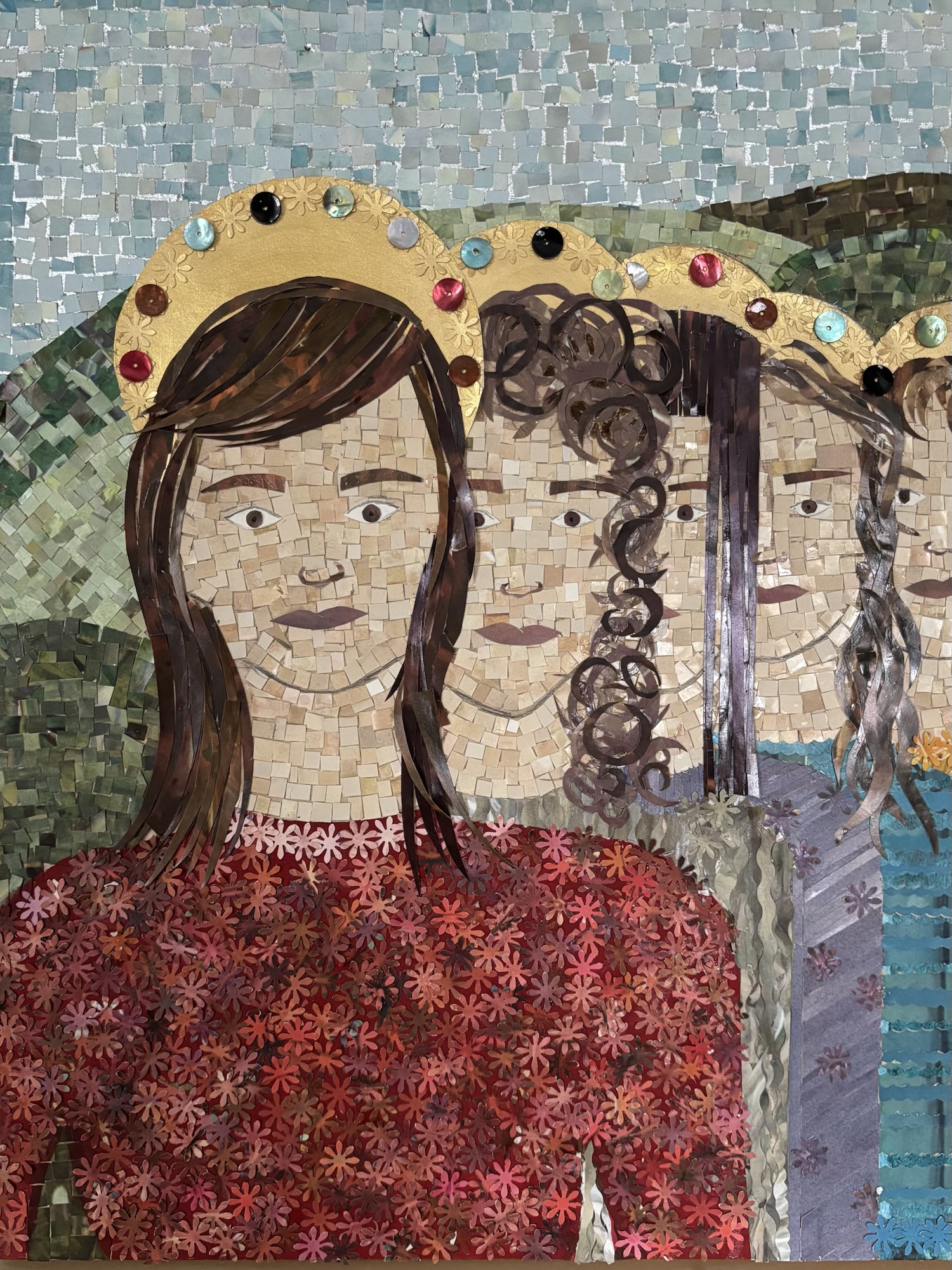
More recently I’ve been motivated to create some new Matron Saints, and the first of this new batch is “Malah, Noah, Hoglah, Milcah, and Tirzah (the daughters of Zelophehad), Matron Saints of Those Who Challenge the Patriarchy.”


Why has this story stuck with me? In part because I get so very frustrated and enraged by the power games of the patriarchy which still exists today. I am cautious about criticizing cultures that are not my own, so I’ll stick with the U.S. I see patriarchal power plays in the culture, in politics, and I see them far too often in the church, even in my own beloved denomination of the Presbyterian Church (U.S.A.)


So if there’s a chance that women might receive something previously withheld from them, or better, receive it without condition, I want to celebrate that. I want to celebrate women being acknowledged as being gifted, compassionate, strong, emotionally intelligent, intellectual, wise, brave, capable of making decisions about their own bodies, and willing to make good trouble. I want to hear the stories of women who have been denied, of women who’ve given up because that wall of patriarchy is twenty feet thick and make of diamonds and steel. I want to know men who are willing to step away, step down, so that a woman might have an opportunity otherwise denied them.


I want the descendants of Malah, Noah, Hoglah, Milcah, and Tirzah to be emboldened to speak up not only for themselves but for other women as well. I want us to make as happy an ending as possible for the story of women. I echo what Marie Shear once said: Feminism is the radical notion that women are people. May it be so.

My thanks to Drs. Robert Coote and Marvin Chaney, my Old Testament professors at San Francisco Theological Seminary, to Dr. Sakenfeld and Dr. Gafney for their rich and inspiring work, and to all the women out there who keep on going.

Revisiting the Matron Saints

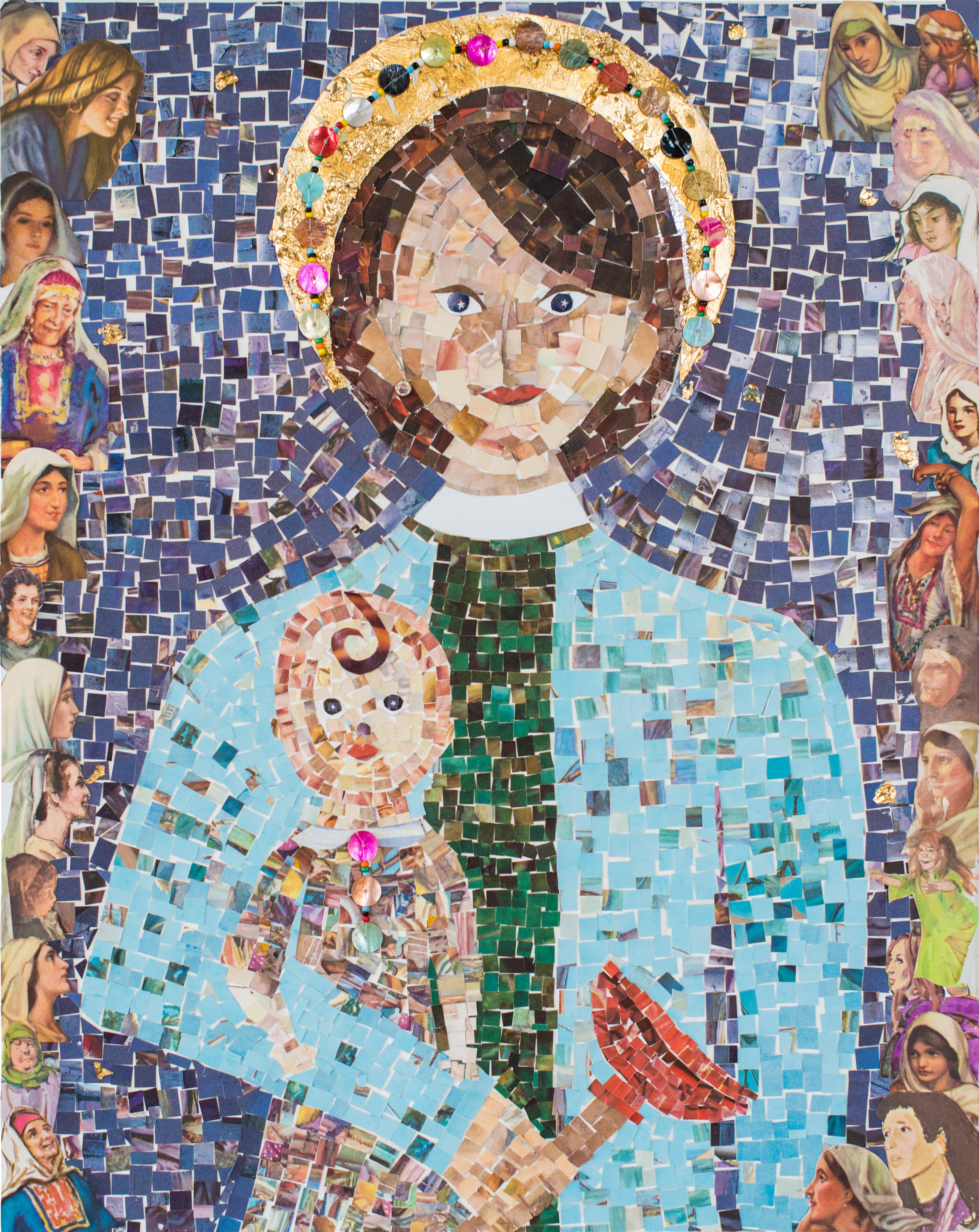
Eight years ago I made a paper collage icon of the biblical Martha, using cut-up pieces of old Sunday School lithographs. I modernized her, imagined her as a clergywoman (or my experience as a clergywoman) and so, in addition to wearing her very proper clerical collar, she was also holding a baby in one hand and a toilet plunger in the other. She was surrounded by all the women who encouraged her over the years – and one who was very grumpy about the whole thing and really thought that only men should be pastors. Ask any clergywoman you know, and she will concur with the experience.

And so the Matron Saints (h/t to my friend Michelle Bartel, who came up with the title) were born. I made twelve, and each was a woman in a Bible story whom I admired or thought a lot about and who represented an issue in the world, the nation, or my life. Creating them helped me get through the first Trump administration.

I made notecards and sold some and then let them be. But the time has come for them to be dusted off. So this post is really a bit of a shameless plug, because not only am I selling cards again ($30 for a pack of 12 Matron Saints, or $3 per card, plus shipping if you’re not local) but I also made calendars and they are, much to my surprise, selling like hotcakes ($25, plus shipping.)

If you want to know more about this project, click on the “matron saints” tab above, and on its drop-down menu. If you’d like to order some, reply to this and then I’ll follow up.

In the meantime, be well, and be blessed, and don’t give up hope.